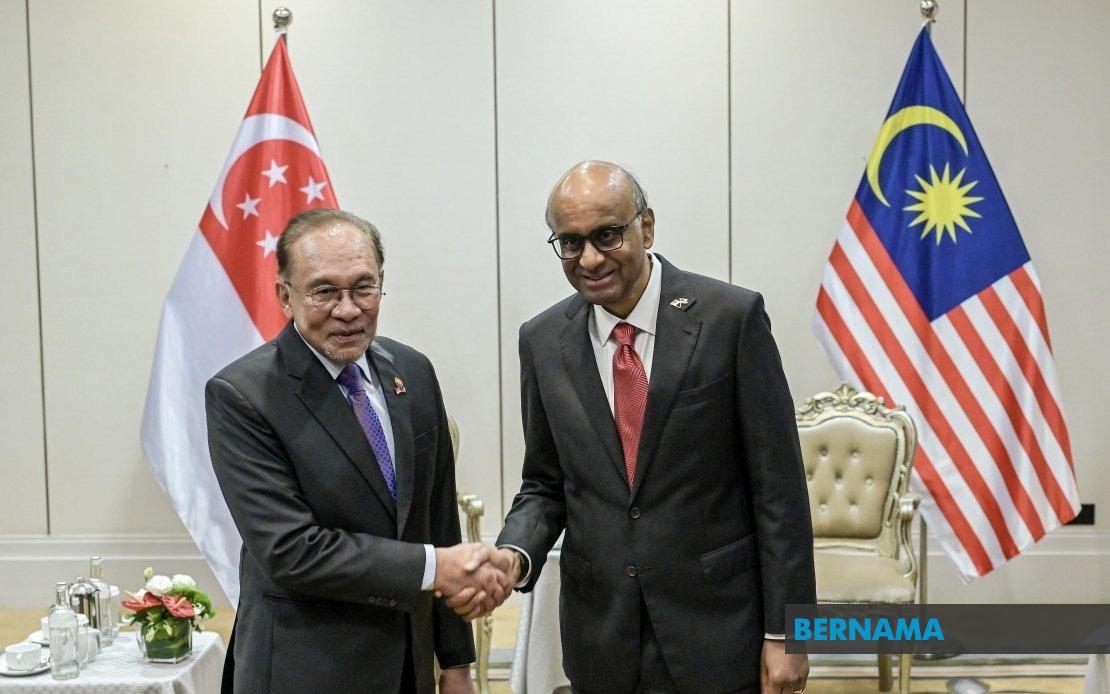
Singapore and Malaysia have recommitted themselves to strengthening collaboration across multiple strategic domains, with food security and energy resources emerging as primary focal points for the two neighbouring economies. The pledge was announced following bilateral discussions between Malaysian Prime Minister Datuk Seri Anwar Ibrahim and Singapore President Tharman Shanmugaratnam, underscoring the enduring importance both nations place on their relationship despite occasional tensions that have characterised their interactions over recent decades.
President Tharman's visit, which runs from July 12 to 15, represents his inaugural state visit to Malaysia since assuming office, signalling the ceremonial and substantive weight both governments attach to strengthening bilateral ties. The formal nature of the engagement—including a state welcoming ceremony at Istana Negara and a royal audience with His Majesty Sultan Ibrahim, King of Malaysia, and Her Majesty Raja Zarith Sofiah—demonstrates Malaysia's commitment to affording the Singapore president full diplomatic honours and marking the occasion as one of considerable importance to the relationship.
During their courtesy meeting, the two leaders ranged across several critical contemporary issues affecting the region. Of particular significance was their discussion of developments unfolding in West Asia, where the two countries maintain distinct interests and strategic positions. Both leaders emphasised the imperative of maintaining adherence to established international legal frameworks, with explicit reference to the United Nations Convention on the Law of the Sea (UNCLOS) and the principle of freedom of navigation. This emphasis reflects shared anxieties about preserving the rules-based international order, especially as geopolitical tensions have escalated in key shipping corridors and maritime zones that both island and peninsular Southeast Asia depend upon for prosperity.
Food security represents one of the most pressing challenges facing both Singapore and Malaysia, albeit from markedly different perspectives. Singapore, as a highly urbanised city-state with minimal agricultural hinterland, relies substantially on food imports to sustain its population of 5.6 million. Malaysia, by contrast, possesses arable land and agricultural capacity but faces its own domestic food security pressures amid climate variability and shifting consumer demands. Deepening cooperation in this sector could involve coordinated approaches to regional food supply chains, agricultural technology transfer, and joint resilience strategies to withstand future supply disruptions—lessons underscored by global trade disruptions witnessed in recent years.
Energy cooperation similarly addresses complementary needs within the two economies. Malaysia maintains significant hydrocarbon resources and refineries, while Singapore functions as a major regional energy trading and petrochemical hub. Enhanced energy sector collaboration could encompass renewable energy development, liquefied natural gas trading arrangements, and joint investments in clean energy infrastructure—areas where both nations are increasingly focusing attention given climate commitments and the imperative to transition away from fossil fuels.
Beyond these headline areas, discussions encompassed several softer but strategically meaningful domains of partnership. Technical and vocational education emerged as a focus area, reflecting both countries' recognition that workforce development and skills enhancement remain critical drivers of economic competitiveness in an era of rapid technological disruption. Such cooperation could involve exchange programmes, curriculum alignment, and shared training initiatives that benefit the broader Southeast Asian region.
Climate adaptation and flood mitigation proved another significant topic, particularly relevant given Malaysia's vulnerability to monsoon-driven flooding and the shared environmental challenges both nations face as low-lying tropical economies threatened by rising sea levels. Singapore's advanced engineering expertise in water management and flood prevention could complement Malaysia's larger land mass and hydrological challenges, creating opportunities for knowledge transfer and joint infrastructure projects.
President Tharman's engagement extended beyond the national capital, encompassing a Tuesday audience with Sultan Sharafuddin Idris Shah, the Sultan of Selangor, and a meeting with Selangor Menteri Besar Datuk Seri Amirudin Shari. This sub-national diplomacy reflects Singapore's strategic interest in deepening ties with Malaysia's most economically developed state, home to Kuala Lumpur and its surrounding metropolitan region. The discussions with Selangor's leadership reportedly centred on potential collaboration involving the start-up ecosystem, positioning both jurisdictions at the forefront of innovation-driven economic development within Southeast Asia.
The emphasis on start-up growth collaboration reflects a contemporary dimension of bilateral partnership that extends beyond traditional state-to-state frameworks. Both Singapore and Malaysia have fostered thriving entrepreneurial ecosystems; deeper integration of these communities could facilitate technology diffusion, venture capital flows, and the creation of regional innovation networks that strengthen competitiveness across the broader Southeast Asian region.
Malaysia's willingness to host this high-profile state visit and accord full ceremonial treatment demonstrates renewed political commitment to the bilateral relationship under the Anwar Ibrahim administration. The Malaysian government has signalled that despite historical frictions—including disputes over maritime boundaries, water rights, and airspace—strategic cooperation remains paramount. For Singapore, equally, the investment in this visit underscores recognition that Malaysia's role as a larger, regionally influential neighbour remains indispensable to Singapore's broader strategic positioning and regional integration.
The timing of this engagement carries additional resonance given broader Southeast Asian geopolitical dynamics. As the region navigates evolving great power competition between the United States and China, along with concerns over regional stability in the South China Sea and beyond, Singapore-Malaysia cooperation serves as a stabilising force. The explicit reaffirmation of commitment to UNCLOS and freedom of navigation signals both countries' investment in preserving rules-based regional order—a message likely directed at external audiences monitoring Southeast Asian alignment amid strategic competition.
Looking forward, the substantive agreements emerging from this visit will require concrete implementation mechanisms. The breadth of cooperation areas—spanning energy, food, education, climate and innovation—suggests ambition beyond ceremonial diplomacy. Whether these commitments translate into binding institutional arrangements, funding allocations, and measurable outcomes will determine the visit's lasting significance beyond its immediate diplomatic symbolism.

