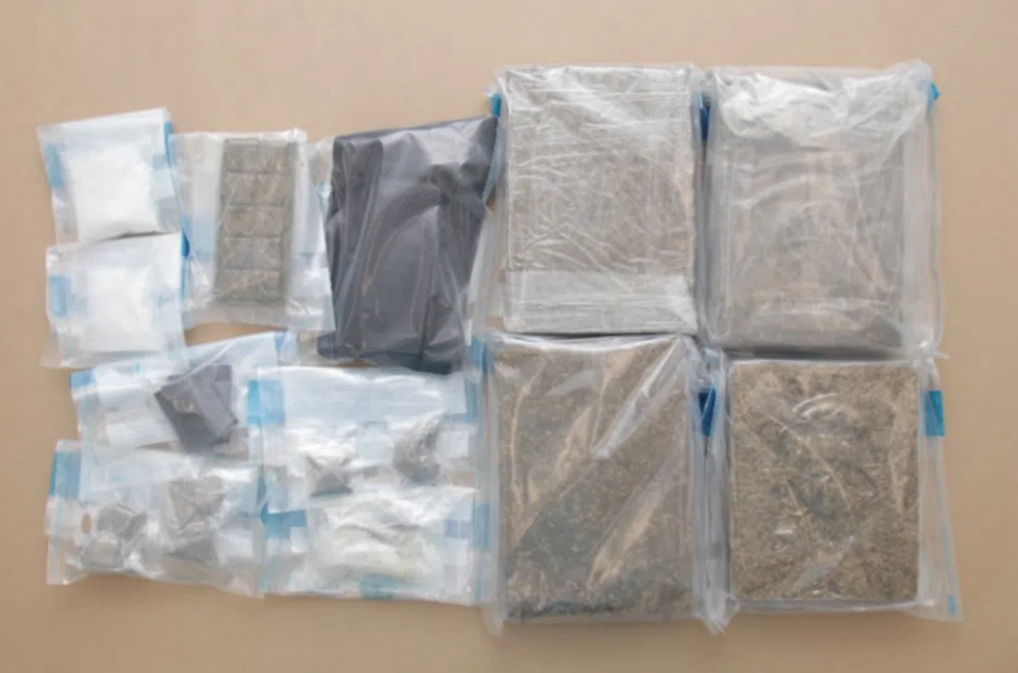
Singapore's drug enforcement authorities have dealt a significant blow to the local narcotics trade, with the Central Narcotics Bureau announcing the arrest of three men and the recovery of approximately $142,000 worth of drugs across multiple operations conducted on July 27. The coordinated sweeps, which unfolded across different residential neighbourhoods on the island, resulted in the seizure of 5.52 kilograms of cannabis alongside substantial quantities of other controlled substances, underscoring the persistent challenges Singapore faces in combating drug trafficking and abuse within its densely populated urban landscape.
The operation centred on three Singaporean nationals aged 27, 29, and 34 years old, whose activities spanned both the supply and consumption end of the drug distribution chain. Two of the men are suspected of operating as drug traffickers, while the third is believed to have been using drugs for personal consumption. The complexity of their alleged criminal network highlights how Singapore's drug problem encompasses multiple layers of illicit activity, from street-level distribution to organised trafficking operations that move quantities of drugs capable of sustaining hundreds of addicts.
The first arrest occurred in the afternoon when CNB officers apprehended the 34-year-old suspect at a void deck near Ang Mo Kio Avenue 4. This initial detention proved pivotal, as officers subsequently obtained access to the man's residential hideout in an adjacent block. The search of this unit yielded four LSD stamps, nearly 880 grams of cannabis, and approximately 123 grams of 'Ice'—a street name for crystal methamphetamine. The discovery of such a substantial cache at a single residential location suggests the operation served as a distribution point for multiple drug types, indicating a degree of sophistication in the trafficking network.
Following leads generated from the first arrest, CNB investigators launched a second operation targeting a 29-year-old man positioned at the lift landing of a residential block near Pasir Ris Street 11. This suspect represented what authorities view as a more significant threat, with officers recovering approximately 4.64 kilograms of cannabis and 145 grams of ketamine from his residential unit following his detention. The distribution of the seized drugs—with packets found both on the suspect's person and strategically cached within and outside his unit—suggests deliberate separation of stock to minimise losses in case of police intervention.
The volume of cannabis recovered from this particular operation brings into sharp relief the quantities involved in mid-level trafficking in Singapore's controlled environment. At 4.64 kilograms, this single seizure underscores how even in a small, highly policed city-state, significant drug quantities can circulate through residential neighbourhoods. The ketamine recovered alongside the cannabis points to the diversification of illicit drug markets in Southeast Asia, where prescription drugs and pharmaceutical chemicals are increasingly diverted for recreational abuse, adding complexity to law enforcement efforts that must track multiple substance types.
Later the same afternoon, officers completed the operation's third phase by arresting a 27-year-old man at his residential unit near Jalan Bukit Ho Swee, where nine grams of 'Ice' were recovered. This younger suspect's involvement suggests that recruitment into drug distribution networks continues to draw younger individuals into criminal activity, a pattern that reflects broader concerns across the region about the age profile of those drawn into narcotics-related offences. His smaller quantity of drugs indicates he may have occupied a lower tier in the distribution hierarchy, though his residential unit's location marks him as part of the broader network authorities had been investigating.
The aggregate quantities seized during these operations—5.52 kilograms of cannabis, 132 grams of 'Ice', 145 grams of ketamine, and four LSD stamps—according to CNB calculations, represent sufficient quantities to supply approximately 860 regular drug users for one week. This metric, commonly deployed by Singapore authorities, illustrates the public health dimensions of drug trafficking beyond individual criminal liability. The ability of one small operation to service such a large population of active users demonstrates how concentrated demand in Singapore's tightly integrated society allows relatively modest trafficking volumes to sustain substantial addiction populations.
Under Singapore's strictly enforced narcotics legislation, the offences alleged against these suspects carry severe penalties that escalate dramatically with quantity thresholds. While trafficking in controlled drugs itself carries severe sentences, the particular danger facing the 29-year-old suspect relates to the cannabis quantities recovered from his unit. Any individual convicted of trafficking cannabis exceeding 500 grams faces the mandatory death penalty under Singaporean law—a threshold the recovered quantity substantially exceeds. This draconian sentencing regime reflects Singapore's hardline stance on drug trafficking, positioning it among the world's most severe in its treatment of narcotics offences.
The operation demonstrates CNB's intelligence-gathering and surveillance capabilities, allowing officers to identify, track, and apprehend multiple suspects operating within what appears to be a coordinated distribution network. The rapid progression from the initial arrest to subsequent operations suggests that interrogation of the first suspect yielded actionable intelligence enabling swift follow-up. Such operational efficiency reflects investment in investigative techniques and inter-agency coordination that characterises Singapore's security apparatus, though the continued emergence of such networks indicates that supply-side enforcement, however effective, has not eliminated drug trafficking from the island nation.
From a regional perspective, the seizure highlights Singapore's continued vulnerability to drug trafficking despite its reputation for rigorous law enforcement. The diversity of drugs recovered—cannabis, methamphetamine, ketamine, and LSD—indicates how Singapore functions as a nexus where multiple drug supply chains converge, likely sourcing from different production regions across Southeast Asia and beyond. The island's role as a major port and financial centre, combined with its relatively affluent population with significant purchasing power, creates market conditions that attract traffickers willing to navigate its formidable law enforcement environment.
The CNB statement confirming that investigations remain ongoing suggests this operation may represent one phase of a broader inquiry into trafficking networks. Intelligence from these three arrests may well generate leads pointing toward higher-level suppliers or other distribution nodes operating throughout Singapore. The sequential nature of the operations—with each arrest generating information enabling the next—indicates an investigative momentum that could extend well beyond the immediate charges against these three individuals.
As authorities consolidate evidence and pursue charges, the case underscores persistent challenges in Singapore's drug war and raises questions about supply chain resilience among narcotics networks. Despite years of intensive enforcement generating thousands of arrests and seizures annually, drugs continue to flow into the market, suggesting that demand reduction initiatives, rehabilitation programmes, and community engagement remain essential complements to law enforcement operations aimed at suppressing supply.

