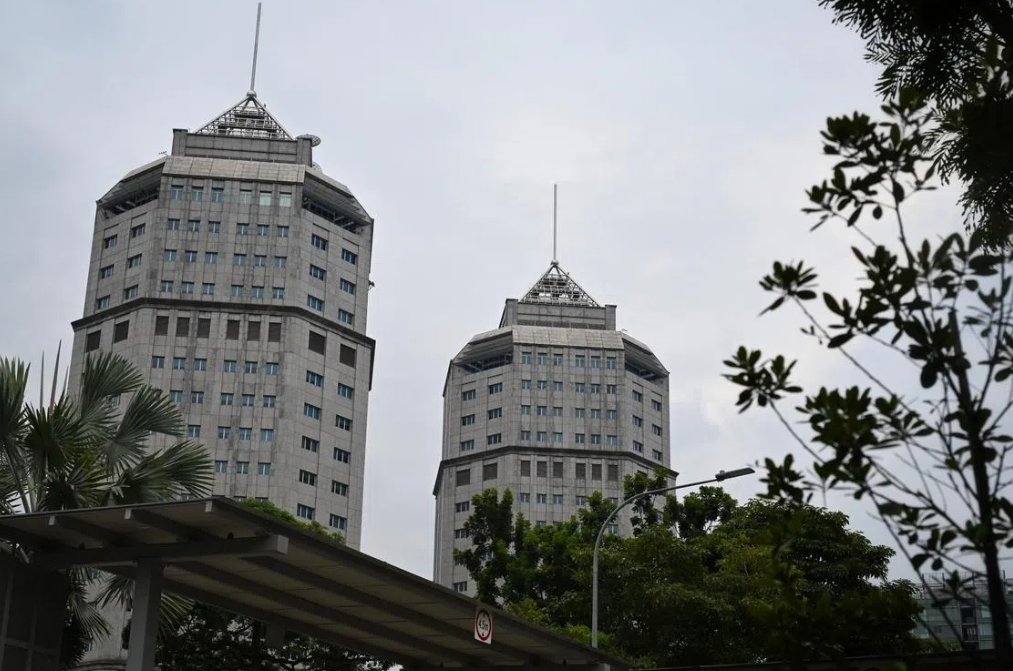
Singapore's Internal Security Department has revoked the work permits of two Bangladeshi nationals and arranged their repatriation after they were found to have engaged in extremist postings on social media. The action against Tayani Md Risad, 25, and Islam Sahedul, 37, represents the city-state's continuing efforts to counter radicalization within its migrant worker population, a demographic that has featured prominently in extremism cases over the past decade.
According to investigations concluded in July, Risad had expressed support for Shafiur Rahman Farabi, a Bangladeshi radical Islamist writer known for inciting violence against secular and atheist bloggers. Farabi himself is suspected of maintaining links to Hizb ut-Tahrir, a fundamentalist Islamist organization that Bangladesh has officially banned. Sahedul, meanwhile, had published inflammatory commentary on the Israel-Iran conflict while simultaneously promoting divisive religious rhetoric that characterized Muslims unwilling to live under Islamic law as infidels. Such content, authorities determined, contradicted Singapore's foundational principles of multireligious and multiracial harmony.
The Internal Security Department clarified that its investigation uncovered no evidence suggesting either man was planning terrorist attacks or actively engaged in terrorism-related activities within Singapore's borders. However, the department emphasized that their extremist ideology and divisive messaging posed a threat to the nation's carefully maintained social cohesion. This distinction—between holding radical views and actually planning violence—has become increasingly important as authorities grapple with the challenge of identifying and managing online radicalization before it escalates into concrete security threats.
When the two men arrived at Hazrat Shahjalal International Airport in Dhaka on July 8, Bangladeshi authorities detained them immediately and confiscated three mobile phones and three passports. The swift action by Bangladesh law enforcement suggested coordination between the two countries' security agencies. Within days, both men were brought before a Dhaka court where police requested extended remand, claiming the workers had admitted to involvement with militant organizations during their time in Singapore and required further interrogation regarding their organizational networks and financial sources.
During his court appearance, Risad disclosed that Singapore's authorities had taken action against him based on Facebook posts from 2023 concerning Hefazat-e-Islam, another radical Islamist group active in Bangladesh, and its leadership. The revelation highlights how intelligence agencies now monitor social media activity, particularly when it involves support for organizations designated as extremist or terrorist entities. A Bangladeshi judge hearing the remand application posed a pointed question that encapsulated the frustration authorities feel: he described the workers as "remittance warriors," individuals who migrate specifically to earn money for their families back home, and questioned why they felt compelled to involve themselves in militant ideologies.
The cases of Risad and Sahedul fit within a troubling pattern that Singapore has documented for nearly a decade. In 2015, authorities arrested 27 Bangladeshi construction workers who had formed a jihadist terror cell and were contemplating armed jihad operations overseas. The following year, eight more Bangladeshi nationals employed in construction and marine sectors were detained after authorities discovered they were members of the Islamic State in Bangladesh, possessed documents detailing weapons and bomb-making techniques, and harbored plans to recruit fellow Bangladeshi workers in Singapore to expand their organization. Those eight men had also been raising funds to purchase firearms for carrying out terror attacks back home.
In 2020, the security landscape around Bangladeshi migrant workers in Singapore was again thrust into focus when a construction worker was apprehended after displaying signs of radicalization. This individual, who had been employed in Singapore since 2017, had begun consuming pro-Islamic State materials online and subsequently purchased folding knives with the stated intention of executing attacks upon his return to Bangladesh. Each incident has demonstrated how social isolation, economic stress, and unrestricted access to extremist online content can converge to create security vulnerabilities within transient worker populations.
These episodes underscore a critical vulnerability in Southeast Asia's labor ecology. Bangladesh supplies hundreds of thousands of migrant workers throughout the region, including substantial populations in Singapore's construction, domestic work, and service sectors. While the vast majority of these workers are law-abiding individuals seeking economic opportunity for themselves and their families, the cases reveal how extremist recruiters have identified migrant worker communities as potential targets. Workers living far from home, often in crowded accommodations and with limited social integration, may be particularly susceptible to online radicalization and the sense of purpose that extremist ideologies promise.
The security implications extend beyond Singapore's borders. Bangladeshi workers in Gulf states, Southeast Asia, and elsewhere represent a diaspora that extremist networks have actively sought to penetrate and radicalize. The financial resources these workers accumulate—through remittances that constitute a crucial component of Bangladesh's economy—can potentially be diverted toward funding militant activities. Additionally, workers who return to Bangladesh after radicalization abroad may bring enhanced organizational capabilities and international connections that amplify security risks in their country of origin.
Singapore's approach combines immediate security measures with intelligence-driven investigation. By cancelling work permits and coordinating with Bangladeshi authorities for prosecution, the city-state removes the immediate threat while gathering operational intelligence about recruitment networks and financing mechanisms. However, preventing radicalization requires addressing the underlying conditions that make workers vulnerable: the isolation of migrant communities, limited social support systems, and the digital environment's role in enabling extremist messaging. Regional governments have begun recognizing that countering online extremism among migrant populations demands coordinated efforts spanning labor standards, social integration, and digital literacy initiatives.
For Malaysia and other Southeast Asian nations hosting Bangladeshi workers, these developments carry particular resonance. With substantial Bangladeshi communities in manufacturing, construction, and domestic service sectors, Malaysian authorities face comparable challenges in monitoring and preventing radicalization. The cases documented in Singapore provide instructive examples of how extremist ideologies can embed themselves within worker communities despite individuals' primary motivation being economic survival rather than political or religious conviction. Intelligence sharing between regional security agencies has become increasingly important, as has the recognition that addressing radicalization requires understanding the distinct vulnerabilities of migrant worker populations.
The Internal Security Department has appealed to the public to report suspected radicalization through its hotline at 1800-2626-473, reflecting confidence in community vigilance as a frontline defense against extremism. However, the effectiveness of such reporting mechanisms depends partly on trust between authorities and migrant communities, a relationship that can be fragile when workers fear that reporting may jeopardize their employment status or immigration standing. Balancing security imperatives with the protection of migrant worker rights remains an ongoing challenge for policymakers throughout the region.

