Singapore has taken action against two citizens over extremism linked to the ongoing Israeli-Palestinian conflict, with authorities issuing Internal Security Act orders that underscore the region's vulnerability to transnational ideological currents. The Internal Security Department announced on 24 June that Cyrus Dzulqarnain Al-Shahriar, 19, a student, received a restriction order, while Tarmizi Mohd Taha, a 30-year-old customer service officer, was issued a detention order. Together, they represent the seventh and eighth Singaporeans dealt with under the ISA whose radicalisation stemmed from the October 2023 Hamas attacks on Israel and subsequent conflict.
Cyrus's case reveals an alarming convergence of extremist narratives that security analysts across Southeast Asia should view with concern. What makes his trajectory distinctive is his embrace of what authorities term "composite violent extremism"—a phenomenon where individuals selectively synthesise beliefs from multiple, sometimes contradictory extremist movements rather than adhering to a single ideological framework. This "salad bar" approach to violent extremism, as officials describe it, poses particular challenges for counter-radicalisation efforts because the perpetrator lacks a coherent ideological anchor. Instead, they construct a personalised worldview that opportunistically draws from Islamist militant groups, white supremacist and incel subcultures, and anti-Western accelerationist ideology—all unified by a conviction that violence is justified and necessary.
Cyrus began his journey into radical spaces in 2022, initially joining online religious study groups to deepen his Islamic knowledge. However, the digital environment exposed him to anti-Western and anti-LGBTQ content, leading him to make public posts that incited violence against LGBTQ communities. The trajectory accelerated following the October 2023 Israeli-Palestinian escalation, when he encountered pro-Hamas narratives online. Unlike many who view such conflicts through a purely geopolitical lens, Cyrus became convinced that Hamas's killing of civilians constituted a legitimate form of jihad. By 2024, he seriously contemplated travelling to Gaza to fight Israeli forces, abandoning the plan only due to lack of resources and personal fear rather than ideological recalibration.
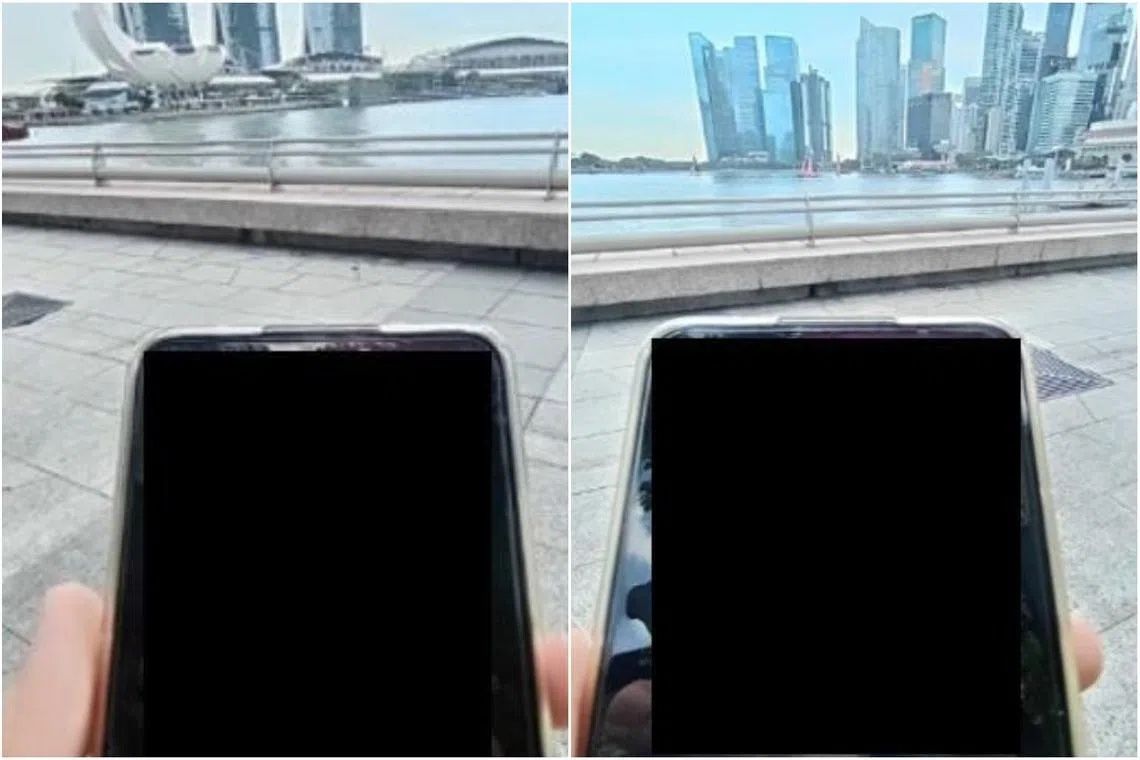
The shift toward more immediately threatening ideologies occurred when Cyrus discovered a niche online Islamist extremist group embracing violent accelerationist philosophy. This group promoted the notion that chaos and violence were necessary preconditions for establishing a future Islamic global civilisation. Critically, they perceived Western nations—including Singapore—as extensions of American hegemony and Zionist control. After joining a private online chat in early 2025, Cyrus began glorifying historical terrorist attacks, including Al-Qaeda's September 11 assault and the 2002 Bali bombings. He produced propaganda photographs featuring an extremist e-publication with Marina Bay Sands in the background, which he posted on social media in November 2025 as a public pledge of allegiance to the group.
Particularly troubling was Cyrus's immersion in what authorities termed the group's "digital jihad" campaigns, which involved harassing, defaming, and inciting violence against users deemed anti-Islamic. His online behaviour escalated to fabricating news stories designed to damage reputations and explicitly encouraging violence. He simultaneously developed an interest in incel ideology—a misogynistic subculture characterised by resentment toward women and society—after encountering online material glorifying Elliot Rodger, the 22-year-old who perpetrated a mass shooting near the University of California, Santa Barbara, in May 2014 that killed six and injured fourteen. The convergence of these seemingly disparate ideological streams, when combined with Cyrus's growing digital activism and violent rhetoric, created a concerning security profile.
Cyrus adopted incel identity markers and published threatening messages directed at women, employing derogatory terminology and articulating fantasies of violence against specific groups including LGBTQ individuals and couples. Authorities noted that while these violent ideations never progressed beyond conceptual stages and he shared neither his extremist views nor violent fantasies with family or schoolmates, his public online advocacy for terrorist organisations and incitement to violence warranted intervention. The fact that his thoughts remained at the ideation level rather than translating into preparatory actions appears to have informed the decision to issue a restriction order rather than a detention order.
Tarmizi's case represents a different manifestation of Gaza-related radicalisation. The 30-year-old customer service officer was detained after admitting his willingness to execute attacks within Singapore if instructed by Hamas. His background in logistics, developed during his mandatory national service with the Singapore Police Force, informed his belief that he could contribute meaningfully to Hamas operations and thereby achieve martyrdom. Unlike Cyrus, Tarmizi appears to have maintained a more traditional Islamist militant ideological orientation rather than adopting composite violent extremism. His case demonstrates that radicalisation around the Palestinian cause extends beyond youth and can reach individuals with access to security sector knowledge and operational expertise.
The emergence of these two cases within a short timeframe highlights how the Gaza conflict, despite being geographically distant, generates radicalisable moments and content streams that penetrate Southeast Asian societies with particular potency among digitally native populations. The Israeli-Palestinian conflict provides a legitimising narrative for violent action and attracts individuals searching for meaning in struggles they perceive as transcendent and righteous. For young people experiencing social isolation, identity confusion, or grievance, this conflict narrative can crystallise inchoate resentments into directed ideological frameworks that justify violence.
What distinguishes the current threat landscape is the architectural fluidity of online extremism. Previous generations of radicalised individuals typically aligned with established organisations possessing clear hierarchies and coherent doctrines. Today's threat often emerges from algorithmically-curated exposure to diverse extremist content ecosystems, where an individual can simultaneously consume Islamist militant propaganda, white supremacist material, and misogynistic incel forums without organisational gatekeepers. This fragmentation makes detection and intervention more challenging because the radicalisation process leaves traces across multiple platforms and ideological domains, making pattern recognition more complex for security agencies.
Singapore's security establishment has explicitly highlighted the novelty of composite violent extremism as a domestic threat vector. Cyrus represents only the second individual detained under the ISA whose radicalisation reflects this pattern of ideological synthesis. The ISD stated that the absence of a coherent worldview does not diminish the severity of this threat—a crucial analytical point for security practitioners across the region. Individuals who construct hybrid belief systems may actually prove more dangerous in some respects, as they lack the organisational constraints or doctrinal limitations that might prevent certain actions. The personalised nature of their extremism means their violence might be unpredictable and difficult to forecast using conventional threat assessment frameworks.
For Malaysia and other Southeast Asian nations, the Cyrus and Tarmizi cases offer instructive lessons about the regional dimensions of transnational conflict narratives. Malaysia's substantial Islamic population and active social media engagement mean that Gaza-related radicalisation narratives will inevitably circulate within Malaysian society. The cases also underscore the particular vulnerability of youth navigating identity formation in plural societies. Digital platforms have created unprecedented exposure to global ideological currents, and young people with limited real-world social integration are susceptible to radicalisation pathways that previous generations could not have imagined.
Authorities in both Singapore and Malaysia should recognise that counter-radicalisation strategies must evolve beyond traditional approaches targeting coherent ideological movements. Community leaders, educators, and mental health professionals require better training to identify individuals exhibiting the psychological vulnerabilities that make composite violent extremism appealing—social isolation, identity confusion, resentment toward women or minority groups, and hunger for significance within imagined global struggles. Cyrus's trajectory from religious seeking to violent extremism occurred substantially within family and school contexts where early intervention might have been possible had the warning signs been recognised.
The cases also demonstrate the critical importance of public vigilance in reporting concerning online content. A member of the public's report of Cyrus's anti-Semitic and pro-Hamas posts ultimately triggered the investigation that led to his detention. This suggests that community-based reporting mechanisms, when combined with sophisticated forensic investigation, remain essential tools for disrupting radicalisation pathways before they crystallise into operational planning. As the Singapore authorities emphasised, the diversity of violent extremist ideologies fuelling self-radicalisation—particularly among youth—represents an evolving security challenge that transcends traditional definitions of terrorism and demands adaptive policy responses across the region.

