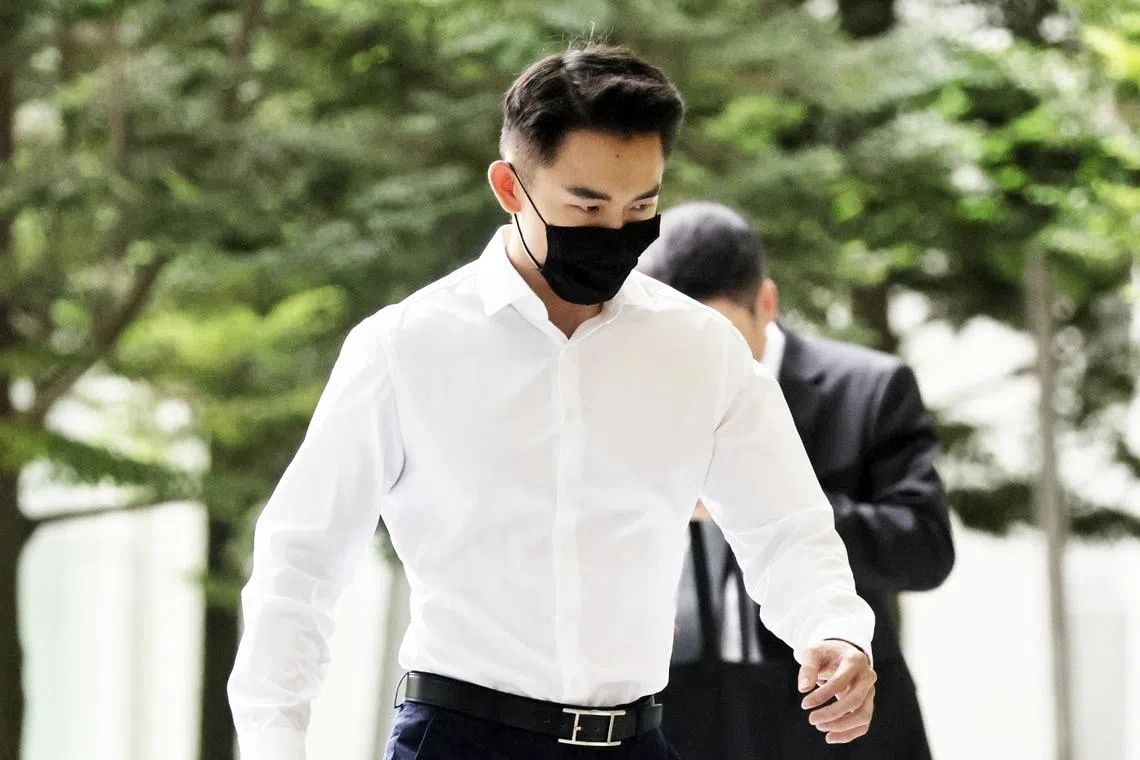
A Singapore doctor has become one of the first individuals convicted from a significant drug raid conducted at a luxury hotel in Sentosa last year. Rayson Lee Rui Sheng, 36, was found guilty of consuming MDMA—commonly known as ecstasy—following a large police operation that netted 49 arrests at a private villa party in August 2023. The conviction, delivered on June 30, marks the conclusion of a closely watched trial in which the accused maintained he was an unwitting victim of drink spiking, a defence the District Judge firmly rejected.
The incident unfolded in the early morning hours of August 9, 2023, when law enforcement received intelligence about suspicious activity at the Sofitel Singapore Sentosa. Police arrived at the villa around 5:30am and discovered what they believed to be controlled drugs on the premises. The Central Narcotics Bureau was subsequently called in, and officers seized multiple substances including ecstasy and ketamine, along with various drug paraphernalia. The scale of the operation was substantial, with 49 men aged 21 to 46 arrested that morning, making it a significant enforcement action against drug consumption in Singapore's hospitality sector.
Lee attended the party after receiving an invitation to celebrate an acquaintance's birthday. He arrived at the villa around 8pm on August 8 and socialised with friends before leaving for a club in Clarke Quay, where he met Tan Li Ming, 29, the co-accused. Both men later returned to the villa separately during the early morning hours. Once there, Lee claimed he consumed three drinks given to him by individuals he did not know. He maintained throughout his testimony that he saw no evidence of drug dealing, pill consumption, or any paraphernalia at the gathering. Tan, meanwhile, provided a more elaborate account, alleging he witnessed a small group of unidentified men drawing liquid from a bottle with a syringe and injecting it into plastic cups in a pantry area.
When forensic testing was conducted, the Health Sciences Authority discovered traces of both MDMA and ketamine in hair samples provided by both men, while their urine samples tested positive for MDMA. These biological findings formed the cornerstone of the prosecution's case. The defendants did not challenge the HSA's analytical results but instead built their defence entirely on the proposition that their drinks had been deliberately contaminated without their knowledge or consent. This strategy proved problematic, as District Judge A Sangeetha noted that the two men continued consuming additional drinks even after allegedly becoming aware something was amiss—a logical inconsistency that undermined their credibility.
The court's assessment of the defence presented by both men was particularly damaging. Judge Sangeetha found that their testimonies lacked credibility and that their prior drug use history, evidenced by residue detected in their hair samples, indicated they were not strangers to substance consumption. The judge remarked pointedly that "neither man was a stranger to drug use," suggesting a pattern inconsistent with claims of innocent victimhood. This observation appears to have been influenced by evidence that Lee had himself consumed pills in Thailand in June 2023, just two months before the Sentosa incident, suggesting a willingness to engage in drug use under certain circumstances.
The prosecution, represented by Deputy Public Prosecutors Jocelyn Teo and Dhiraj G Chainani, systematically dismantled the drink-spiking narrative through several lines of argument. They highlighted the absence of any credible evidence identifying specific individuals who allegedly spiked the drinks, pointing out that the accused had provided only vague references to "unidentified foreign nationals" and unspecified strangers. The prosecutors further noted that even if certain plastic cups had been seized and subsequently tested positive for drug residue—as the defence suggested—this would merely confirm that contaminated beverages were consumed, not that such consumption was genuinely unknowing. The DPPs characterised the defence strategy as presenting "hypothetical scenarios and unexplored possibilities" rather than substantive evidence.
Tan's own account contained notable gaps that strengthened the prosecution's position. He claimed to have observed a mysterious conversation in which an unknown individual told him they were putting "G-water" into drinks and that this substance would provide a "drunk feeling," yet he maintained he did not know what G-water was. This implausible assertion—that someone would consume a substance after being explicitly told it was a psychoactive agent but claim ignorance of its effects—illustrated the weaknesses in the defence case. The prosecution effectively argued that both men possessed sufficient awareness of what they were consuming to stop at any point, yet they continued drinking, suggesting tacit acceptance rather than victimisation.
The conviction carries significant implications for Singapore's approach to drug enforcement within its hospitality and leisure sectors. The operation at Sentosa demonstrated the authorities' capacity to conduct large-scale coordinated raids on venues frequented by affluent clientele, signalling that no establishment is immune from scrutiny. The case also reinforces the legal principle that mere consumption of controlled substances cannot be excused through claims of deception unless supported by compelling corroborating evidence. For Malaysian readers, the outcome underscores the stringent standards Singapore maintains regarding drug-related offences and the judiciary's expectingness of clear, specific testimony from those claiming to be victims of drink tampering.
The sentencing phase of the proceedings has not yet been reported, but both Lee and Tan face potential custodial sentences under Singapore's drug laws, which impose mandatory imprisonment for consumption offences. The case highlights the risks associated with attending large private parties in hotel settings where guest lists are fluid and where substances can circulate freely. It also reveals how quickly celebratory gatherings can become venues for law enforcement intervention, particularly when intelligence points to organised drug activity. The decision by the two men to contest the charges rather than accept responsibility, despite the biological evidence against them, likely influenced the court's perception of their character and may impact sentencing considerations.
From a regional perspective, the Sentosa raid exemplifies the ongoing vigilance Southeast Asian authorities maintain against drug trafficking and consumption networks that increasingly exploit legitimate hospitality venues. Singapore's conviction in this instance sends a clear message that participation in drug consumption activities—regardless of claims about the voluntary nature of ingestion—will result in serious legal consequences. The meticulous forensic work and the methodical dismantling of the defence strategy demonstrate the capabilities of Singapore's investigative and prosecutorial apparatus. For individuals in neighbouring countries like Malaysia, the case serves as a cautionary tale about the legal jeopardy that awaits those who venture into Singapore's drug scenes, where enforcement is consistent, evidence is rigorously gathered, and judicial standards for acquittal are exacting.

