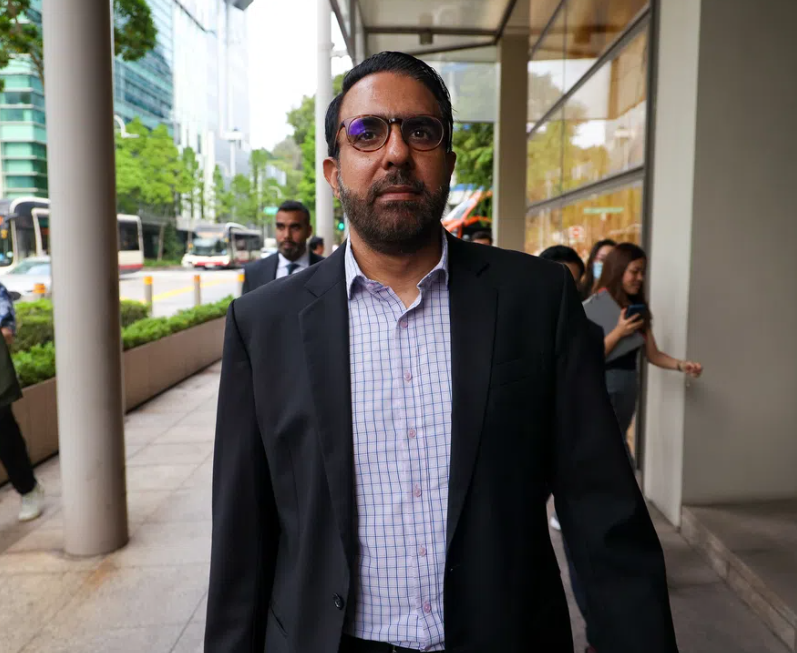
The Law Society of Singapore has signalled its intention to pursue the removal of Workers' Party chief Pritam Singh from the legal profession's register when his disciplinary case is examined on August 13. The move comes after Singh, who represents Aljunied GRC as a Member of Parliament, was convicted in February 2025 on two counts of lying under oath to the Committee of Privileges. Though Singh remains a qualified lawyer, he does not actively practise law. His case represents a significant intersection between political leadership and professional accountability in the city-state.
The disciplinary proceedings are anchored in Singh's conviction, which stemmed from his role in a broader parliamentary scandal. When Workers' Party MP Raeesah Khan made a false statement in Parliament in 2021 regarding her allegation that police mishandled a sexual assault case, Singh was subsequently questioned about his knowledge and conduct surrounding this matter. His conviction for dishonesty under oath triggered the automatic initiation of disciplinary action, as the law mandates such proceedings when legal practitioners face fraud or dishonesty convictions.
Singh's legal battles have extended well into 2025. In December, the High Court rejected his appeal against the original conviction, and he was ordered to pay a fine of $14,000. This sequence of events has left him with limited options as he faces the disciplinary tribunal. The impending August hearing will be overseen by the Court of Three Judges, Singapore's highest disciplinary authority for legal professionals, comprising Chief Justice Sundaresh Menon, Justice Kannan Ramesh and Justice See Kee Oon. This court possesses the power to suspend lawyers for specified periods or permanently remove them from the register.
The Law Society's legal obligation to pursue disciplinary action stems directly from statutory requirements. Under the Legal Profession Act, when a lawyer is convicted of offences involving fraud or dishonesty, the Society must automatically apply to court for disciplinary proceedings without requiring additional direction or evidence. This mandatory framework reflects the profession's commitment to maintaining ethical standards among its members. A Law Society spokesperson confirmed in March that the proceedings were initiated based on information from the Attorney-General's Chambers regarding Singh's convictions.
The range of potential penalties available to the Court of Three Judges includes suspension for up to five years, a monetary fine of up to $100,000, or striking off the rolls entirely. However, legal precedent in Singapore has established a crucial principle: courts have consistently treated striking off as the presumptive or default sanction for misconduct involving dishonesty, unless exceptional circumstances justify departing from this standard. This presumption places substantial weight on Singh's case, as he would need to demonstrate circumstances sufficiently extraordinary to warrant a more lenient outcome.
Recent judicial decisions underscore how strictly Singapore courts apply the striking-off presumption. In July 2026, a lawyer convicted of lying to police during a drink-driving investigation was struck off after the court determined no grounds existed to depart from the presumptive penalty. This precedent suggests that Singh faces a formidable hurdle in avoiding permanent removal from the legal register. The consistency of this approach across multiple cases demonstrates the judiciary's prioritisation of maintaining professional integrity through strict enforcement.
The timing and progression of Singh's convictions have been notable for their speed and finality. The Committee of Privileges investigation, conviction in February, failed appeal in December, and now the August disciplinary hearing represent a swift legal process in a high-profile case. For Malaysia and other Southeast Asian nations observing Singapore's legal system, this progression illustrates the institutional mechanisms used to enforce professional accountability, particularly when political figures are involved.
Singh's experience also highlights the tension between political role and professional regulation. As a senior politician leading the main opposition party, Singh's legal troubles have attracted considerable attention beyond the legal profession. The Workers' Party itself acknowledged the gravity of the situation when, in April 2026, its central executive committee formally reprimanded Singh after finding he had violated two articles of the party's Constitution. This internal party action occurred following his court conviction and compounds the multiple levels of accountability he faces.
The underlying Khan scandal itself warrants context for understanding Singapore's political landscape. Raeesah Khan's false parliamentary statement regarding police handling of a sexual assault allegation represented a significant breach of parliamentary conventions. Her false testimony, coupled with subsequent cover-up efforts, triggered investigations into other party members' conduct. This prompted the Committee of Privileges to examine whether Singh and other WP figures had knowledge of Khan's falsehood and failed to correct the record appropriately. Singh's conviction centred on his truthfulness when questioned about these matters.
For legal practitioners across Southeast Asia, Singh's case offers cautionary lessons about the professional consequences of dishonesty in official proceedings. Singapore's clear statutory framework and consistent judicial application of strict sanctions demonstrate how jurisdictions can enforce professional ethics through disciplinary systems. The absence of discretionary exemptions for lawyers with political prominence reinforces professional standards uniformly.
As the August 13 hearing approaches, Singh's situation reflects broader questions about accountability, the separation between political and professional roles, and the authority of independent disciplinary bodies. The Court of Three Judges will be required to weigh the presumption favouring striking off against any arguments Singh's legal team may present regarding exceptional circumstances. The decision will likely establish further precedent regarding how Singapore's courts treat dishonesty convictions involving prominent public figures in the legal profession.
The case's resolution carries implications beyond Singapore's borders. As regional jurisdictions strengthen their own professional regulatory frameworks, particularly in light of increased scrutiny of legal ethics, the Pritam Singh case demonstrates how independent disciplinary institutions can maintain standards while navigating politically sensitive circumstances. The outcome in August will signal whether institutional independence supersedes political considerations in Singapore's legal governance.

