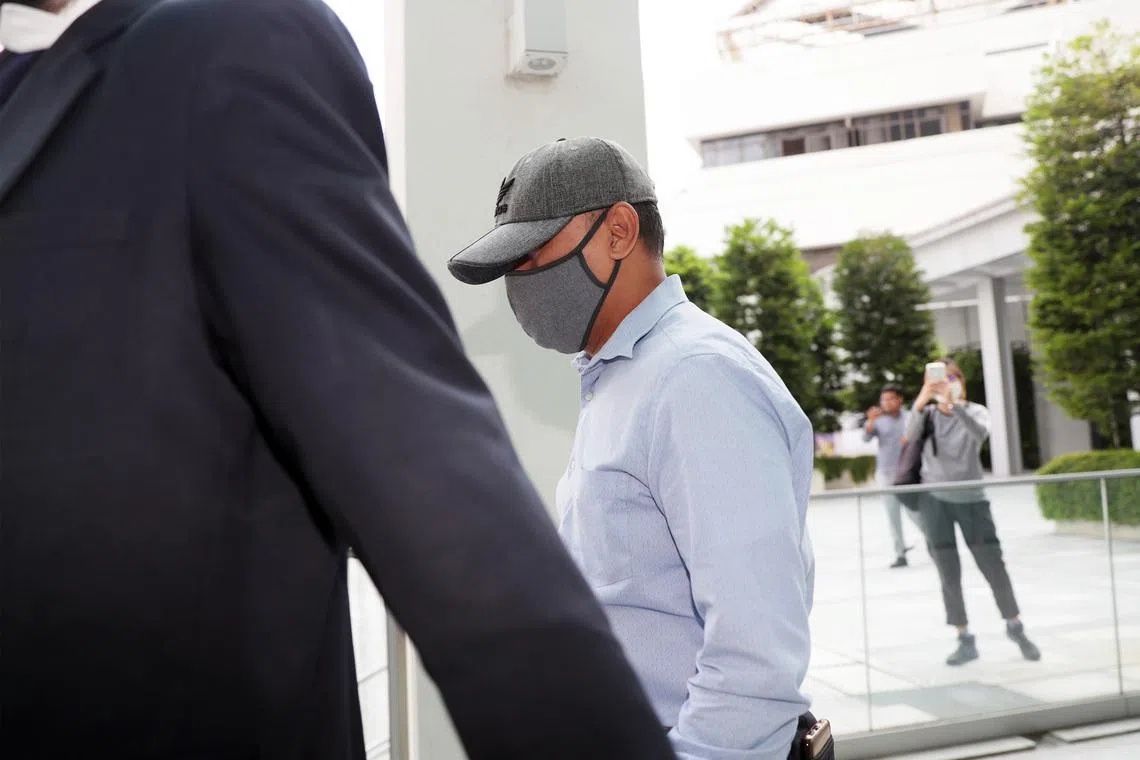
Abdul Rahim Mawasi, a 59-year-old former executive chairman of two prominent Singapore mosques, has received a 14-month prison sentence following his conviction on corruption charges that centered on construction contracts worth S$223,000. The June 26 sentencing caps a case that highlights vulnerabilities in institutional procurement processes and the manipulation of competitive bidding within the religious sector.
At the time of his misconduct, Mawasi held the position of executive chairman at both Darul Aman Mosque on Jalan Eunos and Sallim Mattar Mosque in MacPherson. He simultaneously served as a senior officer with the Islamic Religious Council of Singapore (MUIS), the statutory body governing Muslim religious affairs in the city-state, having been seconded to these two institutions to oversee their management boards. This dual institutional positioning created the structural conditions for his alleged abuse of authority.
The scheme, which unfolded between 2018 and 2019, involved a calculated arrangement with Mohd Mustaqim Kam, a construction industry figure also known as Kam Hock Beng who was 66 years old at the time of sentencing. The two men had known each other for over a decade before entering into their corrupt agreement. Their partnership ostensibly revolved around establishing a travel company focused on pilgrimage tours, but the arrangement contained a concealed quid pro quo: Mawasi would contribute no initial capital to the venture, instead receiving equity compensation through profits generated from construction contracts that Kam's firm, Zeal-Con Engineering, would secure from the two mosques under Mawasi's oversight.
The corruption manifested through systematic price manipulation across multiple projects. When Darul Aman Mosque issued a call for construction services in mid-2018, Zeal-Con submitted an initial quotation of S$128,600 in August. Rather than rely on normal competitive processes, Mawasi engaged in extensive discussions with Kam regarding the bid price, providing crucial pricing intelligence that enabled the company to calibrate its response. Consequently, Zeal-Con submitted a revised quote of S$118,000 in September—significantly undercutting the nearest competing bid of S$125,500 from another vendor. The mosque's management board, kept uninformed of Mawasi's involvement, awarded the contract to Zeal-Con on September 26, 2018.
A similar pattern emerged at Sallim Mattar Mosque. Zeal-Con initially quoted S$115,700 for renovation work encompassing the roof and reception areas. Upon Mawasi's counsel to reduce its bid, the company submitted a lower quotation of S$105,000 several months later. The mosque subsequently issued letters of contract award to Zeal-Con aligned with this revised figure in August 2019. Throughout these negotiations, the mosque's decision-makers remained unaware of the corrupt relationship between its executive chairman and the bidding contractor.
To obscure his financial interest in the joint venture, Mawasi orchestrated an indirect ownership structure. In November 2019, Kam converted an existing shell company into Amal Travel and Tour (ATT), capitalizing it at S$100,000 and creating 100,000 shares valued at S$1 each. Rather than holding equity directly, Mawasi arranged for his son to receive 25,000 shares on his behalf, thereby concealing his beneficial ownership from MUIS and other relevant authorities. During his trial, Mawasi's legal representatives denied any involvement with ATT and correctly noted that he held no registered shareholdings in the company—a technicality that failed to convince the court of his innocence given the broader circumstances.
The prosecution built its case meticulously, with Deputy Public Prosecutor Bryan Wong presenting evidence that established Mawasi's direct involvement in price manipulation and his coordinated concealment of financial interest. The central allegation—that Mawasi had corruptly provided price-related advice to Kam, thereby unfairly enabling Zeal-Con to secure lucrative contracts—proved decisive at trial. The court found that by April 2025, when Mawasi was convicted following a full trial, the pattern of conduct demonstrated deliberate abuse of his institutional position for personal financial gain.
Interestingly, the prosecution did not allege that either mosque sustained substantial financial loss from the arrangement. Zeal-Con completed the contracted construction works satisfactorily, suggesting that the contracts themselves represented legitimate value to the religious institutions. However, the court and prosecution emphasized that the integrity of procurement processes and the trustworthiness of institutional gatekeepers carry independent significance beyond immediate quantifiable harm. Mawasi's conduct represented a serious public sector corruption offense that undermined the principles of fair competition and institutional transparency, irrespective of whether the ultimately delivered services proved adequate.
Mawasi's co-conspirator, Kam, had already been processed through the justice system. In February 2025, Kam received a six-month jail sentence, substantially lighter than Mawasi's punishment. This sentencing differential reflects judicial recognition that Mawasi, as the institutional insider with fiduciary responsibilities, bore greater culpability for initiating and orchestrating the corrupt arrangement. Kam, though clearly complicit in the scheme, could be characterized as the party capitalizing on a corrupt opportunity presented to him rather than the one actively weaponizing institutional access.
During sentencing proceedings on June 26, Mawasi's defense counsel, Satwant Singh Sarban Singh, appealed for leniency, requesting a sentence not exceeding six months imprisonment and highlighting his client's previously unblemished criminal record. These pleas proved unsuccessful. The court imposed the 14-month custodial term and set bail at S$30,000 pending the commencement of his sentence on July 10. The sentence sends a signal that corruption within religious institutions, where public trust runs particularly deep, warrants substantial custodial consequences.
For Malaysia and the broader Southeast Asian region, this case carries cautionary implications. Religious institutions across the region often operate with governance structures that balance spiritual leadership with administrative management, and procurement decisions involving renovation, maintenance, and construction work represent significant financial transactions. The Singapore case demonstrates how inadequate segregation of duties, insufficient oversight mechanisms, and personal relationships between institutional decision-makers and external vendors can create conditions for corruption. Malaysian mosques, suraus, and Islamic councils managing public funds would be well-advised to examine their own procurement protocols, conflict-of-interest policies, and board governance structures to ensure that similar vulnerabilities do not exist within their organizations.
Mawasi's conviction also underscores the importance of independent auditing and whistleblower mechanisms within faith-based institutions. The scheme operated for approximately 18 months before detection, suggesting that internal controls proved insufficient. As Islamic institutions throughout Southeast Asia expand their administrative complexity and financial activities, implementing robust compliance frameworks—including competitive bidding processes with genuine independence, comprehensive disclosure requirements for decision-makers, and regular audit reviews of major contracts—becomes increasingly critical to maintaining institutional integrity and public confidence.

