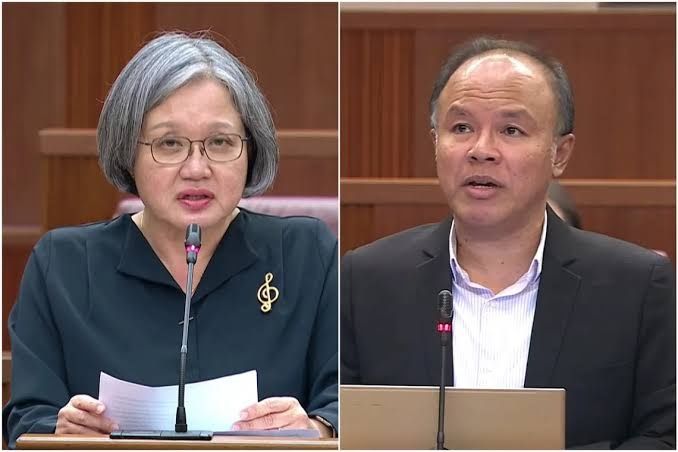
Singapore's Parliament has brought to an end a lengthy investigation into two Workers' Party leaders, Sylvia Lim and Faisal Manap, concluding that no further disciplinary action can be taken against them for misleading a parliamentary committee. The decision, announced by Leader of the House Indranee Rajah on July 7, marks the formal closure of a saga that has consumed the city-state's legislature for nearly four years, illustrating the complex intersection between parliamentary privilege, constitutional procedure, and the passage of time in legal accountability.
The case originated with former Sengkang GRC MP Raeesah Khan, who fabricated an anecdote about police conduct during a 2021 parliamentary speech. A subsequent parliamentary investigation uncovered that Khan had been coached to maintain her falsehood, with party leader Pritam Singh allegedly instructing her to "take her lie to the grave" during an August 2021 meeting. Both Lim and Faisal were present at that gathering but subsequently denied to the investigating committee that the matter had been discussed, effectively lying under parliamentary oath. The committee's findings implicated all three leaders, though it characterised Pritam's actions as substantially more culpable than those of his two colleagues.
Indranee's explanation of why penalties cannot now be imposed hinges on a specific constitutional constraint embedded in Singapore's Parliament (Privileges, Immunities and Powers) Act. Section 22 of this legislation limits Parliament's enforcement powers to offences committed in either the immediately preceding session or the last session of the previous parliamentary term. Since Lim and Faisal's misconduct occurred during the first session of the 14th Parliament, which dissolved following the 2025 general election, the newly constituted 15th Parliament that convened in September 2025 falls outside the temporal jurisdiction required to impose penalties. The legal architecture, designed to prevent indefinite exposure to parliamentary discipline, has effectively shielded the two leaders from formal consequences.
The resolution of this matter carries particular significance for Malaysian observers, given the structural similarities between Singapore's parliamentary system and Malaysia's own constitutional framework. Both nations employ Westminster-derived parliamentary privilege mechanisms, and both grapple with questions about how to enforce parliamentary discipline while respecting due process and the passage of time. The Singaporean precedent demonstrates how strict adherence to procedural timelines can sometimes produce outcomes that seem at odds with substantive justice, raising questions about whether Southeast Asian democracies should consider procedural flexibility in cases where delays stem from circumstances beyond individual culpability.
Pritam Singh, whose conduct was deemed the most serious, received substantially different treatment. Parliament referred his case to the public prosecutor for criminal investigation, allowing him to mount a legal defence with counsel. He was ultimately convicted by the District Court in February 2025 on charges of lying to Parliament, a conviction he appealed. The High Court upheld that conviction in December 2025, effectively confirming the parliamentary committee's findings that Lim and Faisal had indeed provided false testimony. Indranee acknowledged that these court judgments vindicated the committee's investigative work, even as legal timelines prevented Parliament from acting on its own findings.
The decision to delay action against Lim and Faisal while awaiting the conclusion of Pritam's criminal proceedings reflected a stated commitment to fairness, according to Indranee. Parliament chose not to impose penalties on the two junior leaders immediately after the committee's 2021 findings, instead opting to give them "the benefit of the doubt for the time being" pending the resolution of the more serious case against Pritam. This forbearance, Indranee suggested, was intended to ensure equitable treatment. However, the passage of time and the intervening election have now rendered that deferred justice impossible to deliver, illustrating a potential trap in parliamentary procedure: compassionate delay can inadvertently foreclose accountability.
Lim and Faisal both served as MPs for Aljunied GRC during the period of their alleged misconduct. The committee determined they played "subsidiary" roles compared to Pritam and had been "somewhat helpful to the committee, albeit in a limited way" during its investigation. This relative cooperation and lesser culpability influenced Parliament's initial decision to hold action in abeyance. Their rank-and-file status within the party, combined with evidence of limited wrongdoing compared to the party leader's alleged direction of Khan's cover-up, positioned them as junior participants in what the committee characterised as an institutional dishonesty problem rather than individuals acting in isolation.
Indranee indicated that under normal circumstances, she would have initiated formal proceedings under the Parliament (Privileges, Immunities and Powers) Act to address what she termed "dishonourable conduct and a serious contempt of Parliament." Typically, such proceedings move expeditiously, often resolving within the same parliamentary session in which the transgression occurs. The Singaporean Parliament's ordinary practice is to deal with privilege breaches swiftly rather than allowing them to languish. Yet the temporal structure of parliamentary democracy occasionally creates situations where offences discovered in one session cannot be addressed before a new Parliament convenes, as occurred in this instance.
Parliament retains one formal option for registering disapproval: it could pass a motion expressing regret at Lim and Faisal's conduct. However, Indranee argued that the House had already signalled its disapproval of parliamentary dishonesty with sufficient clarity when it passed a motion in January declaring Pritam unsuitable to serve as Leader of the Opposition. That motion, which followed his criminal conviction, represented Parliament's most recent and most authoritative statement regarding the severity with which it regards lying to Parliament and its committees. A further motion targeting only Lim and Faisal seemed redundant and would not materially add to Parliament's already-explicit condemnation.
The Workers' Party itself had addressed the matter during its internal proceedings on June 28, when party cadres voted to retain Pritam as party leader despite his conviction. That vote suggested members either disagreed with the legal verdict, valued Pritam's other contributions sufficiently to overlook the conviction, or viewed the outcome as an unfair result of political prosecution. The party's internal resolution effectively paralleled Parliament's formal closure of the matter, with both institutions concluding that further action was either impossible or inadvisable. The question of institutional reputation and member confidence, however, remained a separate consideration beyond Parliament's formal authority.
For Malaysia, this case illuminates persistent tensions within Commonwealth parliaments regarding accountability, procedure, and proportionality. While Singapore's strict adherence to constitutional timelines reflects respect for the rule of law, it also demonstrates how procedural safeguards designed to prevent abuse can sometimes shield culpable actors from consequences. Malaysian legislators might consider whether their own parliamentary privilege procedures contain similar temporal limitations, and whether those limitations serve democratic accountability or potentially frustrate it. The Singaporean experience suggests that decisions about when and how to pursue parliamentary discipline carry long-term consequences that may not be apparent at the moment of deferral.

