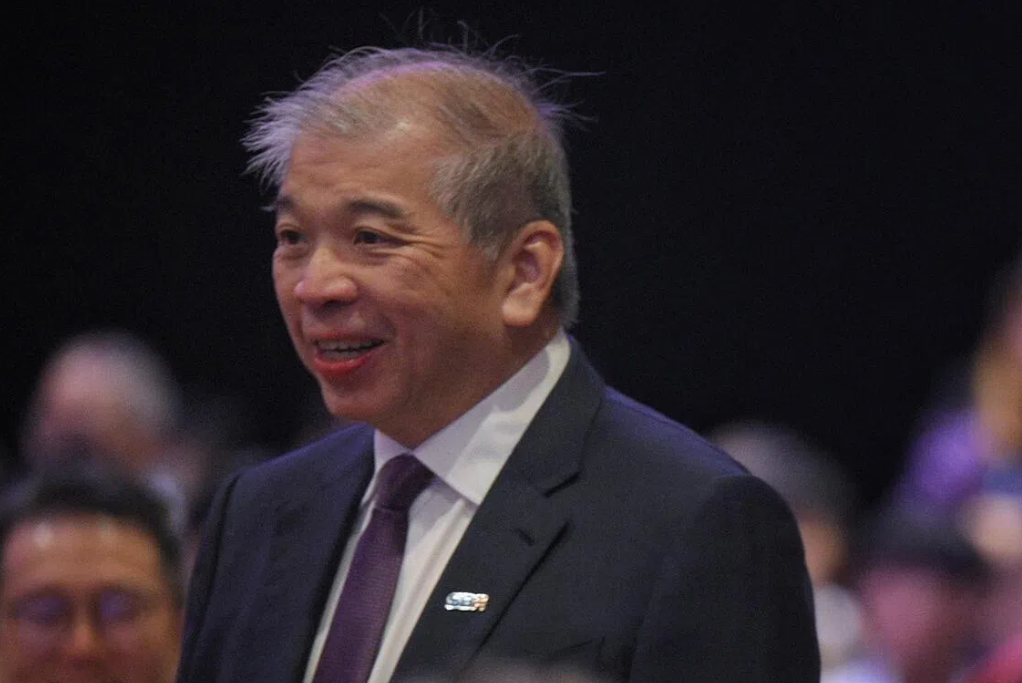
Singapore's prominent shipping magnate Teo Siong Seng and several other container manufacturing executives are now defending themselves against private civil litigation in the United States, following a criminal investigation into what prosecutors describe as a coordinated global price-fixing conspiracy. The legal challenge, mounted separately from federal criminal proceedings, exposes the alleged cartel members to significant financial liability as American businesses seek compensation for years of allegedly inflated shipping costs.
Two class-action suits were initiated in the District Court for the Northern District of California on June 2 and June 9, respectively. The plaintiffs—C.A. Spalding Company, a manufacturing firm, and Daybreak Express, a transportation company—are pursuing treble damages claims, meaning potential liability could reach three times the documented financial losses incurred by US businesses. This multiplier effect has transformed the legal jeopardy considerably beyond the underlying criminal accusations, creating a pathway for private sector claimants to recover damages directly.
The civil complaints reference a January 22 criminal indictment unsealed on May 19 by the US Department of Justice, which identified five major container manufacturers as participants in the alleged scheme. The named companies include China International Marine Containers (CIMC), Shanghai Universal Logistics Equipment, CXIC Group Containers, and Singamas Container Holdings—where Teo serves as chief executive. According to government filings, these four firms and two unnamed manufacturers collectively produce approximately 95 per cent of the world's standard dry containers, meaning the alleged conspiracy would have affected global supply chains substantially.
At the heart of the accusation lies an assertion that participating executives orchestrated production cutbacks to maintain artificially elevated prices. Rather than relying solely on informal understandings, the scheme reportedly involved concrete operational controls: manufacturing plants restricted the number of daily shifts and operating hours across container production lines. More remarkably, the conspirators allegedly installed 87 video surveillance cameras positioned across 49 production lines at their respective factories. These monitoring systems were ostensibly designed to enforce compliance with agreed-upon output limitations, suggesting an organised and deliberate effort to prevent any participant from cheating on the cartel arrangement.
The financial impact of these restrictions was dramatic. Investigators documented that a standard 20-foot shipping container—the workhorse of international trade—nearly doubled in price over the 2019 to 2021 period. The price climbed from approximately US$1,600 in 2019 to US$3,500 by 2021, representing a 119 per cent increase in just two years. For businesses dependent on container transport, particularly those shipping goods across Pacific routes to Asia, these escalating costs translated into substantially reduced profit margins or higher consumer prices.
The alleged beneficiaries of this scheme accumulated extraordinary profits during the period in question. CIMC's container manufacturing division, which recorded 137 million yuan in earnings during 2019, expanded operations dramatically and reported 1.99 billion yuan in profit the following year. By 2021, CIMC's container manufacturing profits had surged to 11.3 billion yuan—an eighty-fold increase from the 2019 baseline. Singamas Container Holdings experienced equally dramatic transformation, swinging from a US$110 million loss in 2019 to a US$186.8 million profit by 2021. These financial trajectories, prosecutors suggest, directly reflect the artificially elevated pricing environment the cartel maintained.
The named individuals facing liability include Mai Boliang, who transitioned from CIMC president and chief executive to chairman in August 2020; CIMC's vice-president Huang Tianhua; Wan Yongbo, who managed CIMC's operations; Li Qianmin, heading Shanghai Universal Logistics Equipment; and Zhang Yuqiang, chief executive of CXIC Group Containers. All five are Chinese nationals. Teo and Vick Ma, Singamas' marketing director, complete the roster of individuals targeted. Ma, also a Chinese national, was arrested in France in April and currently faces extradition proceedings to the United States.
Teo, 71, has responded to the legal entanglement by stepping back from multiple high-profile positions. He has taken leave from his role as executive chairman of Pacific International Lines, the regional shipping company. More significantly, he has absented himself from leadership positions at the Singapore Business Federation, where he serves as chairman; the Singapore Economic Resilience Taskforce; Enterprise Singapore's board; and the National University of Singapore, where he holds the title of pro-chancellor. The breadth of these absences reflects the reputational impact the allegations have exerted on his standing within Singapore's business community.
In May, Teo announced he would not seek re-election as Singapore Business Federation chairman when his term concludes on June 24, having only just assumed the position on May 20 following Lim Ming Yan's early departure to chair Changi Airport Group. His previous tenure at the apex business chamber, spanning from 2014 to 2020, encompassed three consecutive two-year terms. The relatively abrupt conclusion of his latest SBF engagement starkly contrasts with his long tenure during the preceding period, underscoring how substantially the indictment has altered his institutional position.
Teo issued a single public statement on May 28, explaining his decision to step back from various roles. "I have proactively decided to take these leaves of absence to afford myself sufficient time to attend to this matter, and for the best interests of the aforementioned organisations," he stated, offering no substantive response to the underlying allegations. He declined further comment when questioned directly about the civil lawsuits. Court records indicate that summonses were issued on June 8 and 11, requiring all named parties to respond formally within 21 days or risk default judgments being entered against them.
The civil litigation represents a significant escalation in consequences beyond the criminal prosecution. While criminal proceedings determine questions of guilt and potential imprisonment, the civil suits—which employ the lower standard of proof employed in civil cases—permit American businesses to recover monetary damages directly. The treble damages provision means potential liability could reach hundreds of millions of dollars if courts find the allegations substantiated. For Southeast Asian shipping companies and logistics firms that purchased containers during the alleged cartel period, the outcome of these lawsuits may provide insights into their own potential exposure to similar claims.

