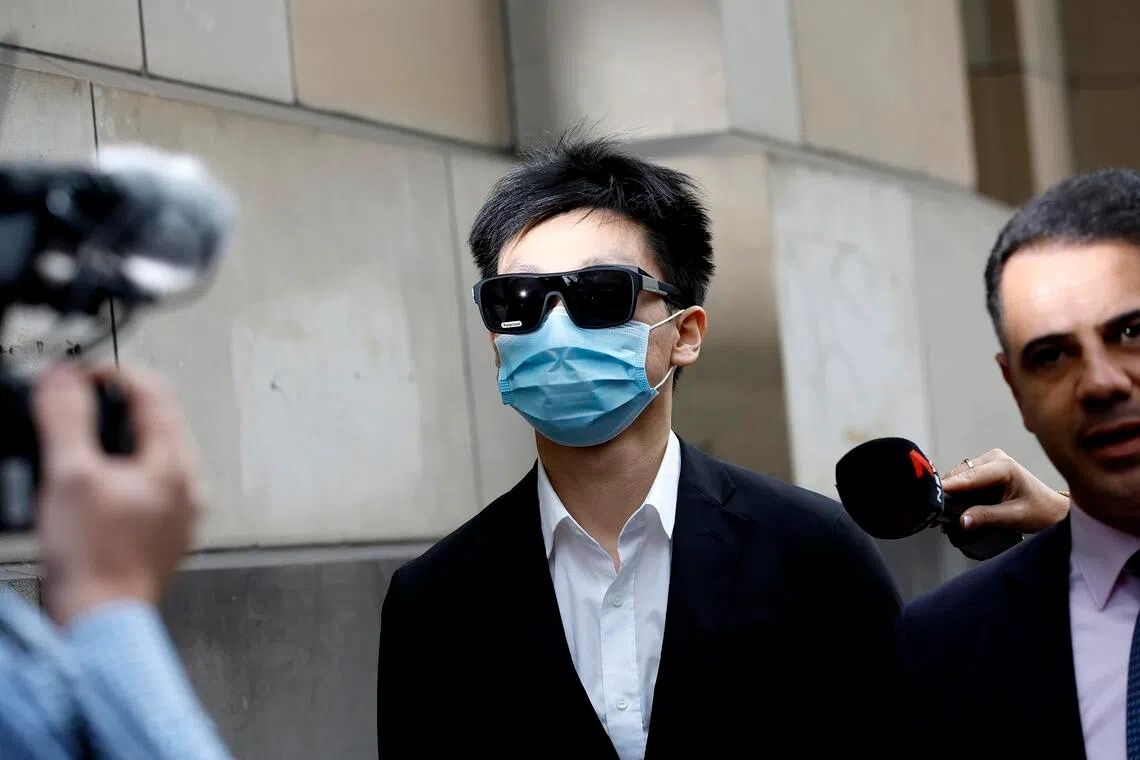
A trainee doctor from Singapore has pleaded guilty to one of Australia's most serious cases involving the secret recording of colleagues in hospital facilities. Ryan Cho, 28, faced Melbourne Magistrates Court on Thursday to enter guilty pleas on 13 charges relating to the covert filming of more than 500 workers across three major hospitals in the Australian city. The case has drawn significant attention both locally and internationally, raising serious questions about workplace safety, duty of care, and screening procedures for medical professionals working in institutional settings.
Choconfessed to recording colleagues at the Austin Hospital, Royal Melbourne Hospital, and the Peter MacCallum Cancer Centre during his employment between 2021 and 2025. His activities extended beyond hospital premises, with admitted recordings of individuals who shared residences with him throughout that period. The scope of his offending became apparent only after arrest, when investigators recovered electronic devices containing more than 10,000 video and image files. Among the devices seized were a laptop, hard drive, and mobile phone that together documented the systematic violation of hundreds of individuals' privacy during intimate moments.
Cho's exposure came in July 2025 when staff at the Austin Hospital discovered a mobile phone concealed in a mesh bag within a staff toilet, actively recording. This discovery triggered a police investigation that would ultimately result in 910 charges being laid against him—a figure that was subsequently consolidated into the 13 counts to which he pleaded guilty. The consolidation, known as "rolling up" charges, is a procedural mechanism that allows courts to manage cases involving numerous similar offences without requiring separate trials for each incident. Despite the reduced number of formal charges, the underlying criminal conduct remained extensive and systematic.
His medical registration was suspended by Australian health regulators in 2025 following his arrest, effectively ending his career in the medical profession. Cho had undertaken his medical studies at Monash University and had been residing in Australia since 2017, having been granted permanent residency just months before his apprehension. The timing of his residency approval, granted in April 2025, adds another troubling dimension to the case, suggesting that existing background check and screening mechanisms may not have identified warning signs or red flags that could have prevented the subsequent offences.
Magistrate Michelle Mykytowycz presided over the brief hearing, which lasted under 30 minutes. During proceedings, she acknowledged the presence of numerous victims in the courtroom and others participating via video link, demonstrating the far-reaching impact of Cho's actions. The magistrate confirmed that sufficient evidence existed to secure conviction and asked Cho to enter his formal plea. Standing before the court in formal attire—a black suit with white shirt and tie—Cho stated "Guilty" to all 13 charges. His father, Wilson Cho, a logistics manager from Singapore, observed the proceedings from the back of the courtroom. In previous court appearances, the elder Cho stated he had been unaware of his son's behaviour prior to the charges and suspension.
Chohas been released on bail guaranteed by an A$50,000 surety lodged by his parents in 2025, with his bail extended through to a three-day pre-sentence hearing scheduled to commence on November 23 at Melbourne's County Court. This hearing will receive impact statements directly from victims, allowing them to articulate the profound harm and trauma caused by the violations. His barrister, Julian McMahon, previously characterised his client as a "complicated young professional man" with what would "almost certainly be recognised as complex psychological issues." Despite acknowledging these psychological dimensions, the seriousness of the offences and the scale of victimisation provide little mitigation in the eyes of the court.
The bail conditions imposed on Cho reflect the severity with which authorities view his conduct. He must report to police three times weekly, maintain no contact whatsoever with witnesses or potential witnesses, refrain from attending hospitals except in genuine emergencies and only with prior police approval, and surrender access to photographic or video equipment outside his residence. Additionally, he has been required to surrender his passport and undergo appropriate medical treatment. His parents have pledged to relocate to Melbourne for the duration of proceedings to ensure compliance with these stringent conditions, demonstrating their commitment to supporting both the legal process and their son's compliance obligations.
The case carries profound implications extending well beyond Cho's individual culpability. Approximately 100 victims, predominantly women, have filed human rights complaints against the three hospitals, alleging systemic failures in sexual harassment and workplace discrimination. These complaints have been lodged with the Australian Human Rights Commission, suggesting that institutional negligence may have facilitated or enabled Cho's sustained offending. Legal representatives from Carbone Lawyers have indicated that additional hospital employees are expected to join the human rights action, potentially expanding both the financial and reputational costs borne by the institutions involved.
The situation raises critical questions for healthcare institutions across the Asia-Pacific region regarding vetting procedures, workplace monitoring, and duty of care obligations toward staff. Medical professionals occupy positions of significant trust, necessitating rigorous background checks and behavioural screening that may currently be insufficient. For Malaysian healthcare institutions and regulators, this case serves as a cautionary example of gaps in professional screening mechanisms and the importance of implementing robust workplace safety protocols. The case also highlights how permanent residency and visa approvals, while based on available intelligence, may fail to detect individuals with hidden predatory behaviours who have not yet committed offences in their country of origin.
Singapore's Ministry of Health and associated professional regulatory bodies have likely observed this case closely, given its implications for medical professional standards and international practitioner credentials. When Singaporean medical graduates work abroad, they remain ambassadors of their home country's medical profession. This case, therefore, carries reputational consequences for Singapore's medical education institutions and the broader healthcare sector. The discovery that a Monash University medical graduate engaged in such systematic violations also raises questions about curriculum-based ethics training, behavioural assessment during studies, and whether psychological screening should be more comprehensively integrated into medical selection and monitoring processes.
The pre-sentence hearing in November will provide further details regarding Cho's motivations and psychological state. Sentencing in such cases typically involves balancing factors including the duration and systematic nature of the offending, the number of victims, the level of violation of privacy, the psychological harm caused, and any mitigating factors such as cooperation with authorities or expressions of genuine remorse. In Australia, sexual offences involving voyeurism and the creation of intimate images without consent carry substantial custodial sentences, with aggravating factors such as the scale of this case likely to result in significant imprisonment. The outcome will set precedent for similar cases and may influence how courts weigh the seriousness of technological violations of privacy in institutional settings.
For Southeast Asian healthcare systems and professional regulatory bodies, this case underscores the necessity of implementing enhanced screening mechanisms for medical professionals, particularly those transferring internationally. It demonstrates that even individuals without prior criminal records can represent serious institutional and safety risks. The case also illustrates how workplace safety extends beyond physical security to encompass protection from predatory behaviour by colleagues, and how institutional accountability mechanisms must be sufficiently transparent and responsive to facilitate victim support and institutional learning. As sentencing approaches, the broader implications for healthcare governance and professional standards across the region will become increasingly apparent.

