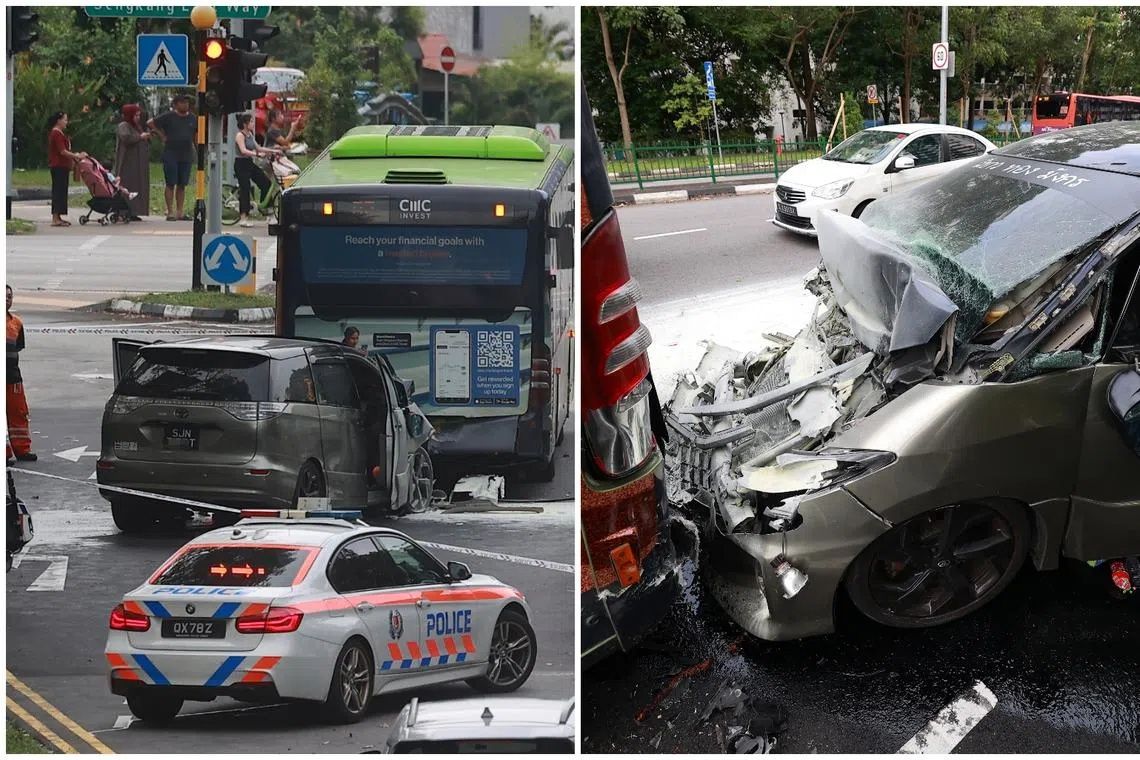
Singapore is grappling with an alarming surge in drug-impaired driving incidents, with medical professionals now sounding the alarm about a particularly insidious threat: anaesthetic-laced electronic vapes that impair drivers as severely as alcohol but remain largely undetected by standard roadside testing. The problem has become so acute that traffic fatalities reached a 10-year high in 2025, with 149 deaths recorded compared to 141 in 2016, underscoring a deepening public safety crisis on the island's roads.
The danger crystallised tragically in May when a 28-year-old woman died following a collision in Punggol involving a driver under the influence of etomidate, an intravenous anaesthetic that has been repurposed for recreational consumption through modified vaporisers called Kpods. The incident revealed that 42 vapes and over 1,200 pods, some containing etomidate, were discovered in the vehicle. Both the driver and the deceased passenger tested positive for etomidate, highlighting how this substance poses risks not only to those behind the wheel but also to innocent passengers.
Parliamentary disclosure in February revealed the staggering scale of the problem. Between 2023 and 2025, authorities documented 38 traffic accidents linked to drug and etomidate use, resulting in 19 fatalities. The trajectory worsened dramatically through 2025 alone, which accounted for 29 of those 38 accidents. Of particular concern, 18 involved etomidate while seven involved combinations of both drugs and etomidate. This concentrated spike suggests the problem is not merely persisting but accelerating, with the phenomenon potentially emerging faster than enforcement mechanisms can adapt.
Clinical toxicologist Jonathan Tang from the National University Hospital's Emergency Medicine Department has treated patients bearing traumatic injuries from accidents involving etomidate-laced vapes, and his assessment carries particular weight given his professional exposure to the consequences. Tang emphasises that etomidate mimics alcohol intoxication in its effects on driving capability, impairing reaction times, hazard perception, and vehicular control. The anaesthetic does not merely compromise the driver's physical capabilities; it also triggers psychiatric manifestations including depressed mood, heightened aggression, and impulsivity—factors that further undermine safe vehicle operation and create compounding risks for all road users.
Three recent court cases from June exemplify the diverse manifestations of this crisis. Mohamed Firdouz Mohamed Akram, a 36-year-old charged on June 19, allegedly consumed methamphetamine before causing injuries to two people in a collision with a taxi in Kallang. After the accident, he abandoned his vehicle and fled, abandoning responsibility for the consequences of his actions. Police discovered drugs, vaporisers, and weapons in his vehicle, suggesting a broader pattern of risky behaviour. Similarly, Puah Zhe Cong, 34, faced charges of dangerous driving causing death after allegedly driving under etomidate's influence, resulting in one death and two injuries. A third defendant, Sivakandesh, 32, was charged after his Mercedes-Benz crashed into a rubbish chute in Yishun Street 11 while allegedly impaired by methamphetamine, striking bollards and a parked vehicle before coming to rest.
Legal penalties for drug-impaired driving exist but may require calibration to match the severity of the emerging threat. First-time offenders face up to one year imprisonment, fines reaching S$10,000, or both, while repeat offenders confront sentences up to two years with fines up to S$20,000. However, these measures presume detection—a significant challenge when substances like etomidate lack the established detection protocols that alcohol has benefited from for decades. The question of enforcement efficacy becomes critical when considering that etomidate use can be nebulous to identify during roadside assessments unless officers specifically suspect it.
Coordinating Minister for National Security K. Shanmugam outlined in Parliament that when traffic accidents occur, the Traffic Police assess motorists for impaired driving through standard protocols. If drug or etomidate use is suspected, blood tests become mandatory. However, the rising accident statistics suggest this reactive approach may be insufficient. The fact that police discovered the connection between etomidate use and accidents only after collisions occurred indicates that preventive detection remains elusive.
For Southeast Asian readers, Singapore's experience carries instructive implications. The emergence of etomidate-laced vapes as a driving hazard represents a novel public health challenge that other countries in the region may encounter as the product spreads beyond Singapore's borders. Malaysia, with significantly higher traffic fatality rates than Singapore, may face particular vulnerability should this trend proliferate. The mechanism of etomidate's effects—causing impairment while remaining less visible than traditional drug or alcohol use—suggests that enforcement strategies across the region may require recalibration to address this emerging category of impairment.
The deterioration in Singapore's road safety metrics extends beyond drug-related incidents. Injured persons increased from 9,342 in 2024 to 9,955 in 2025, indicating that the road environment has become measurably more hazardous across multiple dimensions. Traffic Police have emphasised that driving under the influence of any intoxicating substance represents not merely a personal choice but an act of extreme recklessness that endangers every other road user. The medical establishment, through figures like Tang, has reinforced this message by documenting the physiological mechanisms through which such impairment translates into preventable tragedy.
The intersection of evolving substance use patterns and outdated enforcement frameworks represents the core challenge Singapore now confronts. Traditional roadside assessments, designed to detect alcohol or recognise conventional drug indicators, may fail to identify etomidate impairment, particularly since users may not display the obvious behavioural markers associated with other intoxicants. The tragedy in Punggol occurred despite a collision—suggesting that if accidents involving impaired drivers sometimes go undetected even after occurring, the number of successful unreported instances of drug-impaired driving remains unknown and potentially substantial.
Moving forward, Singapore's approach will likely require integration of more sensitive detection mechanisms, potentially including expanded blood testing protocols for accident scenes and perhaps retrospective analysis of serious accidents to identify impairment patterns. The emerging threat also underscores the need for public education campaigns that extend beyond traditional drunk driving messaging to encompass newer forms of impairment. For regional observers, Singapore's current crisis serves as an early warning system—an opportunity to anticipate challenges and implement preventive measures before such patterns become established elsewhere.

