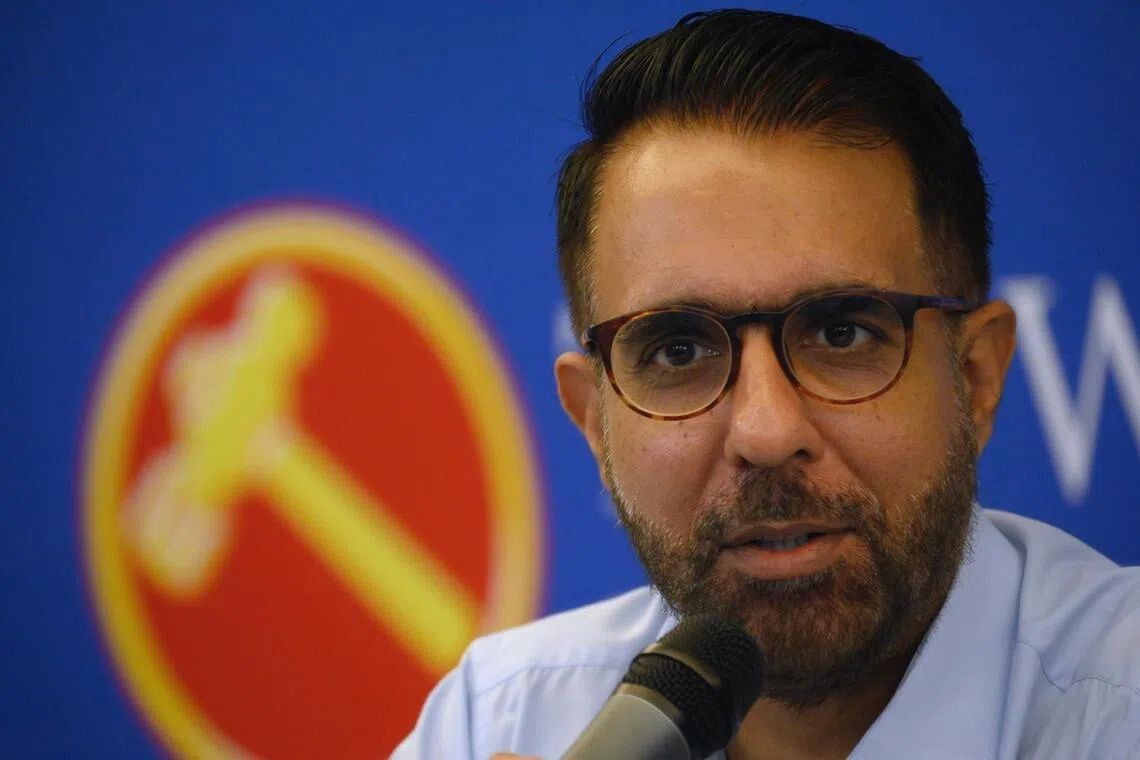
Singapore's Workers' Party confronts an unprecedented internal crisis as a faction of its 100-plus cadres mobilises to challenge Pritam Singh's leadership at elections scheduled for June 28, marking the first serious threat to his eight-year tenure as secretary-general. The push for change has gained momentum following a High Court decision in December 2025 that upheld his conviction for providing misleading information to a parliamentary committee, a verdict that strikes at the heart of the opposition party's defining commitment to integrity and ethical governance.
The gathering storm reflects deeper anxieties within the party about how Pritam's legal troubles and administrative missteps have compromised the Workers' Party's brand as an honest alternative to the ruling People's Action Party. A group of 25 cadres, including former central executive committee members and election candidates, formally petitioned for a special conference in December 2025 where they will demand accountability from Pritam and push for his resignation, with a secret ballot to determine his fate should he refuse to step aside voluntarily. This procedural move, coupled with an ordinary cadres' conference on the same day dedicated to leadership elections, creates a two-stage process that could result in Pritam's removal or, if he narrowly survives the first hurdle, invite a fresh challenger to emerge at the second meeting.
Potential rivals have not yet publicly declared their candidacy, but senior party figures including Aljunied GRC MP Gerald Giam, Hougang MP Dennis Tan, and Sengkang GRC MPs He Ting Ru and Jamus Lim have been quietly approached by disgruntled cadres according to party insiders who requested anonymity to avoid disciplinary repercussions. The fact that several of these individuals served on the disciplinary panel that found Pritam violated the party's constitution adds an extra layer of tension, signalling that the party's institutional processes themselves have become sites of factional dispute. The uncertainty persists because potential challengers appear to be waiting to gauge sentiment at the first meeting before committing, a calculation that mirrors how internal party dynamics will likely determine whether a credible alternative emerges.
The root of the cadres' discontent traces to Pritam's mishandling of the Raeesah Khan affair, a scandal that has become synonymous with failed leadership in the eyes of many party members. Khan, the former Sengkang GRC MP, fabricated a story about a police station encounter during parliamentary proceedings in August 2021, but did not admit to the falsehood until November that year. Pritam was found by both Parliament's committee of privileges and subsequently by the courts to have guided Khan in perpetuating her lie rather than encouraging her to immediately clarify the record. For a party that has built its political identity on being trustworthy and principled, the perception that its leader allowed and facilitated dishonesty represents a catastrophic failure of leadership judgment and personal integrity.
This conviction carries particular significance in Malaysian and broader Southeast Asian contexts where opposition parties must constantly defend themselves against accusations of untrustworthiness and instability. The Workers' Party's entire electoral brand—that voters can entrust them with power because they operate by different ethical standards than the ruling establishment—now appears compromised. Several cadres articulated this concern starkly: the party risks losing moral authority precisely when it should be showcasing itself as a responsible governing alternative. If the party's own leader stands convicted of deception, what credibility remains when it criticises government accountability or transparency?
Fortifying Pritam's precarious position is a second recent blow: Prime Minister Lawrence Wong removed him as Leader of the Opposition in January 2026, a title that conferred parliamentary prominence and symbolic authority. Rather than nominating an alternative MP to assume the role—which PM Wong invited them to do—the party instead closed ranks behind Pritam, a decision some cadres privately view as self-sabotaging. By declining the opportunity to maintain institutional presence and voice, the Workers' Party arguably diminished its parliamentary relevance and handed the government a public relations victory. This strategic misstep has intensified questions about Pritam's judgment in high-stakes decisions, compounds the perception of a leadership in crisis, and adds electoral and institutional grievances to the personal and ethical criticisms already mounting against him.
The party's performance in the 2025 general election has compounded internal dissatisfaction. Despite fielding what many cadres believed was a competitive slate of candidates, the Workers' Party failed to expand its parliamentary footprint—a particular disappointment given the party's organisational strength and recent improvements in electoral messaging. Additionally, Pritam's late decision to withdraw from Marine Parade-Braddell Heights GRC on Nomination Day struck some members as indicative of strategic confusion and wavering confidence. Taken together, these electoral disappointments suggest a leadership lacking direction and tactical acuity, concerns that resonate beyond internal party debates into questions about whether the Workers' Party can genuinely aspire to larger governance responsibilities.
The pivotal question now centres on the stance of Low Thia Khiang, the former party chief who led the organisation from 2001 to 2018 and achieved its historic breakthrough in winning a Group Representation Constituency in 2011. Though Low remains on the party's central executive committee, rumours suggest he has withdrawn his support for Pritam, with reports indicating he voted against him during the CEC meeting discussing the disciplinary panel's findings. Low's considerable influence over party cadres—many of them veterans who respect his leadership record and strategic vision—means his endorsement could prove decisive. A former cadre estimated that combining the roughly 30 unhappy cadres with those inclined to follow Low's lead could provide sufficient votes to unseat Pritam, a calculus that explains why all party attention currently focuses on whether and how Low will deploy his influence.
Historically, Low himself confronted a leadership challenge at the 2016 party elections when then-Aljunied GRC MP Chen Show Mao mounted an unsuccessful bid against him, backed by several veterans now advocating for Pritam's removal. That earlier challenge, though it failed, demonstrated that the Workers' Party does possess precedent and machinery for contested leadership elections. However, the scale and intensity of current discontent appears more significant, driven not merely by factional jockeying but by genuine alarm about the party's compromised integrity and stunted electoral growth. The coming weeks will likely see intensive behind-the-scenes negotiations as potential challengers assess their viability and as Low signals, directly or indirectly, where his sympathies and commitments lie.
The implications extend beyond Singapore's domestic politics into the broader Southeast Asian context of opposition party resilience and democratic competition. A Workers' Party fractured by internal conflict and leadership questions would diminish the region's most organised and credible non-governing political force, potentially embolding ruling parties across Southeast Asia to take a harder line against opposition movements. Conversely, should the Workers' Party successfully navigate this crisis by either rejuvenating Pritam's leadership or transitioning to new, uncompromised leadership, it could demonstrate that opposition parties can hold themselves to exacting standards of accountability and renewal. Malaysian readers, in particular, watching from a nation where opposition politics has experienced comparable internal turbulence and credibility challenges, will recognise in the Workers' Party's dilemma universal questions about how opposition movements sustain themselves amid personal scandal, electoral disappointment, and generational transitions in leadership.
As June 28 approaches, the Workers' Party stands at a crossroads that will determine not merely who leads it, but whether it can reclaim the moral authority essential to its political identity and long-term viability. The outcome depends substantially on whether a credible challenger emerges, whether Low throws his weight behind reform, and ultimately on the cadres' collective judgment about whether Pritam Singh, despite his vulnerabilities, remains the figure best positioned to stabilise the party and chart a path toward renewed credibility and electoral expansion. The votes cast on that day will reverberate through Singapore's political landscape and offer lessons for opposition movements throughout Southeast Asia grappling with similar challenges of integrity, leadership renewal, and organisational resilience.

