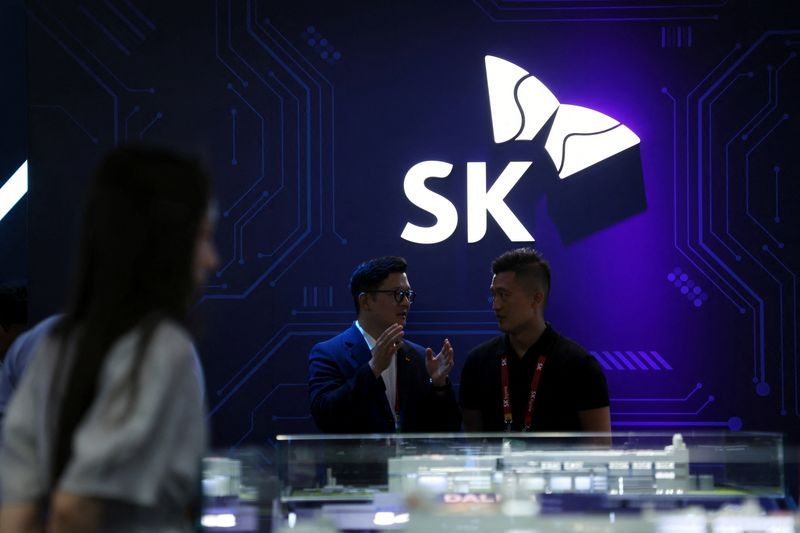
South Korea's memory chipmaker SK Hynix is preparing to undertake what could become the largest-ever American Depositary Receipt offering, planning to raise up to 45.45 trillion won, equivalent to $29.43 billion, through a Nasdaq listing scheduled for July 10. The ambitious capital raise underscores the company's determination to capitalise on surging global demand for artificial intelligence processors and secure its competitive footing against rival manufacturers scrambling to meet orders from technology giants.
The company intends to issue 17.79 million new shares to support the ADR listing, with each ADR representing ten common shares. Led by major underwriters including BofA Securities, Citigroup Global Markets, Goldman Sachs and JP Morgan Securities, the offering represents a significant validation of investor appetite for exposure to the semiconductor sector's AI-driven growth trajectory. The final amount may fluctuate depending on bookbuilding results, though completion at the upper end of the indicated range would decisively eclipse Alibaba's previous record of $21.8 billion from its 2014 New York debut.
Capital deployment from this offering has been precisely earmarked for strategic infrastructure investments. SK Hynix plans to construct an advanced chip fabrication facility in Yongin, supplemented by an upstream advanced packaging production centre in Cheongju. These facilities represent crucial expansions in the company's manufacturing footprint, enabling it to respond to explosive demand for specialised memory technologies. The company also intends to acquire cutting-edge chipmaking equipment, notably Extreme Ultraviolet Scanners, which represent some of the most technologically sophisticated—and expensive—tools in semiconductor manufacturing, essential for producing next-generation chips at the smallest possible dimensions.
The timing of SK Hynix's capital raise reflects its emergence as perhaps the most visible winner of the artificial intelligence revolution unfolding across technology sectors. The company has secured prominent supply relationships with major customers including Nvidia and Google, positioning itself as an indispensable component supplier for AI infrastructure buildouts occurring globally. High-bandwidth memory chips, a key SK Hynix product line, have become critical bottlenecks in AI system deployments, driving unprecedented demand and pricing power for capable manufacturers.
This newfound dominance has manifested in SK Hynix's market valuation trajectory. Earlier this month, the company surpassed Samsung Electronics to become South Korea's most valuable publicly listed company, a symbolic milestone reflecting the semiconductor industry's shifting hierarchies. Where Samsung has historically dominated Korean market capitalisation rankings, SK Hynix's specialisation in memory technologies—particularly those demanded by AI applications—has propelled it to the forefront of investor attention and equity valuations.
The ADR listing strategy itself reflects deliberate financial architecture decisions. American Depositary Receipts enable international investors, particularly those managing US-domiciled funds, to acquire exposure to SK Hynix without navigating Korean securities markets directly. This structural convenience typically commands premium valuations, allowing companies to raise larger sums than equivalent domestic offerings might achieve. For SK Hynix, accessing US capital markets through ADRs expands the potential investor base significantly, particularly among American institutional investors managing multi-billion-dollar technology and semiconductor sector allocations.
The semiconductor industry's capital intensity makes such large-scale fundraising a strategic necessity rather than mere financial optimisation. Advanced chip fabrication facilities cost upwards of $10 billion to construct and equip, and maintaining technological competitiveness requires perpetual equipment upgrades and reinvestment cycles. SK Hynix's decision to fund expansion through equity markets rather than debt reflects confidence in sustained profitability and growth, signalling management conviction that AI-driven demand will persist at elevated levels through the forthcoming years.
For Malaysian and Southeast Asian investors and technology sectors, SK Hynix's expansion carries significant implications. Enhanced semiconductor manufacturing capacity in South Korea may influence regional chip supply dynamics and pricing structures. Malaysian semiconductor firms, many of which occupy positions in electronics value chains serving global technology companies, could experience either intensified competition or expanded subcontracting opportunities depending on market developments. The broader message—that pure-play AI-exposed semiconductor companies command exceptional market valuations—has influenced technology investment patterns across the region.
SK Hynix's positioning as a critical AI infrastructure supplier also illustrates how technological disruption creates concentrated wealth generation in narrowly focused companies. While Samsung Electronics remains economically significant, its diversified portfolio across consumer electronics, displays and telecommunications means it captures a smaller proportion of AI-driven value creation compared to SK Hynix's concentrated memory chip focus. This dynamic has become particularly pronounced as artificial intelligence applications have transitioned from academic curiosity to commercial deployment requiring massive capital expenditures in processing and memory infrastructure.
The regulatory approval and smooth execution of this ADR offering would represent a validation of South Korean fintech infrastructure and government policies supporting technology sector growth. Successfully executing a record-breaking equity offering demonstrates the sophistication of Korean capital markets and their integration with global financial systems. For other technology companies contemplating major capital raises, the SK Hynix precedent establishes a template for accessing US investment pools while maintaining primary headquarters and manufacturing operations in South Korea.
Looking ahead, the success of SK Hynix's capital raise will partly depend on macroeconomic conditions and sustained demand for AI infrastructure. Technology sector investors have grown cautious following previous cycles of over-investment and subsequent corrections. However, the structural nature of AI demand—driven by enterprise computing investment rather than consumer electronics cycles—suggests more durable demand patterns than previous semiconductor booms. This fundamental distinction explains why even cautious investors have remained engaged with pure-play AI-exposed chip manufacturers.

