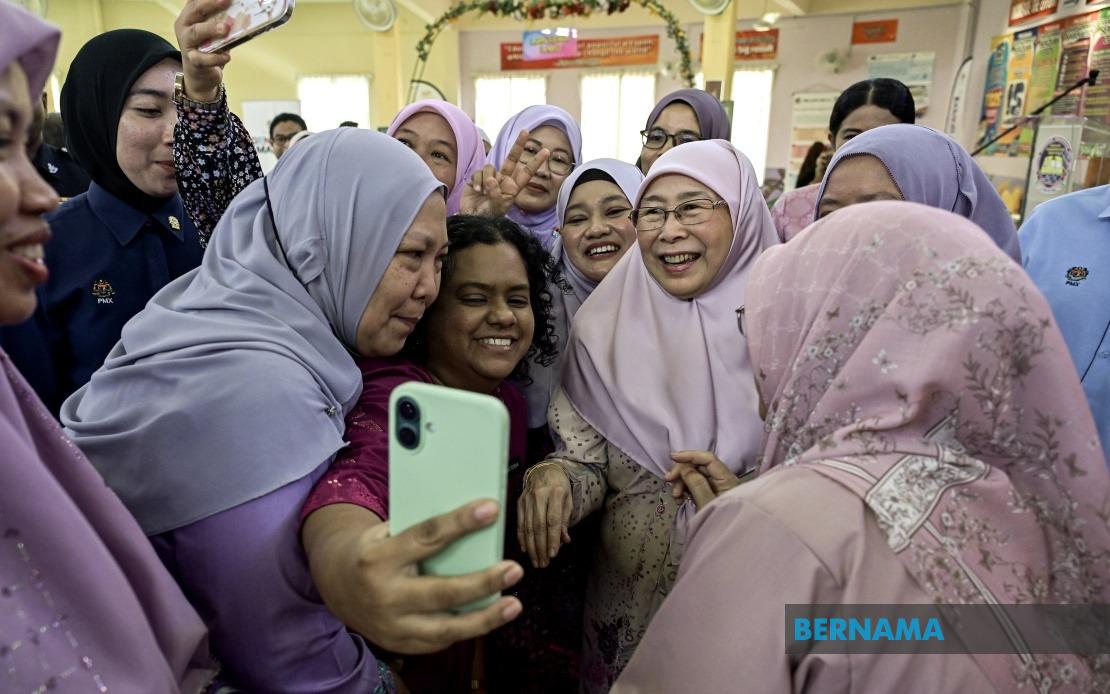
Sekolah Menengah Kebangsaan Seri Mulia in Kuala Lumpur has received RM300,000 in parliamentary allocation designated for comprehensive facility upgrades and student safety initiatives, according to an announcement by Bandar Tun Razak Member of Parliament Datuk Seri Dr Wan Azizah Wan Ismail. The funding, drawn from the constituency's parliamentary allocation, represents a significant intervention for an educational institution that has largely operated without substantial infrastructure improvements for more than two decades.
Dr Wan Azizah underscored that the school's long-standing deferred maintenance and obsolescent facilities necessitated urgent attention. During remarks made at the school's Academic Excellence Awards ceremony, the Bandar Tun Razak MP explained that the allocation would facilitate both routine maintenance operations and more ambitious modernisation projects designed to bring the school's infrastructure into alignment with contemporary standards. The significance of this investment becomes apparent when considering the cumulative impact of 23 years without comprehensive upgrades—a timeframe spanning major technological and pedagogical shifts in secondary education.
Student welfare emerged as the paramount concern driving the allocation's design. The MP placed particular emphasis on the installation of safety grills throughout the facility, measures implemented to prevent accidents and safeguard student well-being during school hours. Beyond the physical infrastructure dimension, Dr Wan Azizah highlighted the administration's awareness of mental health considerations affecting student populations, indicating that funding decisions had incorporated broader student support frameworks rather than purely mechanical facility repairs. This holistic approach reflects evolving understanding of school safety that extends beyond traditional physical barriers to encompass psychological and emotional security.
The safety grills installation, while representing additional expenditure beyond basic maintenance allocations, received full approval from relevant authorities. Dr Wan Azizah stressed the non-negotiable priority assigned to student safety, a sentiment that would resonate across Malaysian education stakeholders grappling with ongoing debates about school infrastructure adequacy and student protection protocols. The approval process for these enhanced safety measures suggests coordination between parliamentary representatives, school administration, and regulatory bodies responsible for educational facilities oversight.
The timing of this announcement coincided with SMK Seri Mulia's Academic Excellence Awards ceremony, an occasion designed to recognise student achievements and reinforce institutional commitment to academic performance. The ceremony served to celebrate students who had demonstrated sustained commitment to their studies, disciplined approaches to learning, and exemplary conduct—values the school sought to perpetuate across its cohort. By linking facility investment announcements to academic recognition events, the school administration and parliamentary representative connected infrastructure improvements to educational outcomes, framing physical upgrades as enabling conditions for sustained excellence.
Dr Wan Azizah's role as Bandar Tun Razak MP, coupled with her position as wife of Prime Minister Datuk Seri Anwar Ibrahim, situated this allocation within broader governmental commitment to educational facility improvements. Her participation in the ceremony provided visible leadership endorsement for the school's development priorities, signalling to the institution and its stakeholder community that the school commanded attention at multiple governmental levels. The presence of Prime Minister's political secretary Datuk Azman Abidin further underscored the significance attributed to this facility initiative.
From a Malaysian education policy perspective, this allocation illustrates ongoing tensions between demand for facility improvements and available government resources. Secondary schools across the country face varied infrastructure challenges, with many institutions operating with deferred maintenance backlogs. The RM300,000 allocation to SMK Seri Mulia, while substantial for a single school, represents the type of targeted parliamentary funding approach increasingly utilised to address infrastructure gaps. This model relies on individual MPs directing constituency allocations toward priority projects, enabling more granular responsiveness to local needs than centralised budgetary mechanisms alone.
The 23-year interval since SMK Seri Mulia's last comprehensive upgrading raises broader questions about maintenance cycles and facility lifecycle management in Malaysian schools. Extended periods without major interventions typically result in cumulative degradation affecting multiple systems simultaneously—structural elements, electrical installations, plumbing networks, and safety apparatus. Addressing this backlog requires coordinated approaches addressing not merely visible deficiencies but underlying infrastructure integrity, a consideration likely informing the allocation's scope.
Student safety initiatives reflected in the safety grills installation connect to national conversations regarding school security and student protection, particularly following high-profile incidents affecting schools in Malaysia and the region. While the primary safety focus appeared to rest on accident prevention rather than security threats per se, the investment acknowledges institutional responsibility for maintaining secure environments conducive to learning. The explicit allocation toward safety-related expenditure, rather than expecting these costs to compete with other maintenance priorities, signals institutional priority alignment.
The integration of mental health considerations into facility planning represents notable evolution in Malaysian secondary school administration. Traditional approaches prioritised physical infrastructure and academic resources; contemporary frameworks increasingly recognise that physical environments significantly influence psychological well-being. By directing funding toward safety infrastructure while acknowledging mental health dimensions, SMK Seri Mulia's leadership demonstrated awareness of interconnected factors affecting student development and institutional effectiveness.
Looking forward, this allocation provides SMK Seri Mulia with resources to address accumulated infrastructure deficits and implement safety enhancements that position the school more competitively within the educational landscape. For students, parents, and educators at the institution, the funding represents tangible recognition of their school's importance and validation of their efforts. For Malaysian education administrators more broadly, the example illustrates how parliamentary allocations, when strategically deployed, can catalyse facility improvements that benefit entire school communities.

