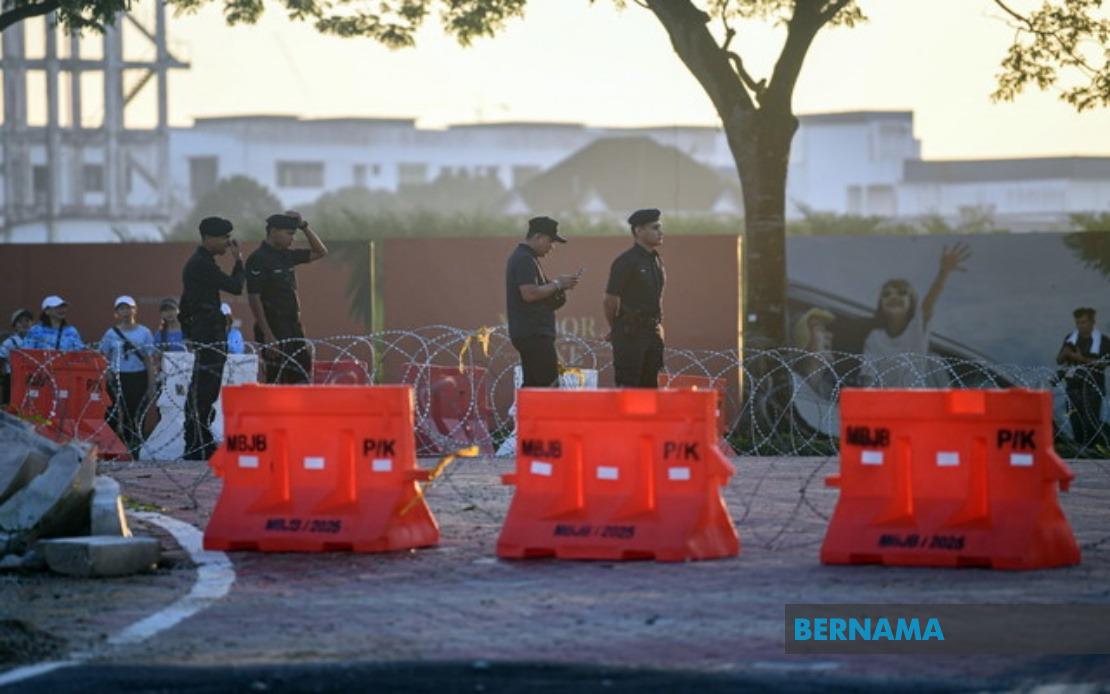
The 16th Johor State Election took its first formal step on June 27 as nomination centres across the state received candidates without disruption, aided by clear morning conditions and robust security arrangements that maintained decorum throughout the day. The Election Commission deployed personnel to all 56 nomination processing centres (PPC) distributed across Johor, overseeing the orderly receipt of nomination documents from 9am through 10am as parties finalised their candidate selections for the 56-seat state assembly.
The atmosphere across nomination venues reflected the competitive nature of the electoral contest, with party supporters beginning to mobilise from as early as 7.30am to demonstrate backing for their preferred candidates. Security personnel maintained a visible presence at each centre, tasked with ensuring that the nomination process remained peaceful and procedurally sound despite the concentrated activity and partisan energy. The Election Commission's preparatory work proved effective in channelling what could have been chaotic scenes into an orderly succession of submission procedures.
Weather patterns favoured the day's proceedings, with the Malaysian Meteorological Department forecasting predominantly dry conditions throughout Johor's morning hours. The agency did warn, however, that several districts would likely experience thunderstorms during the afternoon period, though these developments did not interfere with the morning's nomination activities. The absence of severe weather complications allowed organisers and participants to focus entirely on procedural matters rather than managing climate-related disruptions.
The electoral architecture for this contest encompasses a substantial voter base that underscores Johor's significance within Malaysia's political landscape. The Election Commission registered a total of 2,727,926 eligible voters across the state, comprising 2,703,175 ordinary citizens, 12,041 military personnel and their spouses, and 12,710 police personnel and their spouses. This distribution reflects the state's substantial civilian population alongside its notable military and security force presence, both of which play important roles in Johor's economic and strategic positioning.
The timeline leading to polling day has been condensed to maintain electoral momentum, with the Johor State Legislative Assembly having been dissolved on June 1. The Election Commission subsequently established July 7 as the date for early voting, allowing eligible personnel from the armed forces and police, as well as other qualified early voters, to cast ballots before the main election. This staggered approach distributes voting pressure across two dates and provides flexibility for voters with scheduling constraints or official duties.
The designation of July 11 as polling day gives candidates and campaigns approximately two weeks to conduct their ground operations following the nomination period's conclusion. This timeline is considerably compressed compared to some previous state elections, placing pressure on parties to mobilise resources efficiently and communicate their platforms to voters within a relatively narrow window. The abbreviated campaign period may advantage incumbent parties with existing organisational infrastructure while potentially disadvantaging newer challengers lacking established voter databases and grassroots networks.
Johor's electoral significance extends beyond state-level governance, as the state has long occupied a pivotal position in Malaysian political dynamics. The outcomes of state assembly contests here frequently signal broader trends in voter sentiment and can foreshadow shifts in federal political alignments. The composition of the 56-seat legislature will influence coalition mathematics at the state level and may carry implications for federal government stability depending on any seats held by federal parliamentarians contesting state elections simultaneously.
The smooth execution of nomination procedures on June 27 established a positive tone for the broader electoral process, demonstrating that administrative preparations had progressed satisfactorily. The absence of significant disruptions, procedural breaches, or security incidents suggested that the Election Commission's planning and resource deployment had adequately anticipated the demands that nomination day would generate. This operational competence becomes particularly important in a state as geographically dispersed and densely populated as Johor.
Looking forward, the focus shifts to campaign conduct and voter mobilisation as parties seek to persuade the 2.7 million-strong electorate to support their candidates and vision for state governance. The quality of campaign discourse, the effectiveness of ground-level organising, and ultimately voter turnout on July 11 will determine whether this election reflects continuity or change in Johor's political direction. The nomination day's orderliness has established conditions for what observers and participants alike will hope remains a competitive yet peaceful democratic exercise.

