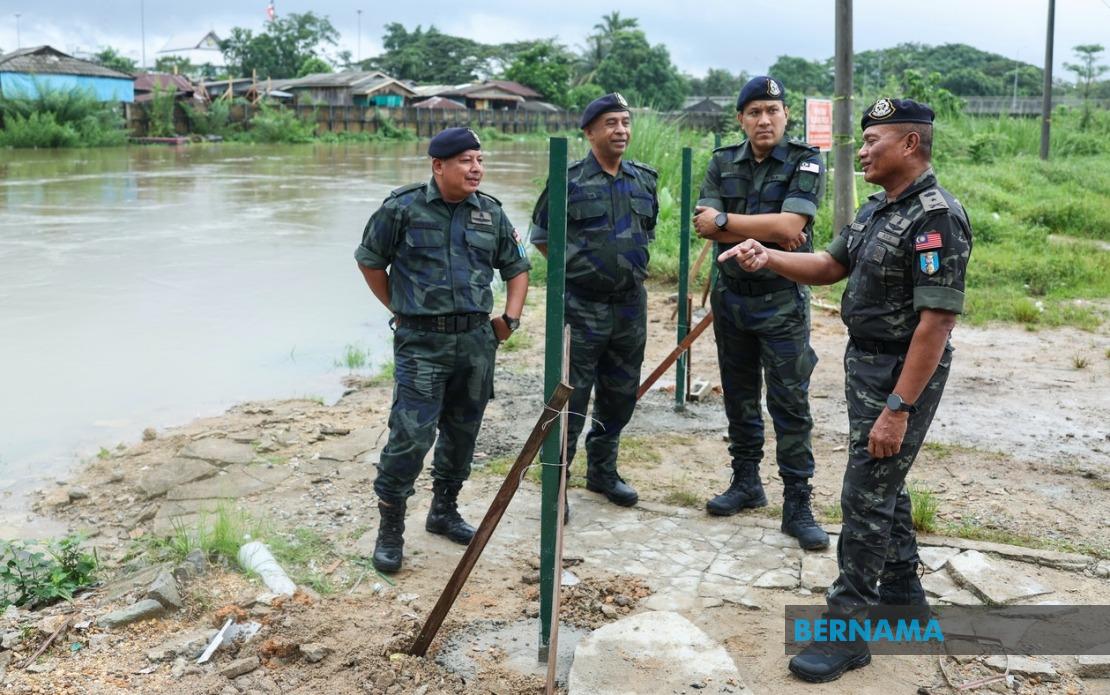
Authorities in Kelantan have exposed a troubling shift in the tactics employed by human trafficking syndicates operating along Malaysia's northern border, revealing how criminal networks are becoming increasingly sophisticated in their approach to evading security forces. A successful raid by the General Operations Force (GOF) in Pasir Mas district has illuminated the new modus operandi, in which smugglers transport undocumented migrants across state lines in deliberately fragmented groups rather than the larger convoys historically favoured by such operations. This strategic recalibration reflects the adaptability of criminal enterprises and poses fresh challenges for law enforcement agencies already stretched thin across the porous border region separating Malaysia from Thailand.
The GOF's Southeast Brigade commander, SAC Ahmad Radzi Hussain, disclosed during a press briefing on June 28 that the altered approach was uncovered during Operasi Taring Wawasan Kelantan, an intelligence-led enforcement campaign conducted by the force's 8th Battalion in coordination with the Criminal Investigation Division of Pasir Mas district police. The operation culminated in the arrest of 13 Myanmar nationals, comprising eight men and five women aged between 20 and 37, following coordinated raids conducted in the early morning hours at Kampung Banggol Kemian. What makes this bust particularly significant is not merely the scale of arrests, but the operational insights it provides into the evolving infrastructure supporting irregular migration across Southeast Asia's land borders.
According to the commander's account, the GOF team initiated action at approximately 3.30 am following tip-offs from intelligence sources indicating unusual activity in the vicinity. Officers spotted a Proton Exora vehicle behaving suspiciously in the area, prompting them to approach the location. The driver, upon detecting the presence of uniformed personnel, immediately abandoned the vehicle and fled into the adjacent forest, successfully evading capture despite subsequent pursuit efforts. The vehicle itself yielded four Myanmar nationals occupying the rear seating compartment, all lacking valid travel documentation or authorization to remain within Malaysian territory. These four individuals were swiftly apprehended and placed in custody.
The discovery of the initial group triggered a systematic search of the surrounding forest terrain, which yielded a far more substantial haul than initially expected. Within approximately one hour of the initial arrest, security forces located and detained an additional nine Myanmar nationals in the forested areas adjacent to where the vehicle had been abandoned. These nine individuals had apparently recently crossed the Malaysian border through unauthorized channels and had been deliberately positioned in the woodland to await onward transportation. Their placement in the forest, rather than in vehicles or makeshift shelters, represents a deliberate tactic designed to minimize the concentration of migrant bodies in any single location, thereby reducing the detectability of the operation through routine patrols or checkpoints.
Interrogation of the arrested migrants revealed the calculated nature of the smuggling operation. All those detained stated that they had been transported from Thai territory across the Golok River, that strategic waterway forming the natural boundary between the two nations, by two unidentified facilitators whose identities remain unknown to investigators. Rather than proceeding directly to their ultimate destination as a consolidated group, the migrants had been deliberately dropped in stages across the forested landscape, a phased dispersal strategy explicitly designed to minimize the risks associated with transporting large numbers of undocumented people simultaneously. This compartmentalization approach, whereby each stage of the journey involves smaller cohorts moving independently, represents a significant departure from the logistical models previously documented by Malaysian authorities and suggests a learning curve within criminal networks responding to enhanced enforcement pressure.
The ultimate objective of this particular smuggling network, according to statements provided by the detainees, was to facilitate employment-seeking opportunities in the Kuala Lumpur metropolitan area. This destination preference aligns with broader economic dynamics within Malaysia, where migrant workers, whether documented or otherwise, are drawn to the capital and surrounding Klang Valley regions due to concentrated labour markets, higher wage levels, and greater anonymity within urban environments. The Kuala Lumpur focus also indicates that these smuggling operations are not random but deliberately targeted, serving a functional purpose within Malaysia's informal economy despite the numerous risks and legal consequences involved.
Beyond the human cargo, authorities also secured the vehicle utilized in the operation: a Proton Exora valued at approximately RM30,000. The impounding of this vehicle represents a significant blow to the smuggling network's operational capacity, as reliable transportation remains essential infrastructure for executing the complex logistics required to move people across borders and through the country's interior. The loss of a fully operational vehicle, combined with the arrest of network participants and the heightened awareness of the specific tactics being employed, will likely force the syndicate to recalibrate its approach once again or seek alternative routes and methodologies.
All 13 arrested individuals were transferred to the custody of the Criminal Investigation Division at Pasir Mas district police headquarters, where investigations were initiated under Section 6(1)(c) of the Immigration Act 1959/63. This legislative provision addresses the trafficking and harbouring of undocumented individuals and carries substantial penalties, positioning these cases within the serious crime framework. The prosecutorial pathway for these individuals remains uncertain, though historical patterns suggest deportation proceedings will likely accompany any criminal adjudication.
This incident illuminates a critical emerging challenge for Southeast Asian immigration and security authorities: as enforcement capabilities improve and border security measures become more sophisticated, smuggling networks respond not by ceasing operations but by evolving their methodologies to circumvent detection. The transition from large-group movements to small-batch operations represents a rational, if criminally-motivated, adaptation to environmental pressures. For Malaysian authorities, this implies that traditional checkpoint-based interdiction approaches may prove increasingly inadequate, necessitating investment in forest surveillance technology, enhanced intelligence sharing with Thai counterparts, and intelligence-driven operations like the Kelantan action. The sophistication of these networks underscores the reality that trafficking and smuggling constitute transnational criminal enterprises requiring sophisticated, coordinated responses that extend beyond individual police or military raids.

