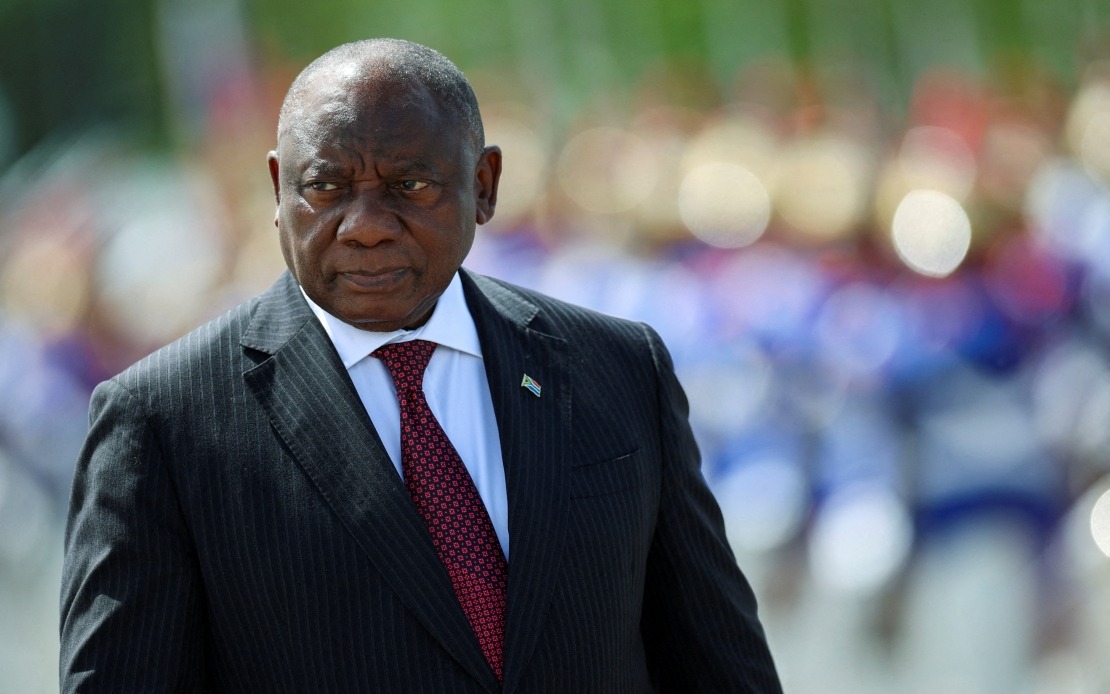
President Cyril Ramaphosa has secured a temporary reprieve from impeachment proceedings following a Western Cape High Court ruling on Friday that sides with his legal strategy. The court issued an interim interdict that prevents parliament's impeachment committee from advancing its investigation until the president's judicial review challenge against an independent panel report is resolved. This development marks a significant tactical victory for the South African leader, though the underlying constitutional questions remain unresolved.
Ramaphosa's legal battle centres on findings from an independent inquiry into what became known as the Phala Phala scandal, a controversy that has dogged his presidency and raised serious questions about governance, transparency, and the proper handling of state procedures. The case originated in February 2020 when approximately US$580,000 in cash allegedly went missing from Ramaphosa's private game farm in Limpopo Province. Rather than being reported through normal channels to law enforcement authorities, the money's disappearance triggered an internal investigation, prompting widespread questions about whether the president had complied with his obligation to declare foreign currency holdings and the circumstances surrounding the theft.
The independent panel, headed by retired Chief Justice Sandile Ngcobo, completed its investigation in 2022 and determined there was sufficient prima facie evidence suggesting Ramaphosa may have engaged in serious misconduct related to the incident. This finding carried enormous political weight in South Africa's volatile political landscape, where questions about leadership accountability have intensified during periods of economic difficulty and institutional challenges. The panel's conclusions appeared to set the stage for formal impeachment proceedings that could have removed the president from office.
However, the National Assembly voted against adopting the panel's report in 2022, effectively shelving the impeachment process at that time. The decision puzzled many observers and appeared to reflect competing factional interests within South Africa's ruling African National Congress party, which has faced internal divisions over how to handle the president's political future. This parliamentary vote seemed to provide Ramaphosa with a temporary escape route from immediate constitutional jeopardy.
The situation took an unexpected turn in May when South Africa's Constitutional Court intervened, ruling that parliament had acted unlawfully in rejecting the panel's findings and refusing to pursue impeachment. This court decision breathed new life into the proceedings and created a legal obligation for the legislature to reconsider the matter. The Constitutional Court's intervention reflected broader tensions between different branches of government and between competing interpretations of what procedures must be followed when serious allegations are made against a sitting president.
In response to the Constitutional Court's mandate, Ramaphosa pursued two simultaneous legal strategies. On June 12, he filed an urgent application requesting that the impeachment committee's work be suspended while he mounted a broader challenge to the panel's methodology and conclusions. Simultaneously, on May 26, he had already initiated separate proceedings in the Western Cape High Court seeking a full judicial review that could overturn the independent panel's findings entirely. These parallel legal manoeuvres represent a comprehensive effort to exhaust all available procedural options before facing impeachment hearings in parliament.
The Friday ruling granting the interim interdict is procedurally important but ultimately limited in scope. The court explicitly stated that its decision does not prejudge the substantive merits of Ramaphosa's judicial review application. Rather, it simply maintains the status quo and prevents parliament from moving forward with impeachment hearings until the High Court has an opportunity to examine whether the independent panel conducted its inquiry fairly and reached justifiable conclusions. This approach allows the courts to proceed deliberately while preventing parliament from acting prematurely.
The main judicial review hearing is scheduled for September 2 through 4, providing Ramaphosa's legal team with several months to prepare comprehensive arguments about whether the independent panel's investigation met constitutional standards. His lawyers will likely challenge the panel's methodology, the evidence it examined, and whether it properly considered the president's explanation for the Phala Phala incident. The court will need to balance respect for parliament's constitutional role in impeachment proceedings against the principle that even presidents are entitled to due process and fair procedures.
For Malaysian observers, this case illustrates how institutional checks and balances can operate in democracies facing leadership crises. Unlike systems where impeachment proceeds straightforwardly, South Africa's experience demonstrates how courts can intervene to ensure procedural fairness, though such intervention can also create the perception of judicial obstruction of legitimate parliamentary oversight. The interplay between the Constitutional Court, High Court, and National Assembly raises questions about institutional coordination that resonate across Commonwealth democracies in the region.
The Phala Phala saga has broader implications for South Africa's governance standards and public confidence in presidential accountability. The alleged undeclared foreign currency, the handling of a private security matter, and questions about transparency have fuelled public skepticism about whether senior officials operate under the same rules as ordinary citizens. Regardless of how the courts ultimately rule, the extended nature of these proceedings underscores how difficult it can be to hold presidents accountable through constitutional mechanisms, particularly in deeply polarized political environments.
Ramaphosa's legal victories so far do not guarantee ultimate success when the substantive review proceeds. The High Court must weigh whether the independent panel's conclusions were reasonable and properly supported by evidence. If the court finds the panel acted fairly and reached justified findings, it will likely dismiss Ramaphosa's challenge and allow parliament to proceed with impeachment hearings. Conversely, if the court identifies serious procedural flaws or unreasonable conclusions, it could invalidate the panel's findings and provide Ramaphosa with a clean legal slate.
The temporary halt on impeachment proceedings provides breathing room for South Africa's political system to contemplate the bigger questions at stake. Beyond the immediate controversy surrounding Ramaphosa lies a deeper debate about presidential accountability, the standards to which leaders should be held, and whether South Africa's constitutional framework adequately protects both parliamentary oversight and individual fairness. As the September hearings approach, both supporters and critics of the president will be watching closely to see whether the courts preserve or constrain parliament's power to remove a sitting president.

