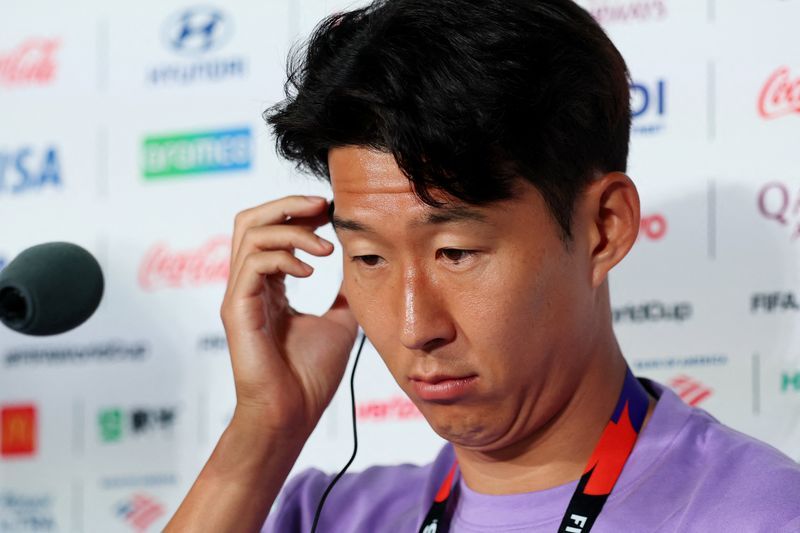
South Korea's national football team has initiated a media boycott during the World Cup after allegations emerged that journalists from the country made derisive comments about captain Son Heung-min's military service obligations. The incident, which unfolded at the team's training base in Guadalajara, has triggered significant tension between the squad and domestic press corps, underscoring the sensitive nature of military conscription discussions in South Korean society.
The controversy surfaced when remarks allegedly made by reporters were captured on an unguarded microphone during a training session where Son, the 33-year-old Tottenham forward, was conducting a separate workout routine. The specific nature and content of these comments sparked an immediate and forceful response from the team, which subsequently declined to participate in optional media interactions beyond those mandated by FIFA regulations. This deliberate withdrawal represents a rare moment of unified team protest against domestic media coverage during an international tournament.
Military service remains one of the most politically and culturally charged topics in South Korea. The nation requires all able-bodied male citizens to complete approximately 21 months of mandatory service as a cornerstone of its national defence strategy against North Korea. The obligation affects virtually all South Korean athletes and public figures, making it an unavoidable aspect of national identity and civic duty.
Son Heung-min secured an exemption from full military service after the South Korean national football team captured gold at the 2018 Asian Games in Jakarta. International sporting success at this level traditionally qualifies athletes for reduced service obligations or exemptions under South Korean law. However, despite his exemption status, Son voluntarily completed a three-week basic military training programme in 2020, demonstrating his commitment to fulfilling national expectations even beyond legal requirements.
During that abbreviated training period in 2020, Son experienced the rigorous physical demands of military preparation, which included exposure to tear gas, live ammunition exercises, and lengthy forced marches spanning up to 30 kilometres. The timing of his service coincided with a suspension of Premier League activities due to the COVID-19 pandemic, allowing him to fulfil this commitment without disrupting his professional football schedule. This voluntary completion of training beyond his legal obligations made the alleged mockery of his service particularly offensive to both the player and his teammates.
The Korea Football Association issued a formal statement expressing regret over what it characterised as inappropriate conduct by certain media representatives. The organisation acknowledged the significant shock and disappointment the incident caused throughout the squad, emphasising that the players are committed to representing their nation with the highest standards of professionalism and integrity on football's biggest stage.
In its official response, the KFA appealed to media organisations to demonstrate greater consideration and responsibility in their coverage of the national team. The federation stressed its commitment to establishing a healthier and more constructive relationship between athletes and journalists, positioning itself as the guardian of the squad's wellbeing and professional environment. The organisation pledged to continue prioritising protective measures for the team while working towards improved media relations.
While the South Korean players have declined voluntary press engagements, they remain obligated to fulfil media requirements stipulated by FIFA regulations governing World Cup participation. These mandatory interactions represent non-negotiable components of international tournament participation, meaning complete media avoidance is neither feasible nor permitted under competition rules. This distinction between optional and obligatory media duties creates a nuanced situation where the team can protest through selective engagement while maintaining compliance with international football governance.
The incident highlights a broader tension within South Korean sports culture, where intense domestic media scrutiny intersects with deeply personal questions about citizenship obligations and national identity. For Malaysian and Southeast Asian sports observers, the situation illustrates how cultural contexts and national priorities can fundamentally shape athlete-media relationships differently across the region. In many Southeast Asian nations, military conscription carries similar significance, though discourse surrounding it typically remains less publicly contentious.
Son's experience represents a unique position within global football, as relatively few international players navigate the intersection of professional sports careers with mandatory military service obligations in their home countries. His voluntary completion of training beyond legal requirements speaks to personal commitment to national duty, making the alleged mockery of this decision particularly significant within South Korean cultural frameworks where such sacrifices carry profound meaning.
The boycott reflects broader generational and cultural conversations within South Korea about how domestic institutions, including media organisations, should treat national heroes and their contributions to representing the country internationally. Young South Korean athletes increasingly expect respectful recognition of their sacrifice and service, whether military or purely athletic, as fundamental components of their public role. The team's unified response suggests strong leadership and solidarity among the squad regarding standards of acceptable media conduct.
This confrontation may prompt necessary conversations within South Korean sports journalism about professional boundaries and ethical responsibilities when covering sensitive national topics. The incident demonstrates that even during moments of national pride and international competition, internal disagreements about respect and appropriate discourse can create friction between athletes and domestic media. For regional sporting observers, it underscores the importance of cultural sensitivity when covering players navigating multiple civic and professional obligations simultaneously.

