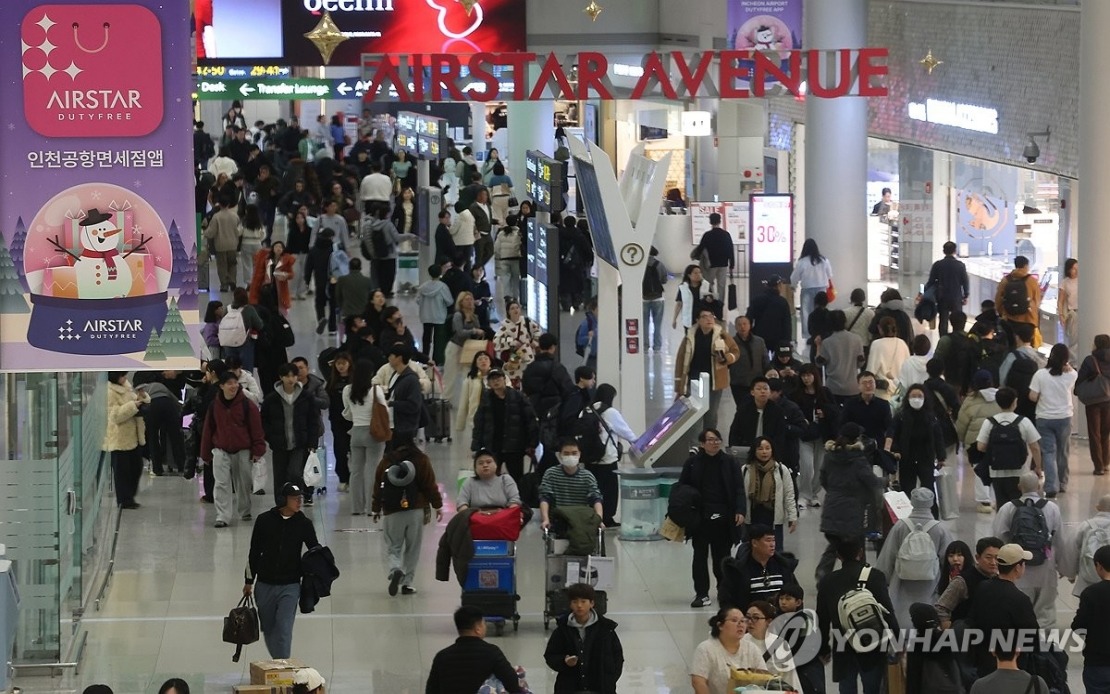
South Korea's tourism sector is experiencing a remarkable surge, with the country welcoming more than 10 million foreign visitors by the middle of June—a development that positions the nation to potentially shatter its all-time annual visitation records. The Ministry of Culture, Sports and Tourism announced that this milestone arrived roughly a month ahead of schedule compared to 2023, when the identical figure was reached in mid-July. More significantly, this is the first instance in which South Korea has achieved the 10 million threshold during the first six months of any calendar year, indicating the strength of the current recovery trajectory in international travel demand.
The acceleration in foreign arrivals reflects a broader normalisation in global travel patterns following years of pandemic-related disruption and travel restrictions. May proved particularly robust, with 1.95 million visitors recorded during that single month—representing a year-on-year increase of 19.4 per cent and demonstrating that momentum in inbound tourism remains resilient despite ongoing economic headwinds elsewhere. This consistent month-to-month growth suggests that South Korea's appeal as a destination has been reinforced rather than fleeting, a crucial distinction for policymakers assessing long-term competitiveness in Asia's competitive tourism landscape.
The visitor composition reveals telling patterns about which source markets are driving growth. Chinese nationals accounted for 560,000 arrivals in May alone, establishing themselves as by far the largest constituent group among foreign tourists. Japanese visitors ranked second with 360,000 arrivals, whilst Americans contributed 210,000 visitors during the same period. This distribution underscores South Korea's particular appeal to broader East Asian audiences and wealthy Western travellers, demographic segments historically associated with higher spending levels and extended stays. The dominance of Chinese tourism is particularly noteworthy given the often-fragile diplomatic relationship between Beijing and Seoul, suggesting that cultural attractions and shopping experiences continue to transcend political considerations.
A significant development in this tourism expansion is the increasingly dispersed pattern of visitation across South Korea's geography. Rather than concentration in Seoul and the immediate metropolitan region—a historical pattern that has complicated tourism benefits distribution—regional airports have seen steadily rising passenger volumes. Statistics show arrivals through regional airports climbed from 230,000 in January to 360,000 by May, indicating that infrastructure investment and marketing efforts promoting secondary destinations are beginning to yield tangible results. This geographical diversification carries important implications for regional economic development and helps ameliorate concerns about tourism revenue concentration in the capital.
The purchasing power of these visitors is equally impressive. Foreign visitors' combined card expenditure—encompassing both in-person transactions and online purchases—totalled 2.12 trillion won, or approximately US$1.38 billion, in May. Notably, this constitutes the first month since 2018, when the ministry commenced systematic tracking of such data, in which monthly foreign spending exceeded the 2 trillion won threshold. This figure not only underscores the revenue-generating capacity of high-value tourism but also indicates that visitors are engaging substantively with South Korea's retail, hospitality, and entertainment sectors rather than merely transiting through the country.
Government officials have characterised the tourism recovery as particularly impressive given external headwinds that might reasonably have dampened travel demand. Kang Jung-won, heading the Ministry of Culture, Sports and Tourism's policy division, noted that despite elevated fuel surcharges stemming from instability in the Middle East—which typically inflate airline costs and dampens price-sensitive travel—South Korea managed to increase year-to-date arrivals by 21 per cent compared to the equivalent 2023 period. This performance suggests that the destination's competitive positioning has strengthened sufficiently to overcome cost pressures that might otherwise suppress demand elasticity.
Looking ahead, South Korean authorities are implementing strategic initiatives designed to capitalise on this momentum and potentially propel annual visitation to unprecedented levels. The Ministry of Culture, Sports and Tourism has committed to expanding collaborative partnerships with private-sector stakeholders, with particular emphasis on leveraging South Korea's formidable cultural exports as tourism draw mechanisms. K-pop artists, whose global fanbase has expanded exponentially over the past decade, are specifically identified as strategic partners in promotional campaigns. Additionally, coordination with major export-oriented corporations suggests a sophisticated approach to tourism marketing that positions the country as comprehensively appealing rather than narrowly focused on any single attraction category.
For regional observers, South Korea's tourism trajectory offers instructive lessons regarding post-pandemic recovery patterns and the resilience of Asia-Pacific tourism demand. The nation's ability to attract visitors despite geopolitical complexities, elevated transportation costs, and macroeconomic uncertainty indicates that destination branding, cultural resonance, and accessibility continue to exert powerful influence over travel decisions. As Malaysia and other Southeast Asian nations continue competing for regional and international visitor flows, South Korea's success in distributing visitors beyond primary metropolitan areas and diversifying revenue sources across multiple visitor nationalities presents a relevant benchmark for policy consideration.