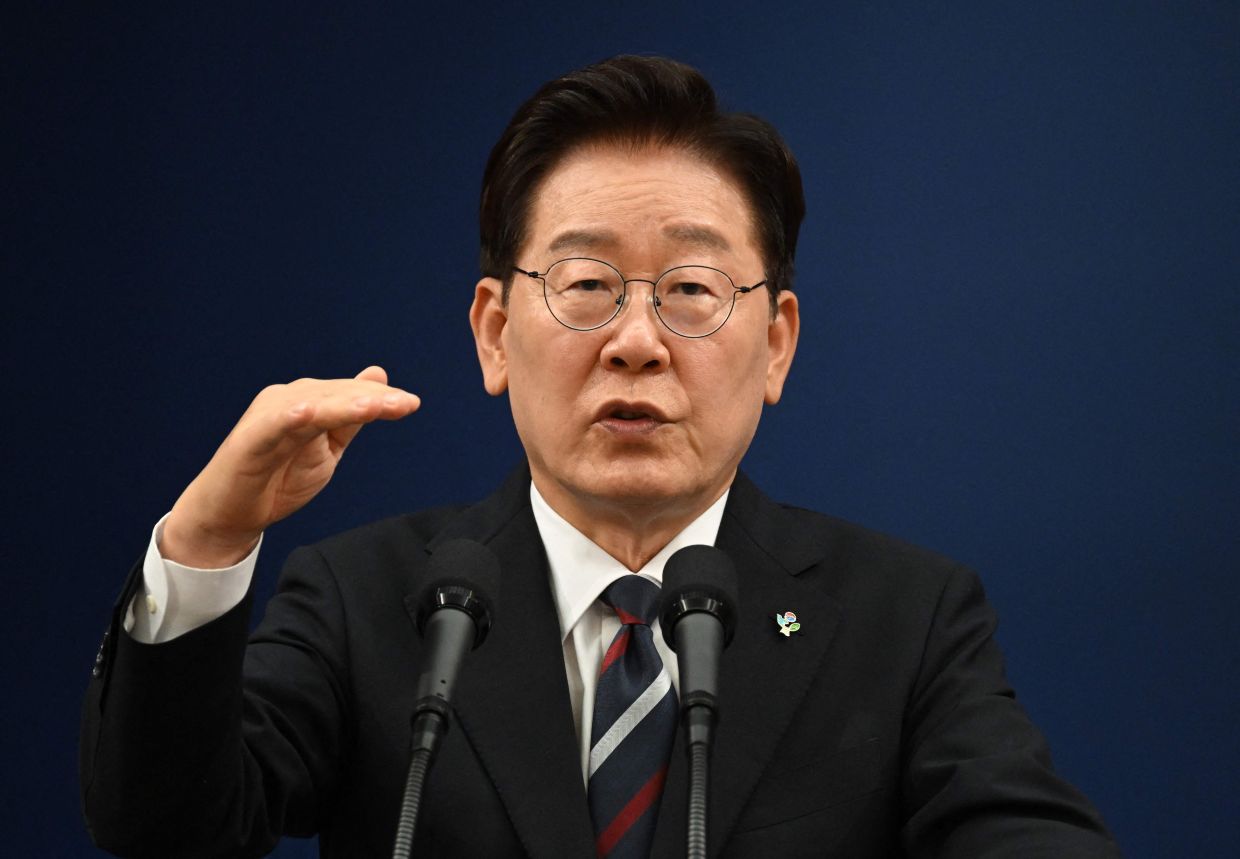
South Korean President Lee Jae Myung is experiencing a significant erosion of public confidence, with his approval rating slipping to 46.7 per cent in a nationwide survey released on June 22—marking the first occasion since his June 4, 2025 inauguration that negative assessments have outpaced positive ones. The decline represents the fifth consecutive week of falling support, signalling growing dissatisfaction with his administration's performance less than three weeks into his presidency.
According to polling data from Realmeter, a respected local research firm, Lee's approval trajectory has been persistently downward. His support stood at 60.5 per cent during the second week of May, subsequently declining through 59.3 per cent, 59.1 per cent, and 55.2 per cent before reaching the critical threshold. The latest measurement of 46.7 per cent represents a four-point-eight percentage point drop from the preceding week alone. Disapproval has meanwhile climbed to 49.7 per cent, though pollsters note this difference sits within the survey's margin of error of plus or minus two percentage points, meaning the crossover remains statistically narrow.
The timing of this approval collapse is notably swifter than previous South Korean presidencies, though still not unprecedented. Former President Yoon Suk Yeol experienced a similar reversal after just six weeks in office during June 2022, whilst former President Park Geun-hye required approximately 16 months and former President Moon Jae-in nearly 19 months to reach comparable approval tipping points. Lee's accelerated decline underscores the intensity of contemporary political pressures and public expectations facing the South Korean executive branch.
Two interconnected crises have precipitated the rating collapse, according to Realmeter's analysis. The June 3 local elections produced a significant ballot shortage that triggered widespread criticism of election management capabilities and amplified demands for accountability. Simultaneously, the ruling Democratic Party of Korea is embroiled in internal leadership disputes as it prepares for an August 17 convention to select a new party chair, creating public perceptions of disunity and fractured governance. Together, these developments have overshadowed potentially positive developments including favourable international reception of Lee's European diplomatic tour and the stock market's breakthrough above the 9,000-point threshold on the Korea Composite Stock Price Index.
Geographic analysis reveals the damage extends unevenly across South Korea's regions, reflecting underlying political and economic vulnerabilities. In conservative strongholds of Daegu and North Gyeongsang Province, approval plummeted 9.9 percentage points to merely 34.6 per cent, suggesting that traditional presidential support bases have been particularly alienated. The Greater Seoul area, encompassing Incheon, Gyeonggi Province, and Seoul proper, has also proven fertile ground for disapproval, with ratings declining 7.6 percentage points in both Incheon and Gyeonggi Province to 44.8 per cent and falling 7.6 percentage points in Seoul to 39.8 per cent. These declines among economically significant regions carry implications for the government's capacity to advance policy agendas requiring broad coalition support.
Ideological fractures within Lee's support base further illustrate the breadth of erosion. Approval among moderates—typically a pivotal swing demographic—declined 4.9 percentage points to 47.5 per cent, whilst liberal supporters slipped 3.2 percentage points to 80.4 per cent despite nominally remaining supportive. The standout anomaly is approval among conservatives, which edged downward by only 0.7 percentage points to 19.8 per cent, already reflecting the deep partisan divide characterising South Korean politics. Analysts attribute declining moderate support partly to concerns over widening asset market disparities, suggesting economic inequality anxieties are eroding confidence among middle-class voters previously aligned with conservative governance models.
The Cheong Wa Dae presidential office responded to the poll with measured language, issuing a statement accepting the findings with humility and pledging closer attention to public concerns. The response acknowledged that fluctuations in approval ratings reflect public assessment of both economic conditions and broader state administration conduct. Such measured acknowledgment represents a conventional political response, though it remains unclear whether substantive policy adjustments will follow or whether the administration will attempt to weather the approval downturn through communication strategy refinements.
Parallel survey data tracking parliamentary party preferences reveals a narrowing competitive landscape that may constrain Lee's governing coalition. The conservative People Power Party maintained a marginal 42.3 per cent support advantage over the Democratic Party's 40.1 per cent in a separate Realmeter poll, but this represented a two-point contraction in the ruling party's lead. The Democratic Party's 2.1 percentage point weekly gain reflected what analysts characterise as a crisis-management phase following a bipartisan agreement to investigate election administration failures, temporarily uniting the opposition through institutional accountability mechanisms.
Younger demographic cohorts are proving particularly resistant to the People Power Party's messaging, foreshadowing potential long-term electoral challenges. Among voters in their twenties, the party's approval rating declined 10.5 percentage points to 48.6 per cent, whilst support among those in their thirties fell 5.1 percentage points to 47.4 per cent. This generational shift reflects broader patterns of declining conservative support among economically anxious younger Koreans grappling with housing affordability challenges, employment precarity, and compressed wage growth relative to previous generational cohorts.
For Malaysian and Southeast Asian observers, Lee's rapidly deteriorating approval rating offers instructive parallels regarding the fragility of political mandates in developed democracies facing governance crises. The election administration failures that triggered Lee's decline—ballot shortages undermining the integrity of democratic processes—represent precisely the type of institutional breakdown that erodes public confidence even among ideological supporters. Malaysia's own experiences with electoral administration challenges and intra-coalition tensions within Pakatan Harapan demonstrate how quickly governance credibility can evaporate when administrative competence and political unity fracture simultaneously, particularly when affecting core democratic functions like elections.
The trajectory of Lee's presidency carries implications extending beyond South Korea's borders, particularly regarding regional stability and economic confidence. A president operating with approval ratings below 50 per cent whilst facing internal party fragmentation faces constrained flexibility in advancing domestic reform agendas or maintaining consistent foreign policy positioning. Southeast Asian governments and investors monitoring South Korean developments should anticipate potential volatility in policy implementation and international engagement as Lee's administration navigates both domestic political pressures and the challenge of rebuilding public confidence during the critical early months of his tenure.