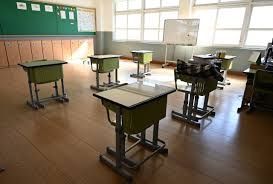
Police on South Korea's Jeju Island have opened an investigation into a high school student suspected of repeatedly entering an elementary school teacher's classroom and leaving semen and urine on separate occasions, marking a disturbing breach of school safety that has drawn widespread concern from educators and authorities. The Seogwipo Police Station confirmed the case on June 16, characterising the incidents as serious violations that span several months and raising questions about campus security protocols across South Korean educational institutions.
The investigation centres on a series of intrusions that began in April when the student allegedly gained access to the elementary school building adjacent to his own high school campus. During this initial breach, he deposited semen inside the teacher's personal drinking vessel—a violation that suggested deliberate intent rather than casual mischief. The teacher only discovered the contamination after using the tumbler, prompting immediate concern about her safety and wellbeing within what should be a secure professional environment.
The situation escalated two months later when the same student returned to the classroom on June 4 and urinated on the teacher's desk chair before leaving the premises. This second incident within a two-month window transformed isolated concern into a pattern of harassment, prompting school administrators to escalate their response and report the matter to law enforcement. The repeated nature of the violations suggested the student either possessed systematic knowledge of the teacher's schedule or engaged in surveillance to facilitate access.
School CCTV systems proved instrumental in establishing the student's identity. Police reviewed corridor footage outside the targeted classroom and successfully identified the perpetrator through visual evidence. Armed with this identification, officers apprehended the student on June 8 on charges of property damage and trespassing—charges that may be expanded depending on investigation outcomes. The swift apprehension reflected competent police work but also underscored how security footage has become essential to modern school safety protocols.
During interrogation, the student offered an explanation that investigators found unconvincing. He claimed not to know the teacher personally and denied harbouring any sexual motivation for his actions, instead attributing his presence in the classroom to searching for a restroom. The implausibility of this account—given that he successfully located the specific classroom twice and committed deliberate contamination acts—suggests the student's initial statement lacks credibility. Police remain sceptical that a student seeking facilities would recognise and target a specific educator's personal belongings on two separate occasions.
The psychological toll on the targeted educator has been severe. According to the Jeju Teachers' Union, the teacher has experienced such profound emotional distress that she has been unable to return to her classroom since the second incident. This outcome exemplifies how such violations extend beyond the immediate physical transgression to create lasting workplace trauma, leaving victims reluctant to resume their professional duties. The union's intervention reflects growing recognition that teacher wellbeing is integral to educational stability.
Investigators are now examining whether the incidents constitute sexually motivated harassment directed at a particular individual. This distinction carries significant legal implications in South Korea, as classification as a sexual crime would trigger different investigative protocols and potential sentencing guidelines. Police have indicated they are considering applications for search warrants targeting the student's mobile phone, personal computer, and other digital devices—a decision that suggests investigators suspect premeditation or evidence of intent stored in electronic format.
The case underscores persistent vulnerabilities in South Korean school security systems despite the nation's reputation for advanced technology and infrastructure. The student's ability to enter an elementary school building twice without immediate detection raises questions about access control measures and staff vigilance. Such breaches reveal gaps between security theory and practical implementation, concerns that resonate across regional schools where similar vulnerabilities likely exist.
For Malaysian educational institutions, this case serves as a cautionary reminder about campus safety protocols. While South Korea maintains sophisticated systems, these incidents demonstrate that technology alone cannot prevent all security breaches. Schools across Southeast Asia should evaluate their own access control procedures, particularly regarding unauthorised entry into restricted spaces and the safeguarding of personal belongings in shared professional environments. The incident highlights how institutional policies must balance accessibility with protection.
The broader context involves rising concerns across East Asia about student conduct and school safety. South Korean authorities have intensified focus on student misconduct ranging from bullying to more serious violations, reflecting societal anxiety about youth behaviour in academically pressured environments. This particular case, while distinct, fits within that conversation about institutional accountability and student discipline.
The investigation's continuation will likely explore whether the student's behaviour reflects psychological issues requiring intervention or constitutes deliberate criminal harassment. South Korean authorities have indicated a thorough approach, suggesting the case will not be resolved through a simple property damage charge. The eventual outcome will establish precedent for how similar violations are classified and prosecuted, with implications potentially extending across the region where comparable incidents occur.
As the investigation proceeds, the spotlight remains on school safety frameworks and the responsibility of educational institutions to protect both staff and facilities from unauthorised access and misconduct.

