The integrity of South Korea's law enforcement system faces unprecedented scrutiny following a sweeping investigation into the Gwangju police department, which uncovered allegations of institutional corruption in a high-profile murder case. On Saturday, July 11, the National Office of Investigation, operating under the National Police Agency, conducted coordinated raids across multiple locations including the offices of senior Gwangju police commanders as part of an expanding inquiry into whether police officers conspired to shield a suspect whose father ranks among their own.
At the heart of the controversy lies a murder case that shocked the nation. A high school student was killed in May, allegedly by an individual whose father works as a police officer in Gwangju, a southwestern metropolitan centre. Rather than proceeding through standard investigative channels, authorities now suspect that senior colleagues of the suspect's father deliberately obscured evidence and granted unauthorised access to investigative materials, fundamentally compromising the integrity of the case and raising uncomfortable questions about nepotism within the police hierarchy.
The National Office of Investigation responded to mounting public concern by establishing a dedicated task force to handle the matter. Over the weekend, investigators executed search warrants targeting the Gwangju Police Agency chief's office, the Gwangsan Police Station chief's workplace, and five additional locations believed to hold relevant documentation. This coordinated operation signals the seriousness with which authorities are treating allegations that institutional mechanisms designed to ensure impartial justice became instruments of personal protection.
The investigation took a dramatic turn when the lead detective assigned to the murder case faced arrest earlier in the week, suspected of potentially destroying or tampering with evidence connected to his investigation. The removal of the primary investigator underscores how deeply the suspected corruption may have penetrated the case's handling. Such actions typically require explicit instruction from senior figures, suggesting the alleged conspiracy extended beyond isolated misconduct to systematic obstruction.
For Malaysian and Southeast Asian observers, this episode reveals troubling vulnerabilities within one of Asia's most developed democracies. South Korea has built a reputation for institutional transparency and rule of law, yet this case demonstrates how kinship networks and professional loyalty can compromise these safeguards even in advanced systems. The incident carries implications for public confidence in police forces across the region, where similar concerns about favour-based justice occasionally surface.
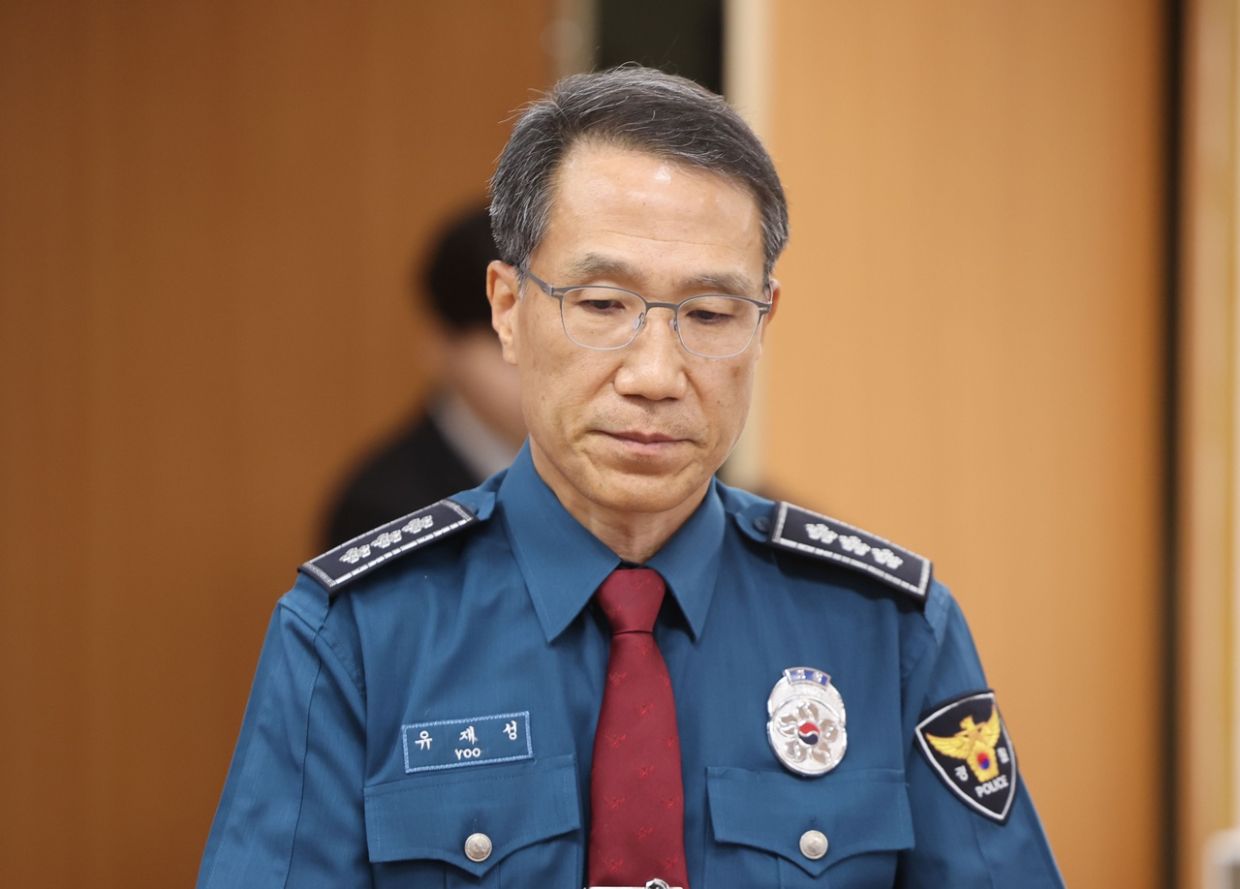
The political ramifications escalated when Acting National Police Agency Commissioner Yoo Jae-seong abruptly terminated his official visit to the United States and returned to Seoul on Friday to manage the crisis. His premature departure signalled the gravity the government attributed to the allegations and reflected urgency in damage control. Upon his return, Commissioner Yoo issued an apology to the victim's family and the broader public, acknowledging institutional failures whilst committing to identifying and punishing those responsible.
Simultaneously, South Korea's prosecution service initiated a parallel investigation into police handling of the case, creating a dual-track accountability mechanism. This approach ensures that if police oversight proves inadequate, the judicial system maintains independent scrutiny. The involvement of prosecutors reflects the principle of separation between law enforcement and judicial functions, though questions linger about whether such institutional checks can realistically constrain behaviour when corruption operates through informal networks rather than explicit protocols.
The Gwangju case illuminates a broader challenge facing police institutions globally: the tension between internal cohesion, professional loyalty, and impartial administration of justice. Police forces require strong internal bonds to function effectively under pressure, yet these same bonds can create moral hazard when officers feel obligated to protect colleagues from accountability. The suspected actions in Gwangju—evidence destruction and information access granted inappropriately—represent precisely this moral corruption, where institutional loyalty overrides professional duty.
For Southeast Asian police forces grappling with comparable issues, South Korea's approach offers a cautionary lesson about the need for robust external oversight, clear accountability structures, and transparent evidence management systems. The visibility of this investigation, including the arrest of the lead investigator and high-level official resignations, suggests an institutional capacity for self-correction that should theoretically prevent such scandals. However, the fact that such corruption occurred at all indicates that existing safeguards remained insufficient.
The broader context matters significantly. South Korea has witnessed increasing public scepticism regarding police conduct, with several high-profile cases raising questions about evidence handling and investigative independence. This Gwangju incident arrives amid a period of institutional self-examination, where transparency advocates and civil society organisations have intensified demands for reform. The government's visible response—high-level apologies, specialised investigations, and prosecutorial involvement—partially reflects this external pressure.
As the investigation progresses, outcomes will shape not merely the fate of individual officers but public perception of institutional reliability. Should authorities demonstrate that they can meaningfully penalise senior figures involved in obstruction, public confidence may stabilise. Conversely, if investigations result in minimal consequences for higher-ranking personnel, cynicism about selective justice will deepen. For Southeast Asian observers monitoring this case, the results will offer insights into how developed democracies manage institutional corruption and whether external accountability mechanisms can truly constrain internal networks.
The victim's family and the broader public await resolution that vindicates investigative integrity. Commissioner Yoo's commitment to accountability will be measured against actual prosecutorial outcomes in coming months. This case, transcending mere police management concerns, fundamentally tests whether rule of law means identical application for all citizens or remains vulnerable to the informal power wielded by those wearing uniforms.

