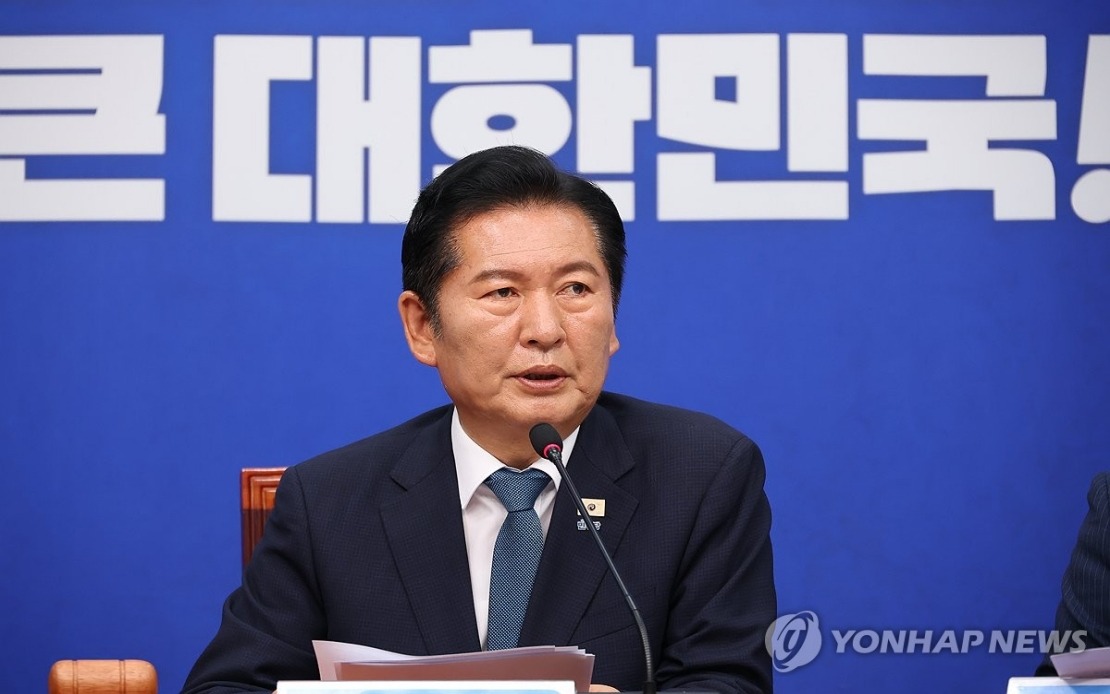
Jung Chung-rae, chairman of South Korea's ruling Democratic Party, formally stepped down from his leadership post on Wednesday during a session of the party's supreme council at the National Assembly, signalling his intention to contest the party's upcoming chairmanship election. The resignation—widely interpreted as a strategic move to reset his candidacy—comes as the Democratic Party navigates internal tensions between rival power camps within its fractious ranks.
In his statement to senior party officials, Jung reflected on his tenure with measured resolve, acknowledging the considerable personal toll his leadership had exacted. He described a period marked by restless nights spent reassessing his political journey and personal commitment to the party's mission. His language suggested an attempt to reframe his departure not as a forced retreat but as a deliberate decision rooted in serious self-reflection about his role within the Democratic Party hierarchy.
Throughout his remarks, Jung emphasised his unwavering dedication to supporting President Lee Jae Myung's administration and fostering operational cohesion between the ruling party, the broader government apparatus, and the presidential office. He characterised his tenure as one of steadfast commitment despite sustained pressure from multiple quarters, both within party circles and from external opponents. This framing appears designed to position his resignation as a dignified conclusion to a conscientious period of service rather than capitulation to mounting criticism.
However, Jung's resignation occurs against a backdrop of growing discontent among pro-Lee faction members within the Democratic Party. Critics have accused Jung of steering the party primarily toward his own hard-line constituency rather than maintaining close strategic alignment with President Lee on fundamental policy matters. This internal friction highlights deeper divisions within the party that extend beyond mere personal ambition, reflecting divergent visions for the party's future direction and its relationship with the presidential administration.
The August 17 national convention promises to be a consequential gathering, with multiple heavyweight contenders vying for the chairmanship. Prime Minister Kim Min-seok, a trusted political confidant of President Lee, is positioning himself as a serious challenger, leveraging his proximity to executive power and established institutional networks. Song Young-gil, a former Democratic Party leader with his own political base and historical standing within party structures, has similarly signalled his competitive intentions, bringing different experience and factional support to the race.
Addressing the possibility of strategic alignment among candidates, Song reportedly broached with President Lee the prospect of consolidating his presidential bid with Kim's candidacy, according to Democratic Party lawmaker Park Jie-won who disclosed details during an interview with CBS radio. Such consolidation would effectively reduce the field to two main competitors and potentially reshape the contest's trajectory. These discussions suggest that behind-the-scenes negotiation among party elites is already underway to determine the convention's ultimate configuration.
During the interim period until the convention, Democratic Party floor leader Han Byung-do will assume temporary leadership responsibilities, serving as acting party chairman. This arrangement ensures continuity in party management and decision-making while avoiding a prolonged power vacuum. Han's stewardship will be crucial in maintaining party discipline and preventing further fragmentation during what promises to be a contentious campaign period leading up to the formal convention vote.
The Democratic Party's internal turbulence carries implications beyond South Korean domestic politics. For Malaysia and Southeast Asia, shifts in South Korean leadership matter considerably given Seoul's economic clout, technological influence, and diplomatic weight in regional affairs. The Democratic Party's factional struggles could affect the coherence and consistency of South Korea's regional policies, particularly regarding trade relationships, technology partnerships, and security arrangements that have grown increasingly important to ASEAN nations seeking to navigate great-power competition.
The broader political context in South Korea suggests that President Lee Jae Myung's ability to influence party dynamics remains significant even as his administration manages complex governance challenges. The extent to which he can shape the convention outcome will test both his political capital within the party and his capacity to maintain unity among competing factions. A successful convention that produces a leadership aligned with presidential priorities could strengthen Lee's governing coalition; conversely, a contested or divisive outcome might complicate his legislative agenda and policy implementation during a critical period of economic adjustment.
For regional observers, the Democratic Party contest underscores persistent patterns in South Korean politics characterised by personality-driven factional competition, where individual leaders and their networks often supersede ideological coherence or programmatic consistency. Understanding these dynamics proves essential for Malaysian policymakers and business leaders seeking to navigate relationships with Seoul, as party leadership changes frequently cascade into shifts in policy priorities and governmental personnel across diplomatic, trade, and cultural sectors that directly affect bilateral and multilateral engagement throughout the region.

