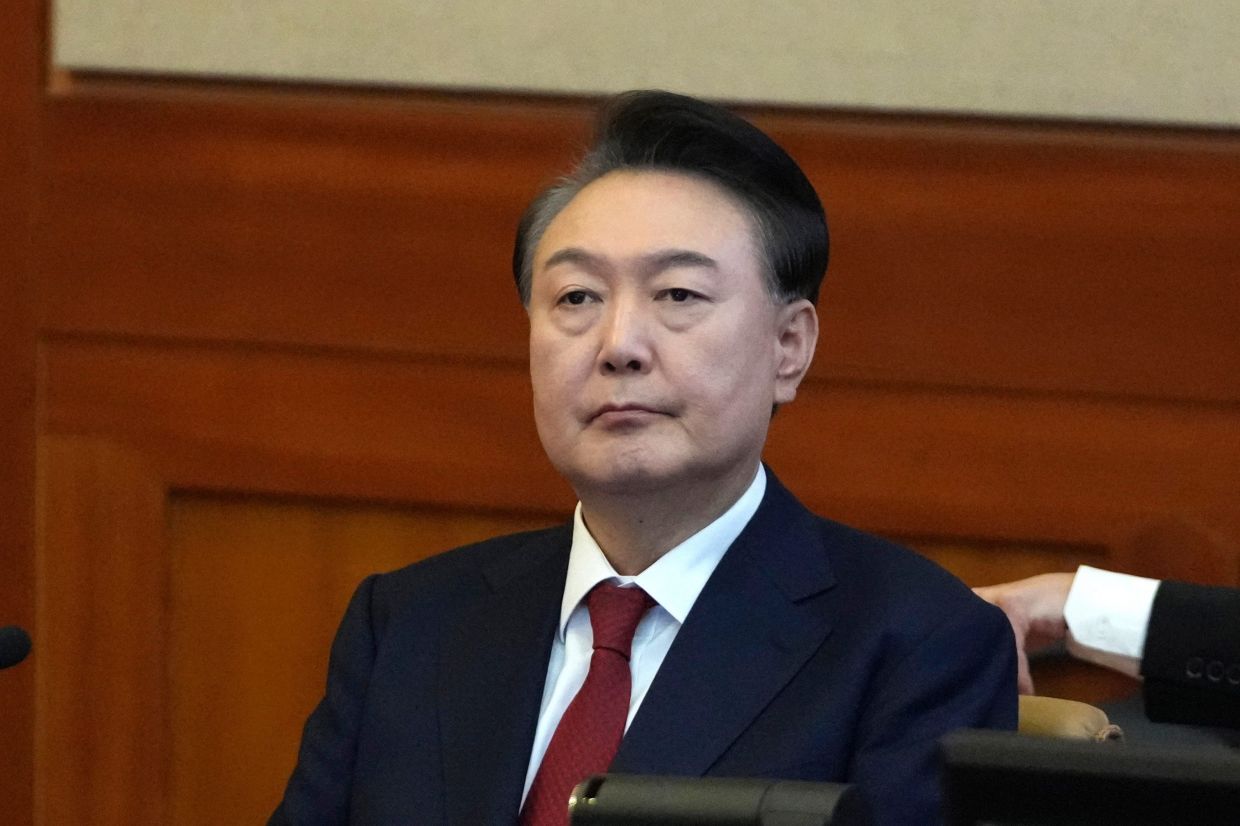
South Korea's Supreme Court has upheld a seven-year prison sentence against ex-president Yoon Suk Yeol for crimes connected to his abortive martial law declaration in December 2024, marking the final chapter in one of the most serious legal proceedings against a former South Korean leader. The court's decision on Thursday represents the definitive ruling in a case that exposed deep institutional vulnerabilities in Asia's fourth-largest economy and raised questions about democratic resilience in the region.
The charges against Yoon centred on his conduct both before and after the declaration, painting a portrait of systematic obstruction of lawful governance. Prosecutors alleged that Yoon circumvented proper Cabinet procedure by convening only a handpicked group of ministers immediately prior to his dramatic late-night address, effectively bypassing the deliberative safeguards built into the South Korean Constitution. The former leader was also accused of fabricating an entire martial law decree, complete with forged signatures from the prime minister, and directing government officials to circulate misleading statements to international media outlets designed to misrepresent the events unfolding in Seoul.
The Supreme Court's reasoning, delivered in a televised judgment, emphasised that the lower court's conviction and sentencing contained no legal or factual errors meriting reversal. This position carried particular weight given that the appeals court had actually strengthened the original conviction by adding guilt for the misleading press release distributed to foreign media and increasing the sentence from five years to seven. The fact that both the prosecution and Yoon's own legal team appealed the case to the country's highest tribunal underscores the significance of the dispute and the polarisation surrounding one of South Korea's most controversial political figures.
Yoon's legal team responded to the ruling with statements of "deep regret," arguing that the Supreme Court had concluded the case without engaging in what they characterised as sufficient deliberation. The defence team has signalled their intention to challenge the verdict on constitutional grounds, a manoeuvre that suggests they believe fundamental principles of due process were violated. Such constitutional challenges, while rarely successful in overturning Supreme Court decisions, keep the matter within public discourse and signal to supporters that legal avenues for recourse remain theoretically available.
The context for these criminal convictions stems from Yoon's shocking address on the evening of December 3, 2024, when he announced martial law in a nationally televised speech that caught even close allies entirely unprepared. The suspension of civilian rule lasted merely six hours before lawmakers mobilised for an emergency parliamentary session and voted to annul the declaration, yet those few hours unleashed profound consequences for South Korea's political stability. The botched move triggered mass street demonstrations in Seoul, sent the Korean stock market into sharp decline, and created significant diplomatic complications with key allies including the United States, which had been neither consulted nor warned.
Yoon's justification for the martial law declaration has remained consistent throughout his legal proceedings: he contended that the measure was necessary to combat what he termed "anti-state forces" and to address alleged security threats emanating from North Korea. The former president has repeatedly insisted that his actions were motivated exclusively by the national interest rather than personal or political considerations. However, these arguments have failed to persuade the judiciary at any level, and many observers within South Korea viewed the declaration as a desperate attempt to break a political deadlock with the opposition-controlled parliament.
The Supreme Court's affirmation of the seven-year sentence comes as Yoon simultaneously faces separate, far more severe legal jeopardy. In a distinct proceeding, a court imposed a 30-year prison sentence on Yoon for authorising drone incursions into North Korean airspace, which prosecutors characterised as an attempt to manufacture a foreign policy crisis that would ostensibly justify the martial law declaration. These overlapping criminal cases have created an extraordinary situation in which a former South Korean president faces decades of potential imprisonment, a development virtually unprecedented in the country's modern political history.
The ousting of Yoon in April 2025, which triggered the presidential election, resulted in victory for Lee Jae Myung of the centre-left Democratic Party, fundamentally reshaping South Korea's political landscape. The transition represented not merely a change in administration but a decisive repudiation of Yoon's political agenda and governing style. The Democratic Party's ascendancy signals that South Korean voters, despite the deep partisan divisions evident throughout Yoon's presidency, ultimately rejected the kind of extraordinary executive action that his martial law declaration embodied.
For Malaysia and other Southeast Asian democracies, the Yoon case carries instructive significance regarding institutional safeguards and judicial independence. The Supreme Court's willingness to uphold convictions against a former head of state, despite his continued assertions of proper motive, demonstrates that robust constitutional frameworks and independent judiciaries can constrain even high-ranking officials. Conversely, the very fact that martial law could be declared in the first place, albeit briefly, illustrates how swiftly democratic norms can be tested when political crises reach critical intensity. The episode serves as a sobering reminder of the fragility of democratic governance when institutional checks are inadequate or when political polarisation reaches levels that tempt leaders to bypass established procedures.
The Supreme Court ruling effectively closes the legal chapter on the central crimes arising from the martial law declaration itself, though Yoon's various other prosecutions and convictions will likely occupy South Korean courts for years to come. The finality of this particular judgment removes any remaining doubt about his culpability in the obstruction of Cabinet deliberations, the forgery of official documents, and the abuse of security forces to evade lawful arrest. Whether this conclusive legal defeat will alter Yoon's political standing among his supporters or influence the broader trajectory of South Korean politics remains an open question, but the institutional message from the nation's highest court is unmistakably clear: no one, regardless of former office, stands above the law.

