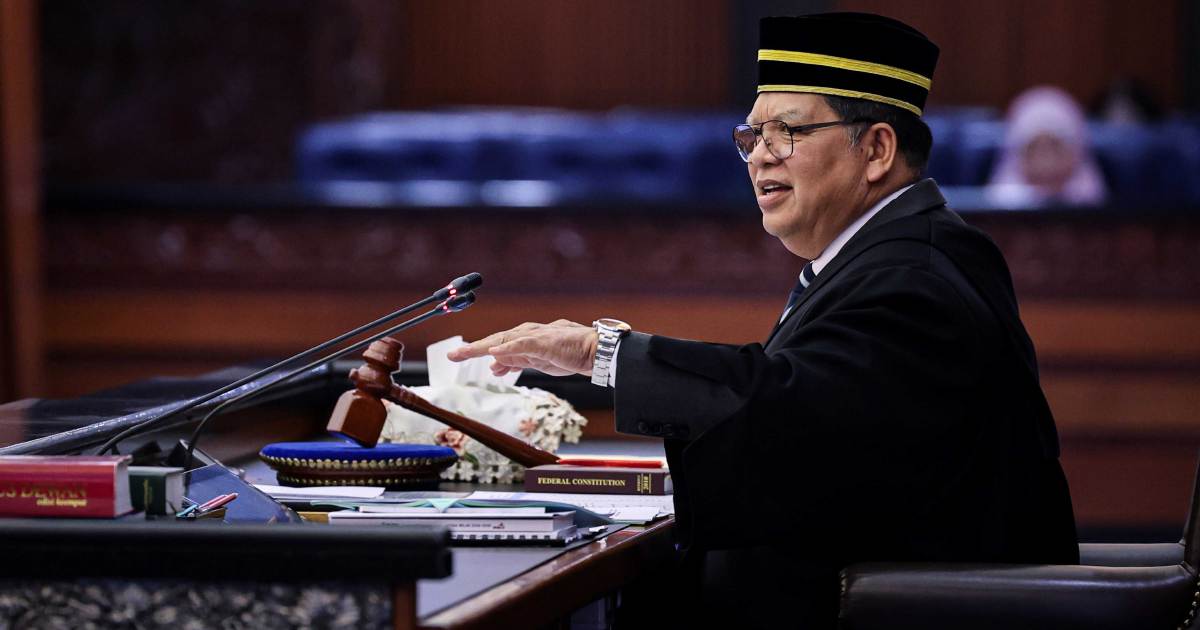
The Speaker of the Dewan Rakyat has moved to reinforce parliamentary discipline by issuing a clear directive to all members regarding their attendance obligations during legislative sessions. Tan Sri Johari Abdul, who holds the highest procedural authority in Malaysia's lower house, emphasized that lawmakers carry a fundamental responsibility to be present during parliamentary sitting days, and that any decision to absent oneself must be supported by legitimate justification.
Parliamentary attendance remains a cornerstone of representative democracy, as it directly determines whether elected members are fulfilling the mandate granted to them by their constituents. When legislators fail to show up without reasonable cause, they undermine the legislative process itself and create gaps in representation. The Speaker's intervention suggests that absenteeism without proper cause has been occurring frequently enough to warrant an official public reminder, indicating a potential erosion of attendance standards within the Dewan Rakyat.
In Malaysia's parliamentary system, members are expected to participate in debates, vote on legislation, and engage with government policies during designated sitting periods. The absence of elected representatives diminishes the quality of legislative scrutiny and reduces opportunities for backbenchers to raise issues affecting their constituencies. Furthermore, low attendance weakens the appearance of parliamentary legitimacy to the public, who increasingly expect their elected representatives to be visibly engaged in their work.
The Speaker's statement carries particular weight given the current state of Malaysian politics, where coalition stability and legislative majorities have been subjects of intense scrutiny. When attendance records show inconsistent participation, questions naturally arise about individual lawmakers' commitment to their roles and their underlying political motivations. This is especially significant in a system where slim parliamentary majorities have sometimes meant that absences can materially affect legislative outcomes.
Valid reasons for parliamentary absence typically include illness, family emergencies, official duties assigned by the government or parliament, and pre-approved leave. The Speaker's clarification about what constitutes acceptable justification is intended to distinguish between genuine circumstances beyond a member's control and deliberate evasion of parliamentary responsibilities. Without such guidance, MPs might attempt to rationalize questionable absences or exploit ambiguities in attendance requirements.
The enforcement of parliamentary discipline has historically been a challenge in many democracies, as the consequences for unauthorized absence are often limited. The Speaker's reliance on public reminders and moral suasion suggests that more formal disciplinary mechanisms may not be readily available or sufficiently robust. This underscores a broader institutional challenge within parliamentary systems: ensuring compliance with procedural standards when sanctions are relatively weak.
For Malaysian voters, the issue of parliamentary attendance directly affects the quality of representation they receive. Constituents expect their elected member to be actively engaged in parliament, raising their concerns during debates and questioning government actions on their behalf. When MPs treat parliamentary obligations lightly, they diminish the value of the democratic mandate they received at the ballot box.
The Speaker's directive also reflects growing public awareness of parliamentary performance metrics. In an era of digital transparency and social media scrutiny, attendance records can be readily tracked and publicized. Citizens and civil society organizations increasingly monitor which MPs show up regularly and which ones maintain poor attendance patterns, creating informal accountability mechanisms that complement formal parliamentary procedures.
Looking forward, the effectiveness of Tan Sri Johari's reminder will depend on whether it translates into behavioral change among members. If the Speaker's words are followed by tangible improvements in attendance, the Dewan Rakyat can strengthen its institutional credibility and demonstrate to the public that parliamentary membership entails genuine obligations. Conversely, if the directive is ignored, it may expose the limitations of the Speaker's enforcement powers and signal broader challenges in maintaining parliamentary discipline.
The emphasis on valid reasons for absence is particularly important because it preserves legitimate flexibility for MPs facing genuine hardships while establishing a clear expectation of regular attendance. This balance is essential for maintaining both parliamentary efficiency and individual fairness. Members who face unexpected emergencies should not face unreasonable penalties, but those who habitually skip sessions without justification must understand that their absence affects not only their own credibility but the institution's reputation as well.
Ultimately, the Speaker's intervention represents an attempt to strengthen the culture of accountability within Malaysia's legislature. By publicly reinforcing attendance expectations, Tan Sri Johari Abdul signals that parliamentary duty is not merely ceremonial but central to the functioning of representative government. Whether this message resonates with all members and translates into sustained improvements in attendance patterns will serve as a measure of parliament's commitment to maintaining its institutional standards.

