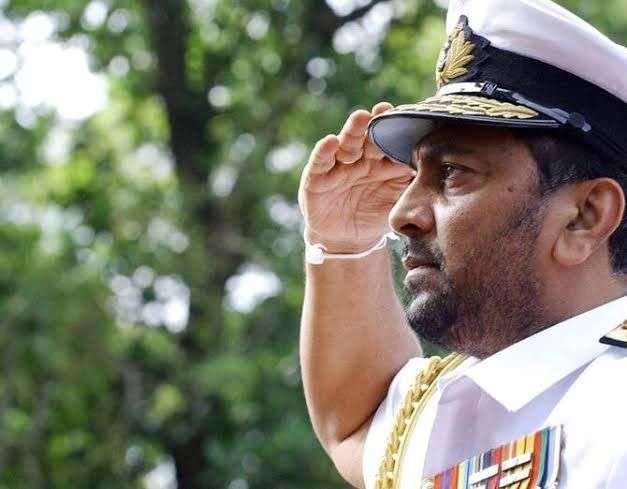
Sri Lankan authorities arrested Admiral of the Fleet Wasantha Karannagoda on Friday on charges of corruption, marking another significant development in the country's expanding crackdown on alleged misconduct involving the Rajapaksa family and their associates. The 73-year-old former navy commander was taken into custody by the Bribery Commission following accusations that he unlawfully facilitated the 2006 naval enlistment of Yoshitha Rajapaksa, who lacked the necessary qualifications for the position.
Karannagoda held the position of navy commander during a pivotal moment in Sri Lankan history—leading the maritime service as the nation's three-decade conflict with Tamil separatists concluded in 2009. His career trajectory subsequently advanced, culminating in his elevation to the rank of admiral of the fleet in 2019, though he currently maintains no formal operational duties within the naval establishment. The arrest underscores how historical military leadership is now facing scrutiny under the current administration's determination to address longstanding allegations of impropriety.
The allegations against Karannagoda centre on enabling Yoshitha Rajapaksa's entry into the navy without meeting standard recruitment criteria. This case gained additional prominence when it was revealed that the younger Rajapaksa subsequently received state-funded training at Britannia Royal Naval College in Dartmouth, Britain's premier naval institution. Yoshitha Rajapaksa, now 38 years old, is currently at liberty on bail following his own arrest in June on charges related to the alleged misuse of public resources for this prestigious overseas instruction.
The Bribery Commission formally confirmed the charges against Karannagoda in a statement, asserting that "the Admiral of the Fleet has committed the offence of corruption in the recruitment and training of Yoshitha Rajapaksa." This official confirmation signals the seriousness with which investigative authorities are pursuing the matter and suggests a systematic examination of how military recruitment procedures may have been circumvented during the period when Mahinda Rajapaksa exercised presidential power.
Karannagoda's legal troubles extend considerably beyond the recruitment matter. British authorities sanctioned him in March 2025 following allegations of serious human rights violations and unlawful killings during his military service. Additionally, he confronts charges of conspiracy to commit murder in connection with the deaths of eleven young men between 2008 and 2009, a period coinciding with the final stages and immediate aftermath of Sri Lanka's civil conflict. These serious allegations had been previously discontinued in October 2021, when Gotabaya Rajapaksa—Mahinda's brother—held the presidency, but were subsequently reinstated once political circumstances changed.
The reinvigoration of prosecutorial efforts against military figures and political allies of the Rajapaksa era reflects the fundamentally different approach adopted by President Anura Kumara Dissanayake, who secured election in September 2024 on a platform explicitly centred on combating corruption and resolving protracted high-profile criminal cases. The shift in political leadership has created space for investigators and prosecutors to pursue matters that had stalled or been shelved during the previous administration's tenure, thereby reopening historical grievances and accountability questions.
Yoshitha Rajapaksa himself faces multiple legal proceedings that illustrate the breadth of inquiries affecting the Rajapaksa family's accumulated interests and activities. Beyond the naval training allegations, he is subject to criminal investigation regarding his acquisition of residential property while his father occupied the presidency from 2005 until 2015. The sources of funds for this real estate purchase have proven impossible to adequately substantiate. During questioning, Yoshitha asserted that he had generated capital by liquidating gemstones bestowed upon him by his elderly aunt, yet the aunt subsequently expressed inability to explain her own procurement of these valuable stones, creating significant evidentiary gaps in his account.
The pattern of legal challenges extending across multiple family members and inner circle associates demonstrates the systematic nature of the current government's approach to investigating alleged misconduct. Beyond Yoshitha's predicaments, his uncle Gotabaya Rajapaksa recently received a prohibition on international travel following allegations connecting him to the catastrophic 2019 Easter Sunday bombings, terrorist attacks that claimed 279 lives and inflicted profound trauma on Sri Lankan society. This multiplicity of pending cases suggests that the judiciary remains occupied with a substantial volume of litigation involving the Rajapaksa circle and their associates.
For regional observers, these developments carry significant implications regarding judicial independence and post-conflict accountability in South Asia. Sri Lanka's intensified pursuit of war crimes investigations, corruption charges, and historical killings allegations reflects evolving international pressure regarding human rights documentation and domestic political transitions that create openings for investigating previously protected individuals. The cases simultaneously raise questions about whether such prosecutions will withstand appellate scrutiny and whether the political consensus sustaining these efforts will prove durable across future electoral cycles and potential changes in parliamentary majorities.
The resurgent momentum behind these prosecutions also reflects broader shifts within Sri Lankan civil society and international opinion regarding the country's conflict legacy. While official reconciliation mechanisms have made limited progress, criminal prosecutions of military figures and political elites represent an alternative accountability pathway, albeit one that remains contested within Sri Lanka's polarized political landscape. How these cases conclude will substantially influence both Sri Lanka's ability to address historical grievances and the nation's international standing regarding human rights compliance and rule of law governance.

