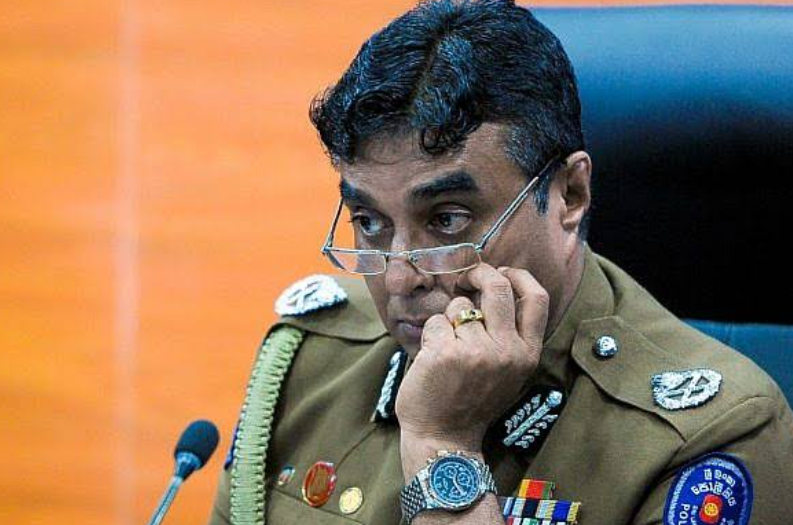
A special fast-track court in Colombo has sentenced former police chief Pujith Jayasundara to death for his failure to prevent the catastrophic 2019 Easter Sunday bombings that killed 279 people, including 45 foreign nationals. The three-judge bench delivered its verdict on Friday in a majority decision, finding the 66-year-old ex-inspector general culpable for negligence that resulted in mass casualties when coordinated suicide attacks struck three churches and three hotels across Sri Lanka on April 21, 2019.
The legal outcome represents a dramatic reversal of fortune for Jayasundara, who was acquitted in 2022 alongside then-defence secretary Hemasiri Fernando. State prosecutors mounted a successful appeal against that earlier judgment, arguing that the gross dereliction of duty by both senior officials constituted grave crimes against humanity. The case has thus moved through the court system for nearly five years, reflecting the complexity of establishing criminal accountability for institutional failures that enabled one of Asia's deadliest terrorist attacks.
Critical to the prosecution's case was evidence demonstrating that Indian intelligence agencies had specifically warned Sri Lankan authorities on April 4, 2019—just seventeen days before the attacks—of an imminent suicide bombing threat perpetrated by extremists. Despite receiving this credible advance intelligence, the Sri Lankan state apparatus failed to implement preventative measures, heighten security alerts at vulnerable locations, or mobilise law enforcement resources. The court accepted the state's contention that this inaction, coupled with the official's responsibilities as head of the national police force, amounted to criminal negligence rather than mere administrative oversight.
The attacks themselves inflicted devastation across multiple sites and left more than 500 individuals wounded. The bombings were subsequently attributed to a homegrown extremist network, though the precise motivations and structural support for the attackers remain subjects of ongoing investigation and public debate within Sri Lanka. The scale of casualties and international dimensions—with significant numbers of foreign victims—transformed the incident into a watershed moment for national security discourse and prompted widespread recriminations against the political leadership.
Jayasundara's legal predicament extends beyond the immediate verdict, as he retains the right to pursue an appeal through Sri Lanka's Supreme Court, the nation's highest judicial authority. Legal observers anticipate this will likely extend the proceedings further, given the gravity of the sentence and the precedential implications for holding senior officials criminally responsible for security failures. Such cases carry substantial political weight in post-conflict societies grappling with questions of institutional accountability.
Significantly, Sri Lanka maintains an unofficial moratorium on capital punishment that has remained in effect since 1976, meaning that despite the court's imposition of a death sentence, Jayasundara will almost certainly not face execution. Government data presented to parliament in February identified approximately 800 individuals languishing on death row across the nation. Under established practice, such sentences are routinely commuted to life imprisonment, rendering the symbolic rather than literal nature of capital punishment in the Sri Lankan justice system.
The broader accountability framework encompasses both Jayasundara and Fernando, though the former defence secretary's current legal status differs from the police chief's. Both officials were arrested in 2019 and detained for four months before securing bail. Prosecutors had framed their alleged misconduct as negligence meeting the threshold of crimes against humanity, moving well beyond typical professional misconduct allegations to suggest systematic failures affecting fundamental state obligations to protect citizens.
In parliamentary testimony, Jayasundara and Fernando had jointly attributed substantial responsibility to then-president Maithripala Sirisena, who simultaneously held the defence minister and law and order minister portfolios. The two officials contended that Sirisena failed to adhere to established national security protocols when evaluating threat assessments and subsequently dismissed the credibility of intelligence warnings. They alleged the president did not treat the security alerts with appropriate urgency, creating institutional paralysis at the apex of command.
The verdict injects fresh momentum into lingering accountability questions that have periodically resurfaced in Sri Lankan public discourse since 2019. Victims' families and civil society organisations have consistently pressed for transparent investigation into the full causal chain of failures and deliberate decisions that enabled the attacks. The court's decision to reverse the acquittal demonstrates judicial willingness to engage substantively with negligence allegations against high-ranking state officials, though questions remain regarding potential prosecutions of political leadership.
For regional observers, the case illuminates challenges that Southeast Asian democracies face when attempting to balance institutional accountability with political stability. Sri Lanka's handling of post-attack justice mechanisms reveals the friction between public demands for comprehensive culpability and governmental resistance to full transparency regarding executive decision-making during security crises. The outcome may establish precedent affecting how similar institutional failures are prosecuted elsewhere in the region where terrorism and negligence intersect.

