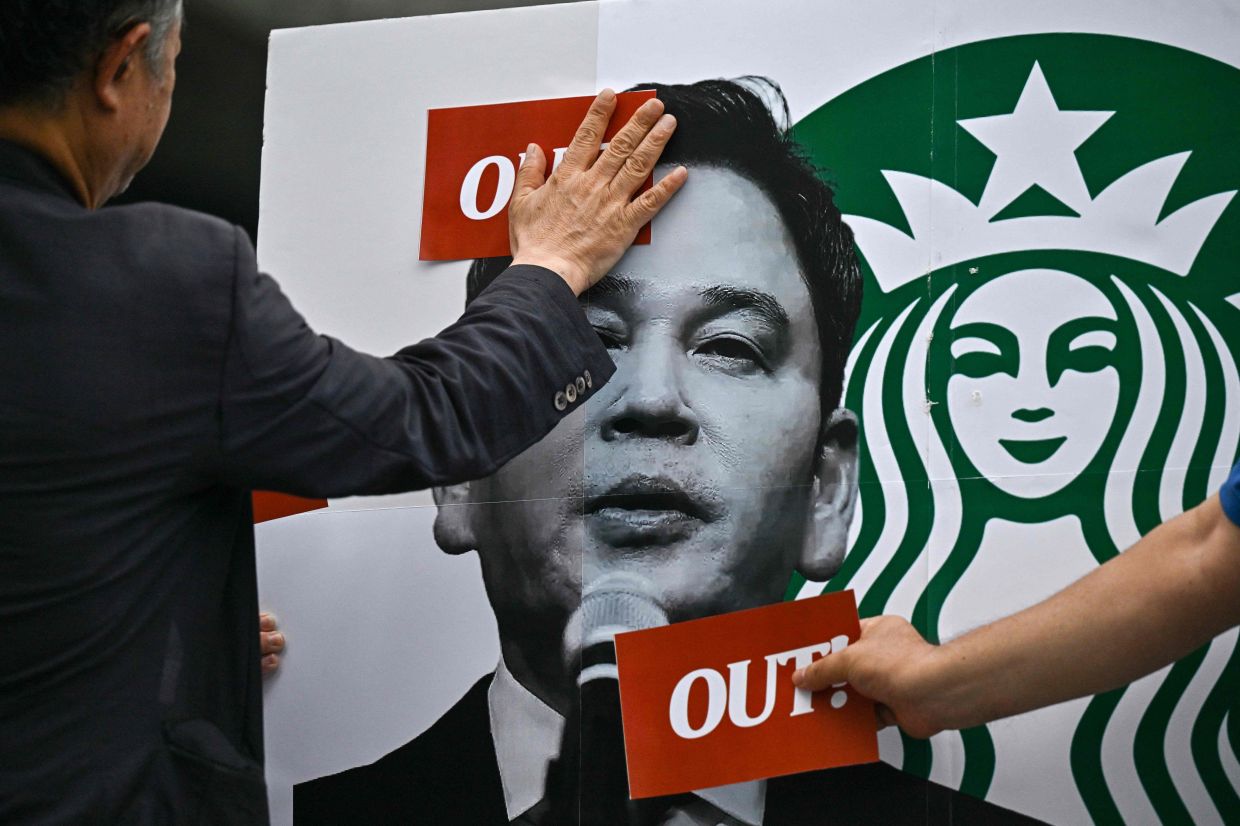
South Korean law enforcement has launched a formal investigation into Starbucks Korea's parent company following a promotional campaign that inadvertently aligned with one of the nation's most traumatic historical events. Police questioned Yang Jong-hwan, head of Shinsegae Group's audit team, on Wednesday as part of their inquiry into what has become a significant corporate embarrassment for the coffee chain operator, the company confirmed on Thursday.
The controversy centres on a May 18 reusable cup promotion branded as "Tank Day," a naming choice that proved disastrous when it fell on the 46th anniversary of the Gwangju uprising, a pivotal moment in South Korean democracy. The 1980 military crackdown on pro-democracy demonstrators in the southwestern city of Gwangju resulted in the deaths of 165 civilians according to official records, though historians and survivor groups have long contested this figure as significantly underestimated. The date carries profound emotional weight across South Korea, marking a watershed moment when ordinary citizens were mobilised by security forces during what many regard as the nation's darkest authoritarian period.
The fallout from the blunder was swift and severe. Shinsegae Group immediately terminated its Korea chief executive when the scandal erupted in late May, acknowledging the gravity of the misstep. Group chairman Chung Yong-jin subsequently offered a formal public apology, attempting to contain the reputational damage to one of South Korea's largest retail conglomerates. Yet these remedial actions proved insufficient to satisfy public sentiment, particularly among those with direct connections to the Gwangju uprising and broader civil society groups committed to preserving historical memory.
A civic advocacy organisation filed a formal complaint against Chung and other senior executives, invoking South Korea's 2016 law governing historical accuracy and preventing the dissemination of misleading information concerning the 1980 pro-democracy crackdown. The complaint simultaneously alleged defamation and insult, suggesting the promotional campaign constituted deliberate or grossly negligent disregard for historical sensitivity. This legal framework reflects South Korea's ongoing effort to protect institutional memory of the Gwangju uprising and prevent revisionism or trivialisation of the event. The complaint's filing indicates that public anger transcended corporate accountability and entered the realm of potential criminal liability.
Shinsegae's internal investigation revealed a troubling pattern of negligent oversight in the campaign's approval process. Multiple officials signed off on promotional materials without actually reviewing the accompanying design files, suggesting inadequate quality control mechanisms and a concerning indifference to contextual sensitivity. This level of organisational failure prompted the company to acknowledge systemic weaknesses in how marketing campaigns undergo scrutiny before public release, raising questions about whether such oversights extend to other initiatives.
The reputational consequences for Starbucks Korea have been measurable and immediate. The coffee chain operator reported a sharp decline in sales during the early stages of the scandal, as South Korean consumers responded to the controversy through boycotts and reduced patronage. This commercial impact underscores how historical consciousness and civic values directly influence consumer behaviour in South Korea, where memory of the Gwangju uprising remains emotionally vivid across multiple generations.
In response to the escalating crisis, Starbucks stores throughout South Korea will close for half a day on Monday to provide all staff with mandatory historical education about the 1980 crackdown and its significance. This pedagogical intervention signals corporate recognition that the incident reflected not merely poor scheduling but fundamental gaps in historical awareness among the workforce. Shinsegae's chairman and other senior leadership will participate in similar educational sessions two days later, acknowledging their personal responsibility to understand the historical context that should have prevented the campaign's approval.
The incident has attracted political attention at the highest levels. President Lee Jae Myung publicly condemned what he characterised as inhumane and disgraceful conduct, demonstrating that the controversy extends beyond corporate misstep into questions of national historical respect. Such presidential commentary reflects broad societal consensus that marketing activities must never compromise reverence for watershed moments of struggle and sacrifice.
For Southeast Asian observers, the Starbucks Korea case illuminates how corporations operating across different cultural and historical contexts must develop sophisticated systems for ensuring that promotional calendars respect each market's commemorative sensitivities. South Korea's robust legal frameworks protecting historical accuracy, combined with activist networks prepared to lodge formal complaints, create accountability mechanisms considerably more robust than those in some neighbouring jurisdictions. The incident also demonstrates that global brands cannot assume that calendar-based marketing strategies developed for Western markets will translate appropriately across Asia.
Starbucks holds an especially prominent position in the South Korean market, ranking as the coffee chain's third largest globally after the United States and China, making any damage to its reputation particularly significant. The company's commitment to implementing historical education and cooperating fully with authorities suggests a longer-term strategy of rebuilding trust through demonstrated cultural respect. Whether this rehabilitative effort succeeds will depend substantially on whether South Korean consumers perceive the response as genuine institutional reform or merely performative damage control.

