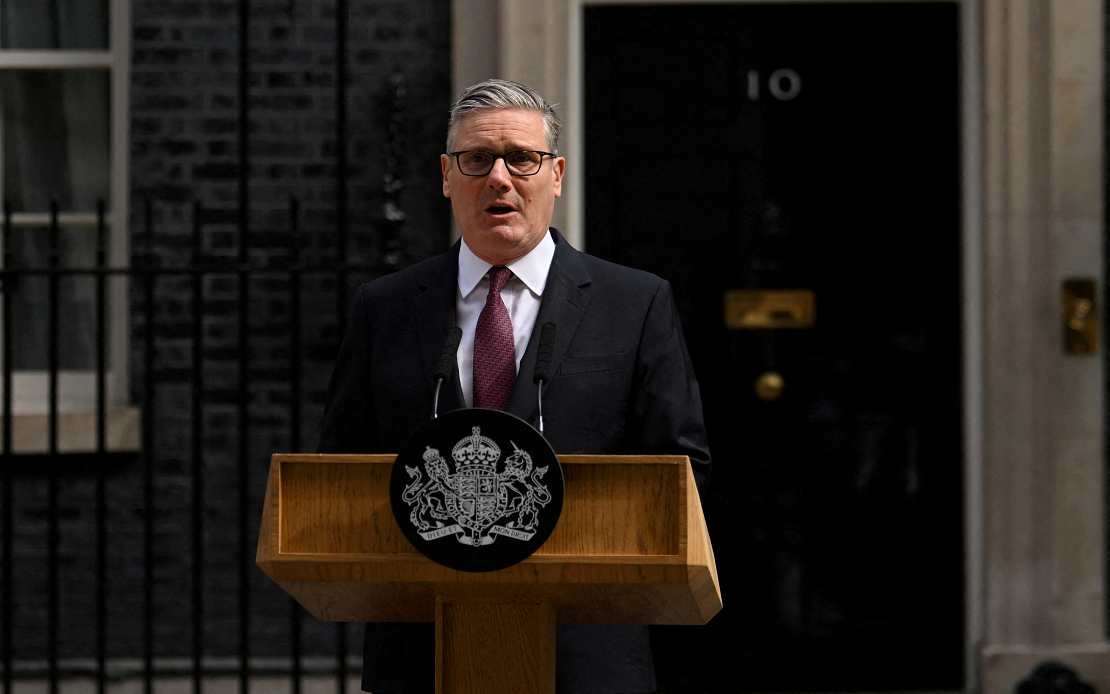
Keir Starmer delivered his final address as British Prime Minister on Monday from Downing Street, announcing his resignation and signalling the end of his tenure leading the United Kingdom. The outgoing premier, accompanied by his wife Victoria Starmer alongside colleagues and supporters, stated unequivocally that his mission had been accomplished and that he departed with optimism. He subsequently travelled to Buckingham Palace to formally tender his resignation to King Charles, marking a formal conclusion to his time at the highest office in British politics.
The transition comes after a tumultuous period for the Labour government, which has faced mounting challenges since its overwhelming electoral victory in 2024. Starmer's decision to step aside represents a significant moment in British politics, reshaping the country's political landscape at a critical juncture. Andy Burnham, the Mayor of Greater Manchester, has emerged as the frontrunner to assume the premiership, positioning himself to lead the Labour Party and the nation into its next chapter.
During his farewell remarks, Starmer emphasised the progress made during his administration, arguing that Britain had become "stronger and fairer" than in the previous government's final days. He pointed to his personal political journey, recounting how he had rebuilt Labour from its historic defeat in 2019, transforming the party into an electoral force capable of securing a decisive mandate from voters. The landslide victory in the 2024 general election represented the culmination of this reconstruction effort, providing Labour with a substantial parliamentary majority.
Starmer's tenure, spanning approximately two years, reflects the compressed timeline of contemporary British politics, where governments face accelerated pressures and shifting public sentiment. His stated accomplishment in restructuring the Labour Party formed a substantial part of his political legacy, as he repositioned the organisation to appeal to a broader electorate following the previous leadership's controversial period. This transformation involved significant internal reorganisation and a recalibration of the party's political messaging and policy direction.
The resignation raises important questions about Labour's broader political strategy and the internal dynamics that prompted the change in leadership at this moment. Burnham's emergence as the likely successor reflects confidence among party members in his ability to navigate the challenges ahead, particularly given his track record as mayor of one of England's major metropolitan areas. His mayoral tenure has provided him with executive experience managing complex urban governance issues relevant to contemporary British political concerns.
For Southeast Asian observers and Malaysian readers particularly, Starmer's departure underscores how even stable, long-established democracies experience rapid political transitions and leadership changes. The transition also demonstrates the consequences of significant electoral mandates and how governing majorities can face erosion through various internal and external pressures. Understanding such dynamics provides valuable context for analysing political developments in the region, where coalition governments and shifting alliances create comparable complexities.
The timing of Starmer's resignation, merely two years into his premiership despite possessing a commanding parliamentary majority, suggests that contemporary electoral victories do not guarantee extended tenure. This pattern reflects broader global trends where public trust in political leadership faces persistent challenges, even when governments inherit mandates for transformative change. The British experience illustrates how rapidly political circumstances can shift and how leaders must continuously adapt to maintain effectiveness and public confidence.
Burnham's anticipated assumption of leadership would represent continuity with Labour's electoral mandate, though his administration would inevitably chart its own course on policy matters and strategic priorities. His mayoral background suggests a focus on regional issues and urban policy, potentially reshaping how the central government engages with metropolitan concerns. This shift in emphasis from Starmer's approach could signal changing priorities within the party and government regarding resource allocation and policy focus.
The broader implications of this leadership transition extend beyond immediate British politics, influencing the country's approach to international relations, trade policies, and regional partnerships. For Malaysia and ASEAN members, changes in British leadership can affect bilateral relations, investment frameworks, and diplomatic engagement. The transition period typically involves reassessments of foreign policy priorities and international commitments, potentially creating opportunities for strategic dialogue and partnership recalibration.
Starmer's legacy as prime minister will likely focus on his party's reconstruction and electoral recovery, even as his abbreviated tenure prevents the implementation of a comprehensive long-term agenda. Burnham's incoming administration faces the substantial task of translating electoral support into tangible policy achievements while maintaining party unity and public confidence. The leadership transition occurs amid various domestic and international challenges requiring sustained political attention and strategic decision-making, positioning Burnham's government at a pivotal moment in British political history.

