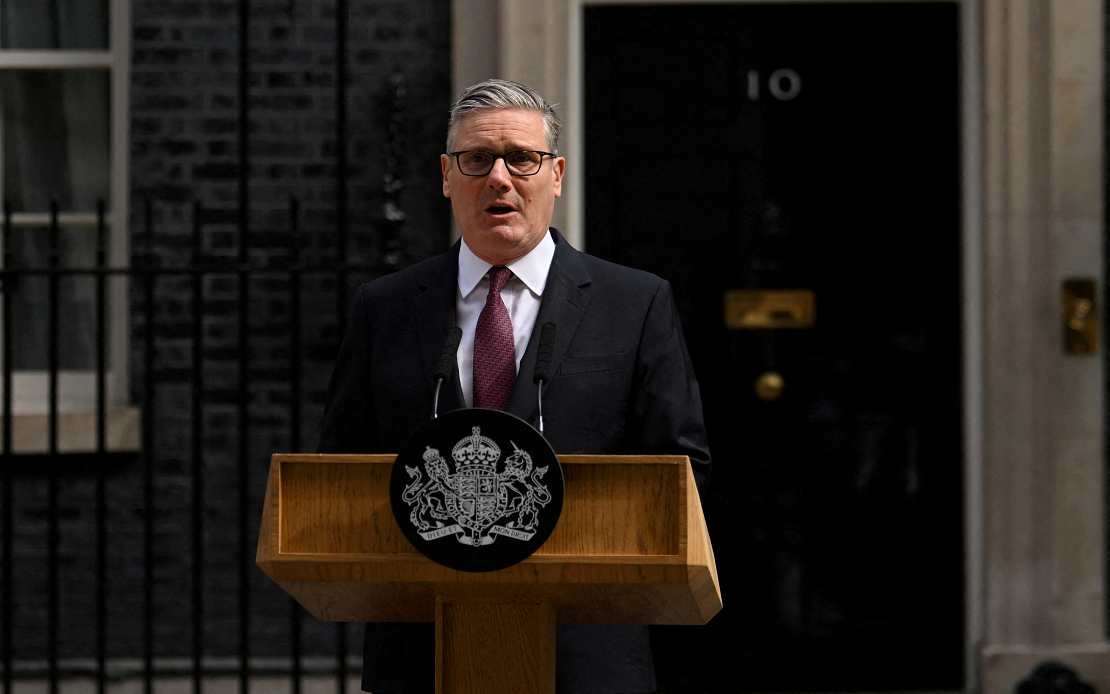
British Prime Minister Keir Starmer has called for an urgent resumption of ceasefire negotiations between the United States and Iran, warning that the current standoff threatens regional stability and vital commercial shipping routes. Speaking at a joint press conference in Paris alongside French, German, and Ukrainian leaders following a "coalition of the willing" meeting, Starmer condemned what he characterised as Iranian attacks on commercial vessels and regional partners, insisting such aggression must cease immediately.
The escalating tensions centre on control of the Strait of Hormuz, one of the world's most strategically important waterways through which roughly one-third of global maritime petroleum trade passes annually. For Malaysia and other Southeast Asian nations reliant on stable global energy supplies and shipping corridors, any prolonged disruption carries significant economic consequences. The strait's closure or restricted passage directly affects oil prices, shipping insurance premiums, and the cost of goods flowing through regional trade networks that depend on uninterrupted access to international markets.
Starmer expressed qualified support for diplomatic engagement on the outstanding issues separating the two powers, indicating Britain's willingness to contribute military assets to restore safe passage for international shipping. His emphasis on "unrestricted freedom of navigation" reflects broader international concerns about Iran's capacity to weaponise control over this critical chokepoint. The British government's offer of material support underscores how the dispute has evolved beyond bilateral US-Iran tensions into a matter threatening global commerce and the rules-based international order.
The recent exchange of military strikes between Washington and Tehran represents a dangerous escalation in what had appeared to be a stabilising trajectory. President Donald Trump announced that the United States would reinstate its blockade on Iran and impose charges on vessels seeking safe passage through the waterway. This aggressive posture contradicts the framework established when a memorandum of understanding to end the US-Israeli conflict was signed in June, which had promised unrestricted Strait access as a confidence-building measure.
Iran had effectively sealed the Strait during the wider Middle Eastern conflict that commenced in late February, creating an artificial scarcity and leveraging the waterway as a bargaining tool in regional negotiations. The expected reopening following the June agreement reflected tentative progress toward de-escalation. However, the recent tit-for-tat strikes indicate that underlying strategic mistrust remains unresolved, with neither party confident that the other will honour commitments to restore normal shipping conditions.
For maritime nations in Southeast Asia, including Malaysia, the implications extend beyond immediate energy security concerns. Shipping companies operating through the Strait face unpredictable insurance costs, route diversification expenses, and operational delays. Malaysian ports and logistics centres could experience increased business from vessels seeking alternative routes, but this advantage is offset by the broader economic damage from heightened geopolitical risk and supply chain disruption. Insurance markets have already begun pricing in elevated risk premiums for vessels transiting the region.
Starmer's invocation of a "coalition of the willing" approach mirrors the diplomatic strategy employed during earlier Middle Eastern crises, where multiple nations coordinate to apply pressure on actors threatening international stability. The inclusion of Ukrainian representation at these talks signals Western efforts to maintain unified messaging across global security challenges. However, the absence of broader regional representation—particularly from Gulf states most directly affected—suggests potential limits to coalition credibility and enforcement capacity.
The fundamental challenge confronting international mediators lies in addressing underlying Iranian grievances about sanctions and perceived US hostility whilst simultaneously reassuring the international community that vital shipping lanes will remain accessible. Trump's announcement of reimposed blockades and passage fees introduces additional complications, as it appears to weaponise the Strait in ways that violate international maritime law principles. This approach risks pushing Iran toward further countermeasures rather than negotiating compromise positions.
Southeast Asian governments must carefully navigate this crisis by advocating through diplomatic channels for swift negotiated resolution whilst preparing contingency plans for prolonged disruption. Malaysia's position as a maritime trading nation and supporter of international law places it in a position to contribute to mediation efforts, though regional leverage remains limited against major powers pursuing entrenched strategic interests. Supporting calls for freedom of navigation and negotiated settlement aligns both with national economic interests and international legal principles.
The resolution of this standoff requires movement on multiple fronts simultaneously: de-escalation of military rhetoric and operations, resumption of formal diplomatic channels, and confidence-building measures that address both Iranian security concerns and international demands for unrestricted passage. Starmer's appeal for urgency reflects genuine concern that the window for diplomatic resolution may be narrowing as military momentum builds on both sides. Without prompt intervention, the Strait crisis could metastasise into a broader conflict with consequences extending far beyond the immediate region, directly impacting economic stability across Asia and globally.
Malaysia and fellow Southeast Asian nations have clear stakes in supporting international diplomatic efforts to restore stability. Rising oil prices resulting from Strait disruption directly increase production costs across manufacturing and transportation sectors. Trade volumes through regional hubs depend on predictable shipping routes and insurance regimes. By supporting calls for ceasefire resumption and unrestricted navigation, Malaysian policymakers reinforce principles that protect broader regional interests and establish precedents for resolving future maritime disputes through negotiation rather than coercion.

