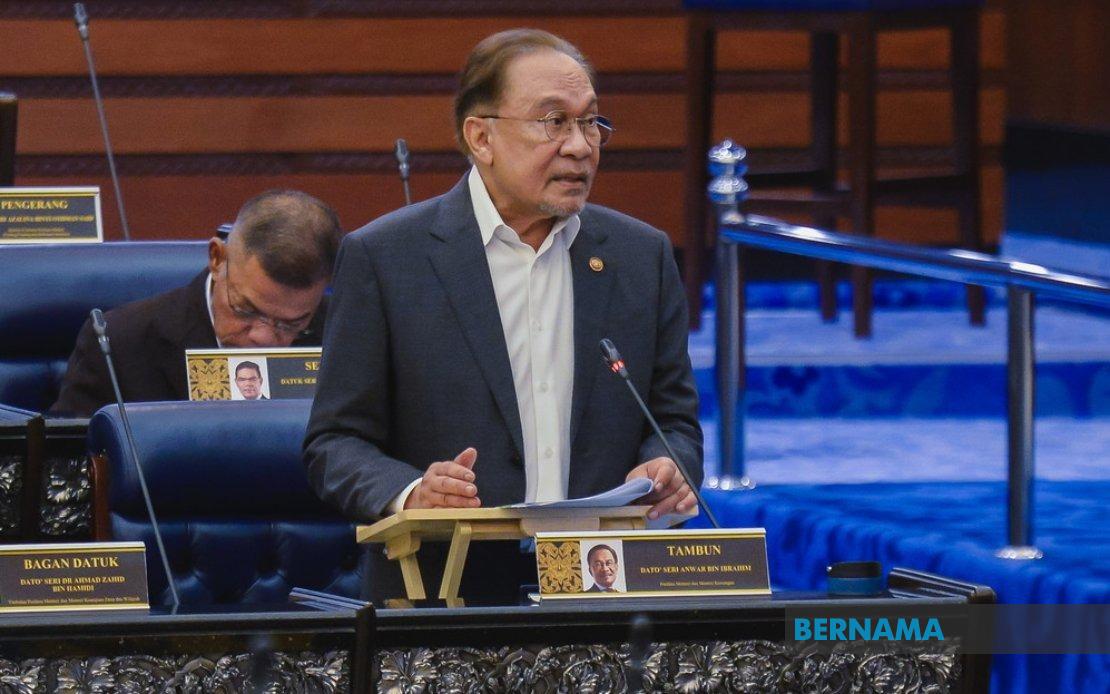
Prime Minister Datuk Seri Anwar Ibrahim has drawn a firm line on how states can access additional federal funding for development projects that require a Notice of Change (NOC), declaring that fresh negotiations are mandatory before any extra allocation or loan can be approved. Speaking during Minister's Question Time in the Dewan Rakyat, Anwar emphasised the need for a structured approach to handling cost escalations in state-level infrastructure schemes, signalling the government's intent to maintain fiscal discipline across the federal system.
The Prime Minister's statement carries significant implications for Malaysia's federal structure and the relationship between the Federal Government and state administrations. An NOC, which formalises changes to original project specifications and scope, automatically triggers additional financial exposure that cannot be ignored or rubber-stamped. Anwar's position reflects growing concern within Putrajaya that states may have previously assumed they could simply request more money without justification, a practice the current administration is determined to curtail. This approach aims to prevent project cost spirals that could burden federal finances and undermine the government's broader fiscal consolidation objectives.
According to Anwar, any assessment of an NOC request must begin by identifying the root causes of cost increases. Critically, investigators must determine whether the contractor bears responsibility for the escalation, whether through poor initial costing, material mismanagement, or deliberate claims inflation. This distinction matters enormously because it shapes accountability and potentially determines which party—the state, contractor, or federal government—should absorb the additional expense. Without such scrutiny, perverse incentives could emerge, encouraging states and contractors to knowingly underestimate project costs, then seek federal bailouts when reality diverges from initial budgets.
The Prime Minister also stressed that the Federal Government cannot be automatically bound by decisions made at state level. Once a state government approves an NOC or signs an amendment with a contractor, that decision does not automatically transfer financial obligation to Kuala Lumpur. Instead, a fresh negotiation process must unfold, with Putrajaya treating each request on its merits rather than as a foregone conclusion. This represents a significant assertion of federal authority and fiscal gatekeeping, potentially frustrating state governments accustomed to greater flexibility, but it reflects the administration's determination to prevent the federal budget from becoming a dumping ground for state overspends.
The immediate trigger for Anwar's remarks was a supplementary question from Datuk Awang Hashim (PN-Pendang) concerning Kedah's request for additional funding to complete the Pulau Bunting Water Treatment Plant project. This facility represents a critical piece of Kedah's water infrastructure, yet the additional costs indicate either flaws in the original planning phase or genuine unforeseen circumstances. Without knowing the specifics, it is difficult to assess whether Kedah's request is reasonable or symptomatic of broader mismanagement. However, Anwar's response suggests the Federal Government intends to scrutinise such requests carefully rather than approve them reflexively.
The involvement of Deputy Prime Minister and Energy Transition and Water Transformation Minister Datuk Seri Fadillah Yusof signals that the Kedah water project will receive detailed technical and financial review. Fadillah's portfolio encompasses the water sector, positioning him to assess whether the additional funding is genuinely warranted or whether project management issues lie at the heart of the cost overrun. His expected explanation to Parliament will likely provide more granular insight into the government's criteria for evaluating NOC-related funding requests, potentially setting a precedent for how similar cases are handled in the future.
The policy position articulated by Anwar reflects broader challenges across Malaysia's development sector. Large infrastructure projects frequently experience cost creep, schedule delays, and quality issues that compound expenses. Whether caused by poor planning, contractor underperformance, material inflation, or changing requirements, these problems cascade through federal and state budgets alike. By insisting on renegotiation and root-cause analysis, the government hopes to inject more rigour into project management and cost discipline, potentially preventing future overruns before they metastasise.
For state governments, the implication is clear: they must exercise greater due diligence when awarding contracts and approving amendments. Signing off on an NOC without confidence in the justification and without securing federal pre-approval in principle risks creating a funding shortfall that cannot be easily resolved. States must also be prepared to defend their requests in detail, demonstrating that cost increases were unavoidable and proportionate. This shift may slow some projects during the negotiation phase, but it could ultimately protect both state and federal finances.
The Malaysian construction and infrastructure sectors will likely take note of this policy shift. Contractors may face additional scrutiny when submitting variation claims, and project managers may be expected to demonstrate more rigorous cost control from inception. The policy also has implications for how development partnerships between federal and state governments are structured, potentially encouraging more transparent cost-sharing arrangements upfront rather than relying on subsequent renegotiations.
Anwar's stance also reflects the government's commitment to fiscal prudence at a time when Malaysia's debt levels remain elevated and economic growth faces headwinds. Every ringgit committed to unplanned project amendments is a ringgit unavailable for other priorities, whether health, education, or debt reduction. By tightening the approval process for NOCs, the Federal Government is attempting to protect its fiscal space while still enabling legitimate infrastructure development at the state level.
Looking ahead, this issue will likely feature prominently in centre-state fiscal negotiations. States may push back against stricter requirements, arguing that federal inflexibility hampers development and leaves communities with incomplete or delayed projects. The Federal Government will need to balance firmness on fiscal discipline with pragmatism about genuine implementation challenges. How effectively the government manages this balance will shape not only the Pulau Bunting project's outcome but also the broader health of Malaysia's federal-state development partnership in coming years.

