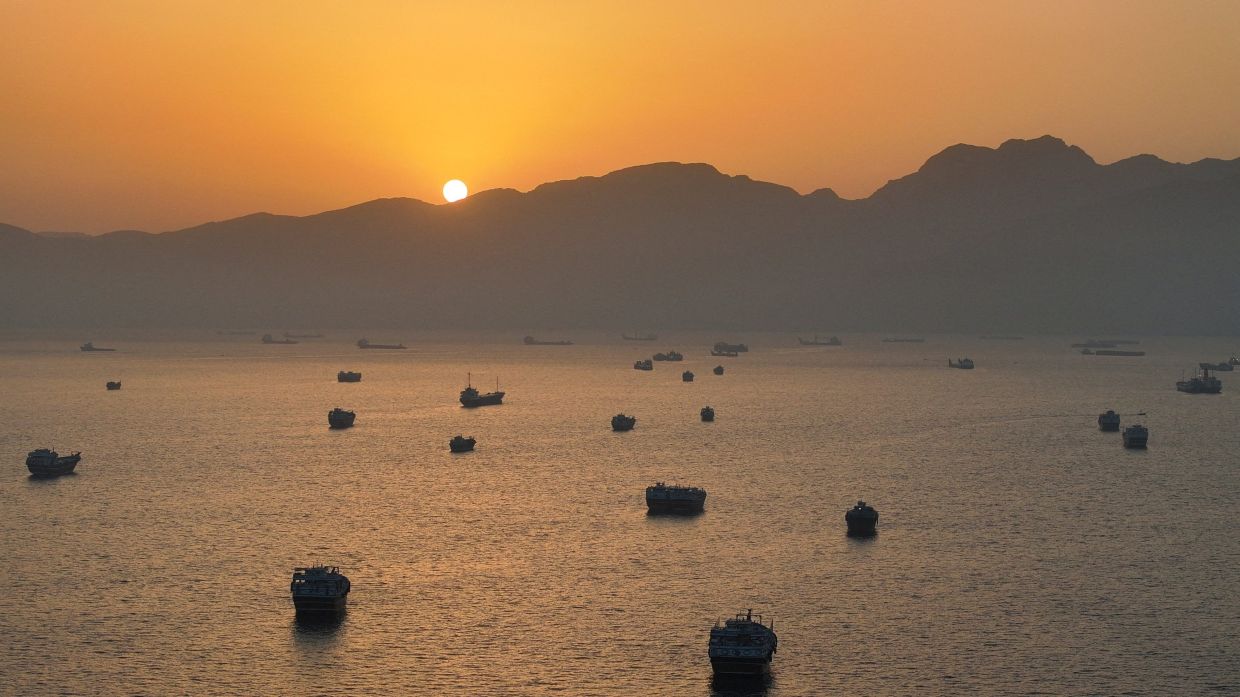
A significant bottleneck in global energy supplies is beginning to ease as three large crude carriers departed the Strait of Hormuz on Wednesday carrying approximately 5 million barrels of oil, marking the latest sign that the interim agreement between Iran and the United States is freeing up petroleum stocks that have accumulated in the Persian Gulf region. The departure of these vessels represents a crucial turning point in the effort to restore normal shipping patterns through one of the world's most critical maritime chokepoints, where roughly one-third of globally traded seaborne crude typically transits each day.
The South Korean-flagged VL Breeze, a Very Large Crude Carrier managed by Hyundai Oilbank, successfully navigated the strait with 2 million barrels of condensate from Qatar and crude from Abu Dhabi destined for the South Korean port of Daesan. This particular vessel's departure carries symbolic weight given South Korea's heavy dependence on Middle Eastern oil imports to fuel its petrochemical and refining industries. Simultaneously, the Indian Oil Corporation chartered the VLCC Plata Carrier to transport 2 million barrels of Saudi crude outbound from the Gulf, while the Suezmax tanker Prudent Warrior proceeded toward Sohar in Oman with 1 million barrels of Iraqi Basrah crude. The movement of multiple vessels in a single day underscores how the diplomatic breakthrough is catalysing activity that had been stalled for weeks.
Shipping analysts and monitoring firms including LSEG and Kpler have estimated that approximately 90 million barrels of crude oil had accumulated within the Gulf region, effectively trapped by the geopolitical tensions that have characterised the broader Middle East conflict. This massive stockpile created a dual pressure on global markets: it represented lost supply to international buyers whilst simultaneously acting as a ceiling on crude prices as traders anticipated eventual release. The gradual opening of shipping lanes addresses both concerns simultaneously, particularly benefiting refineries across Asia that have endured supply uncertainties affecting their operational planning and profit margins.
South Korea's maritime ministry provided confirmation on Wednesday that four vessels operated by South Korean shipping companies had successfully transited the strait, with one returning to South Korean ports and others proceeding to alternative destinations. However, the broader picture remains constrained, with the ministry noting that 18 of the 26 vessels initially stranded since the beginning of Middle East hostilities continue to remain within the Gulf. This indicates that whilst progress is occurring, the recovery of normal shipping conditions remains incomplete, and many vessel operators continue to face extended waiting periods or routing complications.
The temporary maritime corridors established through joint efforts by Oman and the International Maritime Organisation represent an institutional response to the navigation challenges that have characterised recent months. Oman, positioned at the strategic entrance to the Gulf, has committed to maintaining the Strait of Hormuz as an open shipping channel without imposing transit tolls, a reassurance to vessel operators concerned about additional costs or restrictions. The internationally sanctioned northern and southern shipping lanes provide designated pathways intended to enhance safety and reduce encounters between commercial shipping and military activities that have occasionally disrupted traditional routes.
Liquefied natural gas markets are experiencing their own revival, with empty LNG tankers now returning to the region to load cargoes at record pace since the conflict began. The supertankers Shandong Redwood and Milaha Qatar represent the latest vessels spotted west of the strait positioning themselves to collect LNG from Qatar, bringing the total number of empty LNG carriers transiting through Hormuz to nine. This represents the highest volume since regional hostilities erupted, signalling that both crude oil and natural gas exporters anticipate sustained demand for their energy products.
Qatar, a global leader in liquefied natural gas production and export, is preparing to accelerate its operations significantly. According to reports citing Qatar's Prime Minister Sheikh Mohammed bin Abdulrahman al-Thani, the nation expects to restore full LNG production capacity within a matter of weeks, suggesting that regional energy producers have increasing confidence in the stability afforded by the interim Iran-US arrangement. This statement carries considerable weight in global energy markets, as Qatar supplies liquefied natural gas to customers across Europe, Asia, and beyond, with any production constraints having immediate ripple effects through international fuel costs and energy security calculations.
The geopolitical significance of these developments extends well beyond immediate commodity prices, reflecting broader shifts in regional tensions and international diplomatic engagement. The interim agreement between Iran and the United States addresses longstanding grievances and creates space for commercial normalisation that benefits not only the signatories but the entire global economy dependent on uninterrupted energy flows from the Middle East. For Malaysia and other Southeast Asian economies, relief in energy supply chains translates directly into more predictable petroleum costs for transportation, manufacturing, and power generation sectors that remain sensitive to international crude price fluctuations.
Refinery operators throughout Asia, including those in Malaysia, India, and South Korea, have weathered months of supply uncertainty that complicated procurement decisions and operational scheduling. The resumption of more predictable shipping patterns through Hormuz allows these facilities to plan with greater confidence and potentially negotiate more favourable terms with Gulf suppliers now confident in their ability to fulfil export commitments. The broader implication is that Asian manufacturing competitiveness, which relies heavily on stable energy input costs, stands to improve as supply chain disruptions ease.
Looking forward, the critical metric to monitor will be the pace at which the remaining 18 stranded vessels achieve departure, alongside the trajectory of new shipments entering the market. Should diplomatic gains prove durable, the accumulated crude overhang currently depressing production incentives should gradually diminish, potentially creating conditions for more balanced energy markets. Conversely, any deterioration in Iran-US relations could rapidly reverse these gains, underscoring how Middle Eastern geopolitical fragility continues to pose systemic risks to global economic stability and the growth aspirations of energy-importing developing economies throughout Asia.

