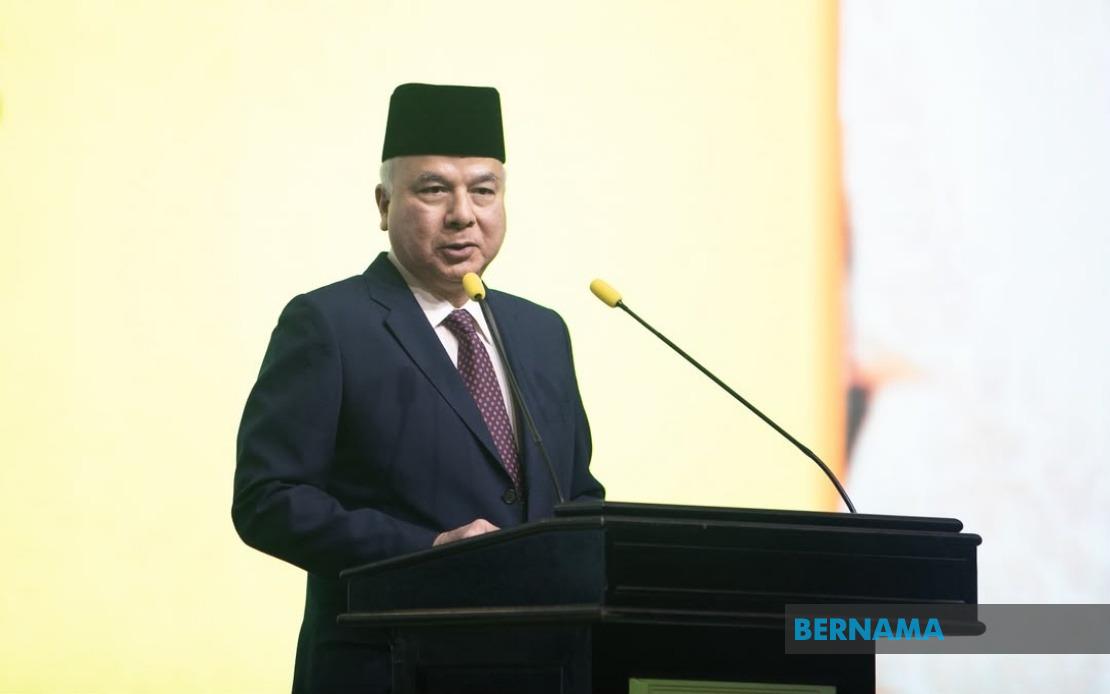
Perak's Sultan Nazrin Shah delivered a significant message on governance at the 8th World Conference on Islamic Thought and Civilisation in Ipoh, cautioning that even the most resource-rich nations with talented populations can fail their citizens without institutional strength and leadership accountability. Speaking at the conference themed "Everyone Matters: Pride and Unity in Islam," His Royal Highness articulated a comprehensive vision of what effective governance requires in contemporary societies, drawing connections between institutional integrity and citizen welfare that resonate particularly for Southeast Asian nations navigating their own governance challenges.
The Sultan's remarks came as Malaysia continues to grapple with institutional reforms and public trust issues following years of political transition. His emphasis on institutional durability suggests that short-term political solutions cannot substitute for systemic strengthening. He underscored that good governance in practical application demands the coordinated functioning of multiple institutional elements, each designed to outlast individual leaders or administrations. This observation carries particular weight in regional contexts where leadership transitions often disrupt policy continuity or create uncertainty about institutional independence.
Transparency in public resource management emerged as a cornerstone of the Sultan's governance framework. He argued that citizens need confidence that their tax contributions serve collective rather than partisan interests. This principle directly addresses concerns across Southeast Asia about fiscal accountability and the proper allocation of government budgets. In Malaysia's context, where public spending scrutiny has intensified following high-profile cases of corruption and mismanagement, the Sultan's framing of budgets as moral documents reveals whose needs governments prioritise, offering a framework through which citizens can evaluate whether their leaders act in their interests.
Impartial application of the rule of law represented another pillar of Sultan Nazrin's governance vision. He stressed that accountability cannot be selective, with powerful individuals exempt while the disadvantaged receive full protection. This principle challenges governance models where political connections determine legal outcomes. For Malaysia and the region, where judicial independence and equal protection remain contested issues, the Sultan's formulation provides a yardstick for assessing institutional health. The notion that no one "sits above accountability" directly engages with concerns about political elites operating under different rules than ordinary citizens.
Political culture received substantive attention in the Sultan's analysis. He distinguished between the absence of debate and political stability, noting that many of the world's most stable democracies experience vigorous disagreement. What matters, he argued, is channelling disagreement through legitimate institutions rather than through violence or extra-constitutional means. This distinction proves relevant for Southeast Asia, where political contestation sometimes escalates beyond institutional boundaries. The Sultan suggested that instability emerges not from disagreement itself but from erosion of shared rules for resolving disputes. When citizens lose faith in electoral fairness, judicial independence, or the integrity of public office, social cohesion fractures, with vulnerable populations suffering most severely.
The Sultan connected institutional integrity directly to citizen welfare, particularly for marginalised groups. He emphasized that the principle of "everyone matters" must originate within government itself, materially reflected in budgetary priorities. This observation highlights how abstract governance commitments become concrete through resource allocation decisions. Malaysian readers will recognise the relevance of this argument to ongoing debates about equitable development, affirmative action policies, and whether government spending genuinely prioritises vulnerable communities or primarily serves elite interests.
A profesionalised civil service operating without regard to race, religion, or political affiliation represents another dimension of the Sultan's governance framework. He presented this institutional design as the embodiment of national unity in its most practical form. For Malaysia, a multi-ethnic, multi-religious nation, this argument carries particular significance, suggesting that institutional neutrality rather than ethno-religious accommodation provides the foundation for genuine unity. Leaders who govern with humility, listen before legislating, and recognise their power as borrowed rather than owned create stronger citizen loyalty than rhetorical appeals, according to the Sultan's analysis.
The Sultan shifted attention toward development strategy, arguing that modern prosperity requires international engagement rather than isolation. Trade, investment, knowledge exchange, and technology transfer constitute the currents enabling contemporary economic growth. This perspective counters protectionist impulses sometimes emerging in Southeast Asian policymaking. The Sultan presented evidence that economies embracing open trade while building resilient, diversified domestic industries outperform both protectionist nations and those dependent on single sectors. For Malaysia, balancing openness with domestic capacity-building remains an ongoing policy challenge, particularly as regional competition intensifies.
Cooperation across multiple sectors emerged as fundamental to sustainable growth in the Sultan's framework. Public-private partnerships, international collaboration, and civil society engagement all feature in his model of development. However, he cautioned that cooperation must not become dependency, nor should openness compromise a nation's autonomous policy-making capacity. This nuance recognises that developing nations face genuine risks from unequal partnerships, a concern particularly acute in Southeast Asia where economic relationships with larger powers sometimes constrain policy autonomy. The Sultan's insistence on balance reflects sophisticated understanding of integration challenges facing regional nations.
Islamic finance received particular emphasis as an underutilised tool for development cooperation within the Organisation of Islamic Cooperation. The Sultan noted Malaysia's established position as a global Islamic finance hub, spanning sukuk issuance, takaful insurance, and Syariah-compliant fund management. However, he argued that Islamic finance's true potential extends beyond mere compliance with prohibitions on riba, resting instead on distinctive philosophies of risk-sharing, asset-backing, and equitable economic participation. This vision positions Islamic finance as capable of addressing development challenges across the OIC, from clean water infrastructure to renewable energy, through patient capital mechanisms that conventional finance struggles to provide.
The Sultan's emphasis on Islamic finance's risk-sharing principles offers a development paradigm distinct from conventional debt-based financing, potentially addressing structural obstacles facing many Southeast Asian economies. Small and medium enterprises across the region might particularly benefit from Islamic finance mechanisms explicitly designed for equitable participation rather than pure profit extraction. Infrastructure development, renewable energy transition, and inclusive growth objectives could potentially find new financing channels through expanded Islamic finance cooperation, creating alternatives to existing multilateral mechanisms and development banks.
Sultun Nazrin's address ultimately synthesised governance principles, development strategy, and Islamic economic philosophy into a coherent vision of national progress. His argument that institutions, accountability, transparency, and equitable resource allocation form prerequisites for sustainable development provides a framework applicable across Southeast Asian contexts. By emphasising institutional durability over personality-driven governance, the Sultan challenged prevailing approaches in many regional nations. For Malaysia specifically, his remarks on civil service neutrality, judicial independence, budgetary morality, and balanced openness address contemporary governance debates with intellectual seriousness often absent from political discourse.

