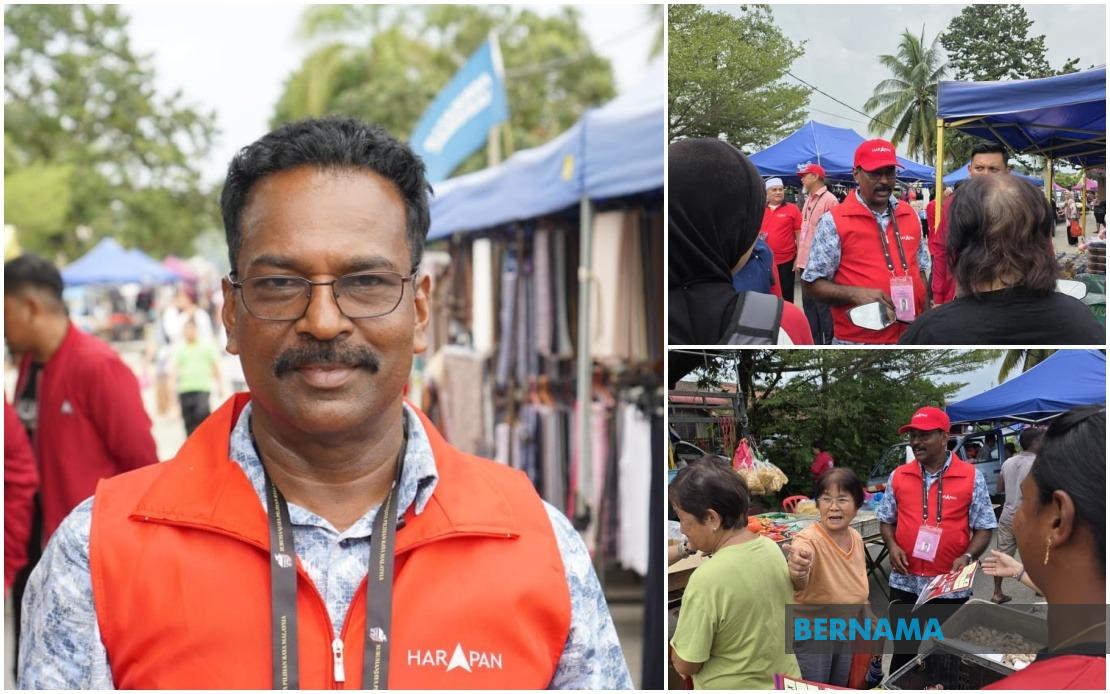
C. Subramani, the Pakatan Harapan candidate contesting Bukit Kepong in the 16th Johor state election, is banking on a groundswell of voter discontent to secure a surprise victory in a three-way contest dominated by entrenched political forces. The Pagoh-born politician projects confidence in his electoral prospects, citing what he characterises as encouraging responses from residents throughout the campaign trail. His optimism rests on a fundamental premise: that ordinary Johoreans in this constituency are hungry for tangible change and new leadership willing to address longstanding community grievances.
Subramani's strategic positioning hinges on recognising that governance improvements require seamless coordination between state and federal administrations. He argues that when elected representatives and government agencies operate in lockstep, development initiatives flow more smoothly and constituent problems are resolved with greater efficiency. This argument carries particular weight in Malaysia's federal system, where overlapping jurisdictions frequently create bureaucratic friction. By emphasising administrative alignment, Subramani is essentially promising voters that they will no longer fall victim to the excuse that a problem belongs to "another level of government." Issues spanning education policy, water management, and drainage systems would, under his proposed framework, find clear escalation pathways to relevant federal ministers or the Prime Minister himself.
The candidate's campaign strategy reflects serious groundwork across Bukit Kepong's diverse demographics. His visits to Orang Asli settlements represent more than symbolic gestures; they constitute a deliberate effort to map the constituency's most acute infrastructure deficits and economic pressures. These indigenous communities, historically marginalised in development conversations, have become a focal point in Subramani's platform. His candid acknowledgment that he has "witnessed the challenges they face" suggests he has moved beyond surface-level campaign rhetoric to document specific community needs requiring immediate intervention.
Among Subramani's articulated priorities is the transformation of the Bukit Kepong Gallery into a heritage tourism destination capable of generating local economic activity. This initiative appeals to multiple voter segments simultaneously: heritage enthusiasts, small business owners seeking expanded market opportunities, and young people seeking employment alternatives. Tourism development, if executed properly, could animate the local economy without requiring heavy industrial infrastructure that typically brings environmental and social costs. Complementing this vision, he identifies practical grievances that resonate across income levels: inadequate street lighting creating safety hazards, infrastructure bottlenecks via narrow bridges, and the perpetual shortage of affordable housing for the B40 community.
Subramani's prior electoral experience, though unsuccessful, provides him with valuable institutional knowledge. His 2022 contest in Buloh Kasap exposed him to campaign mechanics, voter psychology, and the mechanics of state politics in Johor. Returning to contest again, albeit in a different seat, demonstrates resilience and commitment. His tenure as Pagoh PKR chief has embedded him within party structures and local networks, positioning him as more than a parachuted candidate from higher party echelons. This local rootedness matters significantly in constituencies where voters retain scepticism toward outsiders.
The electoral context adds complexity to Subramani's challenge. Bukit Kepong features a genuine three-cornered contest involving Pakatan Harapan, Barisan Nasional, and Perikatan Nasional candidates. The previous holder, Datuk Dr Sahruddin Jamal from Perikatan-Bersatu, secured the seat with only a modest 710-vote majority in 2022, indicating genuine volatility and vulnerability. This narrow winning margin transforms Bukit Kepong from a safely held seat into genuinely competitive terrain. For opposition forces, the fragmentation of votes across three major coalitions creates genuine opportunities for upsets, provided campaigning proves efficient and opponent bases remain demobilised.
The broader Johor election context amplifies these local dynamics. With 172 candidates competing across 56 state assembly seats and approximately 2.7 million registered voters preparing to cast ballots, the electorate appears engaged and the outcome uncertain. Johor, historically a political bellwether for Malaysian elections, often signals broader national sentiment shifts. If anti-incumbent feeling proves sufficiently pronounced to unseat sitting representatives across multiple constituencies, Subramani's Bukit Kepong campaign could benefit from momentum generated elsewhere in the state.
Subramani's optimistic framing—that residents are "looking for change" and he is therefore "not worried about facing competition"—reflects calculated confidence rather than overconfidence. His acknowledgment of the three-way contest demonstrates awareness of the legitimate threats posed by both establishment coalitions. Yet by reframing the election as fundamentally about voter appetite for new approaches, he positions himself as the change candidate while his opponents represent continuity and entrenched interests. This framing proves particularly potent when incumbent performance has disappointed constituents and their expectations for improvement remain unfulfilled.
The emphasis on federal-state administrative alignment merits closer examination for what it reveals about contemporary Malaysian governance challenges. Subramani's repeated invocation of this theme suggests that voters in Bukit Kepong experience real friction from siloed government operations. Local issues languish unresolved because responsibility becomes diffuse, ministries lack coordination, and constituent problems slip through jurisdictional cracks. By offering the vision of streamlined, cooperative governance, Subramani addresses a genuine pain point in how Malaysians experience their state machinery. For voters accustomed to bureaucratic frustration, this promise of smoother administration may prove more compelling than abstract ideological messaging.
The Orang Asli engagement component deserves particular attention, as indigenous communities represent a constituency historically underserved by major political coalitions. Rather than treating Orang Asli settlements as voting blocs to be mobilised via ethnic politics, Subramani's approach involves substantive dialogue about infrastructure and livelihood challenges. Should this translate into significant support from indigenous voters, it could provide the margin of victory necessary to overcome his established opponents, particularly if conventional support bases across other constituencies remain fragmented or lukewarm.
Subramani's development agenda—heritage tourism, street lighting, bridge repair, affordable housing—reads as genuinely local rather than nationally templateised. The specificity suggests authentic engagement with constituent feedback rather than top-down imposition of campaign themes. For voters fatigued by politicians offering boilerplate promises, this granular, place-based approach communicates that the candidate has actually listened to community conversations. In tightly contested elections where margins prove slim, such authenticity may indeed prove decisive.

