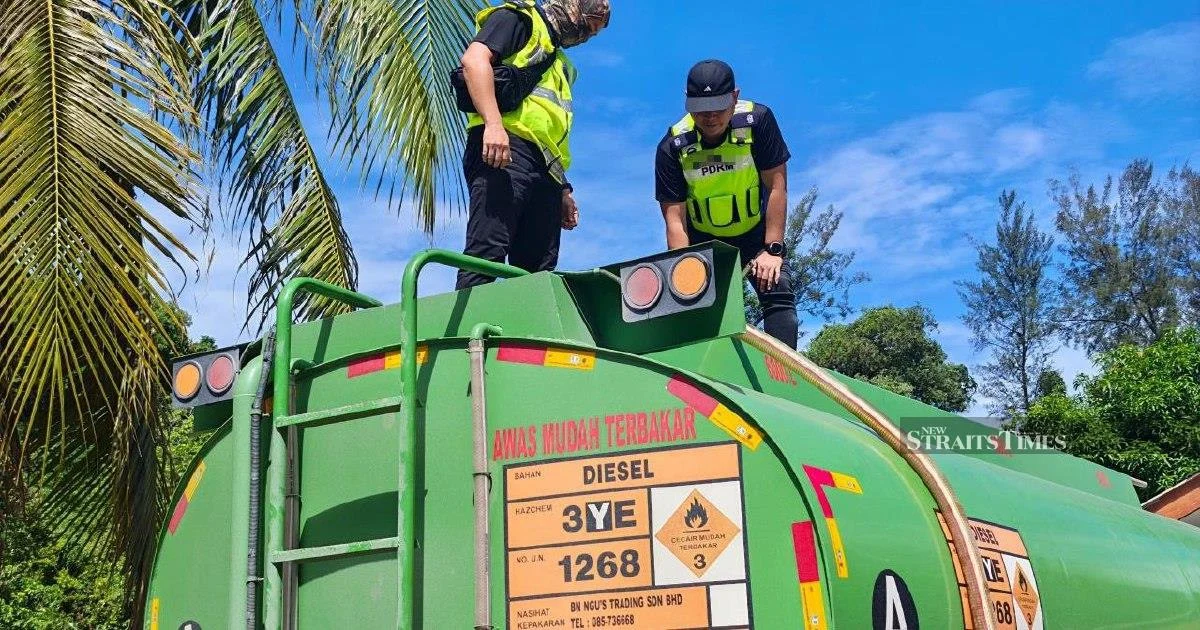
Law enforcement agencies in Miri have successfully dismantled an organised diesel smuggling operation centred in Tanjung Lobang, recovering a substantial quantity of government-subsidised fuel and apprehending four suspects implicated in the illicit trade. The discovery represents a significant blow against fuel diversion networks that have long plagued Malaysia's energy security and undermined the integrity of the subsidy system meant to support vulnerable communities and legitimate business operators.
The operation centred on a bungalow property that had been converted into a clandestine fuel depot, disguised to avoid detection by regular inspection patrols. Such hidden storage facilities have become increasingly sophisticated, reflecting the high profitability of black market diesel sales where unsubsidised prices fetch considerably more than government-controlled rates. The choice of a residential structure rather than a commercial site demonstrates how smugglers deliberately exploit regulatory gaps by situating operations in areas with lighter enforcement scrutiny.
The seizure of 15,000 litres marks one of the more substantial fuel recovery operations in recent months within the Sarawak region. This volume, when converted to market value at unsubsidised rates, would have generated significant illegal profits had the operation continued undetected. The scale of the bust underscores how individual cells within these networks accumulate substantial quantities over time, often through coordinated theft or diversion from legitimate supply chains and distribution networks.
Fuel subsidy diversion has emerged as a persistent challenge for Malaysian authorities, creating economic distortions and diverting government support away from intended recipients. The subsidised diesel scheme exists primarily to shield transportation operators, fishing communities, and agricultural sectors from volatile international crude prices. When significant quantities are siphoned into black markets—particularly across maritime borders toward neighbouring countries—the subsidy loses its intended protective effect while simultaneously imposing fiscal strain on government finances.
The four arrested individuals are now undergoing investigation to determine their specific roles within the smuggling hierarchy and whether connections exist to larger distribution networks operating across Sarawak and potentially beyond state borders. Such investigations typically reveal whether suspects were simply managing storage and distribution, or whether they played roles in procurement, financing, or coordinating shipments to external markets. Understanding the operational structure remains crucial for law enforcement seeking to identify and disrupt upstream sources supplying these depots.
Tanjung Lobang, strategically positioned along Miri's coastal region, has historically served as a focal point for maritime-related smuggling activities. The area's geographic proximity to sea routes and international waters creates natural vulnerabilities that organised syndicates routinely exploit. Local enforcement coordination between maritime authorities and land-based police units has proven essential in recent years for identifying suspicious activity patterns and locating hidden installations before significant quantities can be moved offshore.
The diesel contraband trade operates within a complex ecosystem involving multiple stakeholders across the supply chain. Transit hubs like those discovered in Tanjung Lobang typically serve as consolidation points where fuel accumulated through various illicit channels—including theft, siphoning, and fraudulent documentation—gets stored before bulk export or domestic redistribution. Understanding these logistics networks has become increasingly important for Malaysian authorities developing prevention strategies.
The detection of this operation reflects ongoing investment in intelligence gathering and surveillance capacity within Sarawak's enforcement agencies. Successful identification often depends on public tip-offs, routine patrol observations of suspicious activity, or analytical work connecting unusual movement patterns to suspected locations. The Miri operation demonstrates how conventional investigative techniques, when properly resourced and coordinated, can yield substantial results against organised fuel smuggling operations.
Beyond the immediate seizure and arrests, this bust carries implications for Malaysia's broader energy security and subsidy integrity. Fuel diversion networks compromise government resources intended to support economic competitiveness and social welfare. Persistent enforcement against these operations sends deterrent signals to potential participants while building prosecutorial cases that can result in meaningful penalties. However, addressing the root drivers—particularly the price differential between subsidised and international rates—remains essential for developing comprehensive long-term solutions.
Authorities have intensified operations targeting fuel smuggling throughout 2024, reflecting escalated commitment to combating organised black market activities. Miri's strategic importance as a coastal commercial hub means success against smuggling here has ripple effects across Sarawak's wider enforcement environment. The investigation into the four arrested individuals will likely reveal connections to other suspected facilities or personnel, potentially leading to follow-up operations that further degrade smuggling network capabilities in the region.

