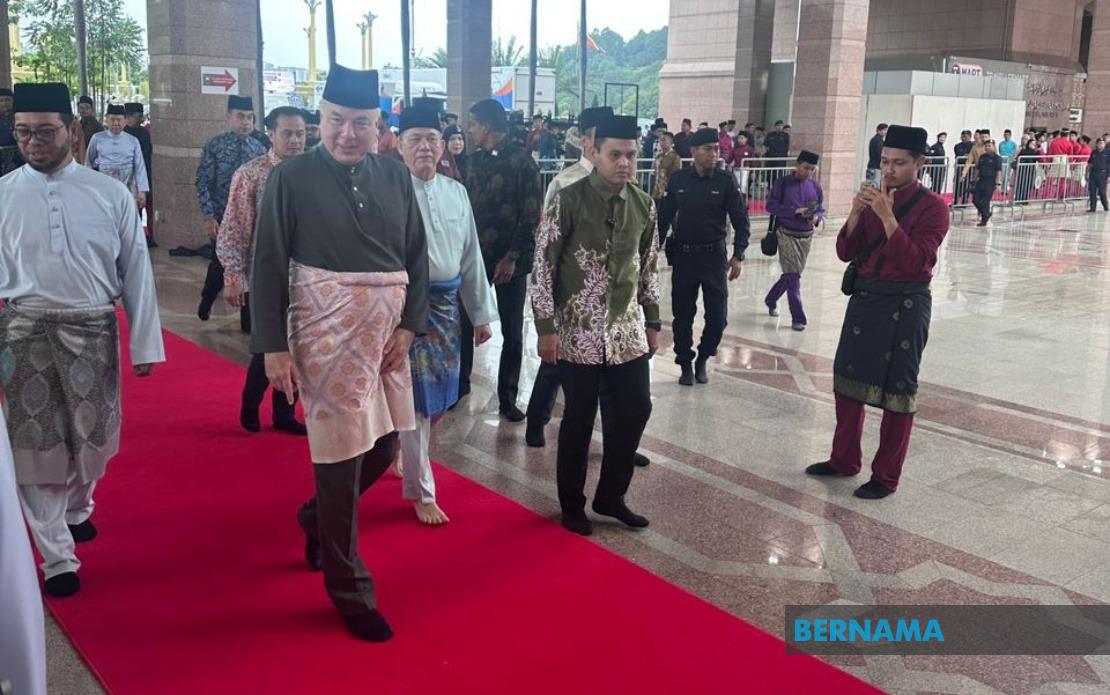
Sultan Nazrin Shah, the Deputy Yang di-Pertuan Agong, delivered a pointed message to the nation's leadership on June 17 at the National Level Maal Hijrah 1448 Celebration in Putrajaya. The Sultan warned that countries suffer significantly when their leaders succumb to impulsive decision-making, emotional reactions, and reckless action rooted in personal sentiments rather than reasoned analysis. His intervention reflects growing concern about governance standards at the highest levels, a message particularly resonant in Malaysia where policy reversals and sudden administrative shifts have occasionally disrupted public confidence and economic planning.
The Sultan emphasised that hasty decisions made without thorough consideration inevitably create problems that ordinary citizens must ultimately resolve at considerable personal expense. When leaders prioritise immediate gains over long-term consequences, the burden of adjustment falls on the population at large. This observation carries particular weight in Southeast Asia, where rapid policy shifts can destabilise emerging economies and undermine investor confidence. The Sultan's insistence on "calmness, openness, and cautiousness" in leadership decision-making represents a fundamental statement about the prerequisites for sound governance, advocating for leaders who base their choices on well-informed analysis rather than reactive impulses.
The royal address came during festivities attended by approximately 5,000 participants, including Deputy Prime Minister Datuk Seri Fadillah Yusof and Minister in the Prime Minister's Department (Religious Affairs) Dr Zulkifli Hasan. The celebration, themed "MADANI Dihayati, Ummah Diberkati", provided an appropriate platform for the Sultan to reflect on principles of leadership and national direction. The presence of senior government officials suggested receptiveness to the monarch's counsel, though the Sultan's remarks functioned as much as gentle correction as exhortation.
Sultan Nazrin directed leaders' attention to lessons embedded within the Hijrah itself—the Prophet Muhammad's migration from Mecca to Medina. The Sultan highlighted the Prophet's strategic acumen in appointing Abdullah bin Uraiqit, a non-Muslim guide, based purely on his expertise, knowledge of desert routes, and proven reliability. This historical example carries profound implications for modern governance in multi-ethnic, multi-religious societies like Malaysia. The Sultan's invocation demonstrates that merit and competence must supersede sectarian considerations, a principle that resonates with Malaysia's constitutional framework of pluralistic administration yet acknowledges persistent challenges in its implementation.
The Sultan stressed that national greatness derives not from self-satisfied reflection on past accomplishments but from extracting lessons that illuminate future development. This perspective counters nationalist narratives that emphasise historical achievement without engaging contemporary realities. A truly great nation, in the Sultan's formulation, demonstrates capacity to learn and evolve. For Malaysia specifically, this suggests the need to transcend nostalgia for previous eras of growth and instead address current structural challenges—infrastructure modernisation, skill development, technological adaptation—with the same purposefulness that drove earlier development phases.
Central to the Sultan's message was an extended meditation on sacrifice as the foundation of meaningful achievement. He characterised sacrifice not as mere acceptance of loss but as subordination of personal interest to collective good, demanding courage, perseverance, and genuine conviction. The Sultan expressed alarm at erosion of this value within Muslim communities, observing that the spirit of sacrifice has become increasingly scarce and, troublingly, often merely rhetorical. This observation applies broadly across the region, where rising affluence and consumer culture have arguably diminished willingness for collective sacrifice in pursuit of national objectives.
The Sultan warned that the Muslim community faces mounting global pressures and uncertainties that require restoration of the sacrificial spirit. Without such restoration, social cohesion and institutional resilience will deteriorate. The message implicitly critiques contemporary political culture where leaders frequently invoke sacrifice while citizens bear disproportionate costs for elite preferences. Genuine sacrifice, the Sultan argued, must become a normalised value embedded in national consciousness, particularly among those wielding power and influence.
Unity emerged as the Sultan's third major theme, drawing inspiration from the Medina Charter's demonstrated ability to unite diverse populations through tolerance and equitable leadership. The Sultan argued that success in advancing Islamic civilisation depends fundamentally on just, wise governance operating within frameworks of intercommunal respect. This reference carries particular significance for Malaysia, whose social stability rests substantially on constitutional arrangements protecting minority rights and enabling coexistence across religious and ethnic lines. The Sultan's invocation of the Medina Charter as a historical precedent for such arrangements implicitly affirms Malaysia's foundational pluralism.
The Sultan emphasised that effective governance requires citizens' willingness to cooperate, respect difference, and maintain harmony across the boundaries of ethnicity, culture, and religion, provided leadership remains genuinely just and wise. This formulation acknowledges both the responsibility of leaders and the reciprocal obligations of citizens. For Malaysia's complex social fabric, such interdependence proves essential; unity cannot be imposed through force or majoritarian dominance but must emerge from leaders genuinely committed to equitable administration and populations willing to transcend narrow sectional interest.
The Sultan reframed the significance of Maal Hijrah celebration itself, arguing that its importance transcends commemorative function. Rather than serving merely as a historical marker or nostalgic exercise, the annual observance should prompt collective self-examination, honest reckoning with past errors, and awakening to contemporary realities obscured by material preoccupations. This interpretation transforms religious observance into a framework for practical governance reflection. The Sultan suggested that societies risk becoming overwhelmed by worldly concerns, losing sight of enduring principles and fundamental values that sustain institutional legitimacy and social coherence.
The Sultan's address ultimately articulated a comprehensive vision of leadership and national development centred on deliberative wisdom, sacrificial commitment, and genuine pluralism. His warnings against impulsive governance directly address patterns visible across Southeast Asia, where rapid policy shifts, personalised decision-making, and institutional instability have undermined development outcomes. For Malaysia specifically, the message affirmed constitutional principles while gently challenging their inconsistent implementation, offering a framework through which political leaders might evaluate their own performance against standards of reasoned judgment, inclusive governance, and genuine commitment to collective welfare rather than factional advantage.

