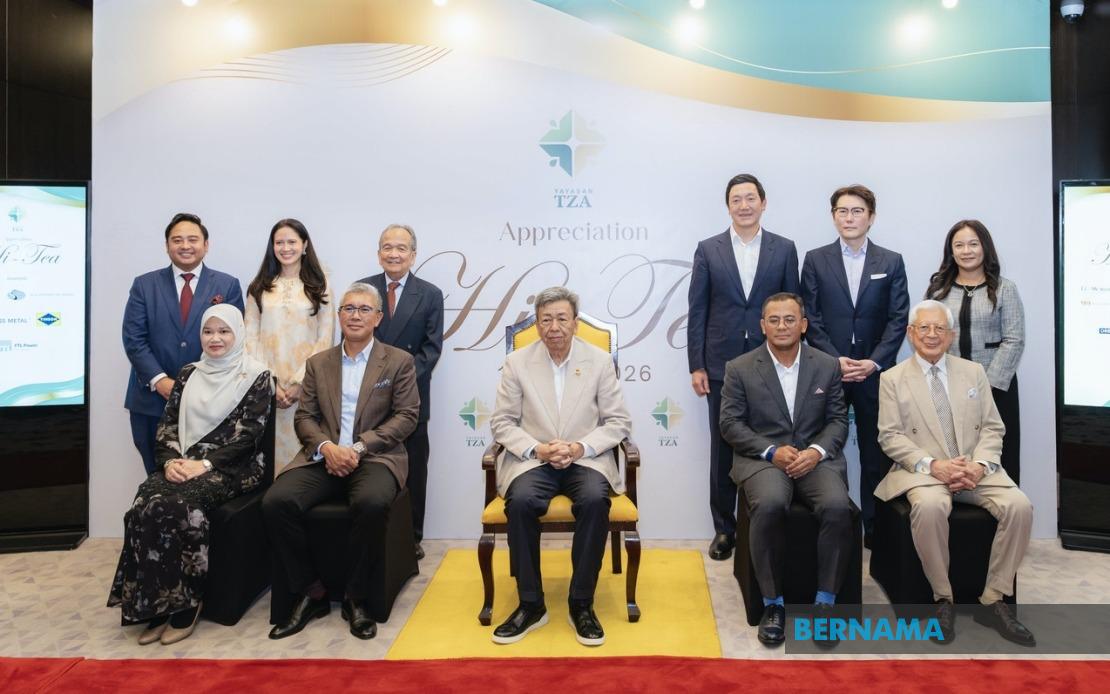
The Sultan of Selangor, Sultan Sharafuddin Idris Shah, graced the Yayasan TZA (YTZA) Appreciation Hi-Tea Ceremony in Kuala Lumpur on June 18, marking a significant occasion for the foundation's commitment to social development in the state. His presence underscored the royal backing for initiatives aimed at uplifting disadvantaged communities through structured programmes and strategic partnerships. The event drew attendance from prominent government officials, including Selangor Menteri Besar Datuk Seri Amirudin Shari and Education Minister Fadhlina Sidek, demonstrating the alignment between state and federal efforts in advancing educational equity.
Tengku Datuk Seri Zafrul Abdul Aziz, advisor to YTZA, articulated the foundation's overarching philosophy during his address, emphasising that the organisation extends beyond immediate relief to foster long-term community resilience and individual empowerment. The foundation's multifaceted approach encompasses direct educational support, environmental sustainability projects, grassroots community engagement, and cultural celebrations targeted at underserved populations. This comprehensive framework reflects an understanding that sustainable development requires simultaneous intervention across educational, social, and environmental dimensions, an approach increasingly recognised as essential for addressing systemic inequality in Malaysia.
Central to YTZA's educational mission is the ACE SPM initiative, a flagship programme designed to strengthen examination preparation among Form Five students from B40 households across Selangor. The programme addresses a critical gap in Malaysia's education landscape where students from lower-income backgrounds often lack access to quality supplementary tuition and mentoring. By focusing on Sijil Pelajaran Malaysia candidates at this pivotal juncture, ACE SPM intervenes at a moment when educational outcomes significantly influence future economic mobility and social advancement.
The programme's reach expanded substantially in 2025, serving 467 students across ten schools throughout Selangor. Beyond this direct school-based engagement, YTZA's digital initiatives extended educational resources to more than 4,000 students, demonstrating how technology can scale impact in an increasingly connected society. This hybrid model combining in-person and online support acknowledges the diverse learning preferences and infrastructure realities across different communities, from urban centres to suburban areas.
The foundation's expansion plans signal confidence in the programme's effectiveness and a recognition of persistent educational inequality. Tengku Zafrul expressed determination to broaden reach in coming years, suggesting that current beneficiary numbers represent merely the initial phase of what aims to become a more comprehensive intervention across the state. For Malaysian policymakers, this growth trajectory offers insights into how private sector philanthropy can complement government education initiatives, particularly where targeted support for disadvantaged cohorts produces measurable outcomes.
Two significant corporate donations announced during the ceremony underscore sustained private sector commitment to educational equity. Kuok Brothers Sdn Bhd contributed RM1 million while YTL Power International Berhad pledged RM300,000, with the mock cheque presentations witnessed by the Sultan. These contributions, totalling RM1.3 million, represent meaningful capital infusion for programme expansion and operational sustainability. The presence of major Malaysian corporations in YTZA's donor base reflects broader corporate social responsibility trends, though such philanthropy warrants examination regarding alignment with national development goals and transparency in impact measurement.
Beyond educational programming, YTZA unveiled Larian KITA@Klang, a community fun run scheduled for October 10 in conjunction with the Sultan of Selangor's Silver Jubilee celebrations. As the fourth iteration of the Larian KITA series, this initiative emphasises inclusive community participation while celebrating local cultural and culinary heritage. Such events serve multiple functions simultaneously: they mobilise communities around shared wellness objectives, generate grassroots engagement with the foundation, and create platforms for celebrating diverse Malaysian cultures.
The October 10 event timing coincides with royal festivities, creating symbolic resonance between institutional leadership and community development. For Selangor residents, participation offers opportunity to engage with both wellness initiatives and heritage celebration. The choice to ground the run in Klang, a municipality with significant cultural and historical significance, demonstrates strategic selection of venues that resonate with local identity and community pride.
Yayasan TZA's trajectory reflects evolving approaches to social development in Malaysia where foundations increasingly adopt hybrid models combining direct service delivery, community mobilisation, and partnerships across sectors. The foundation's emphasis on empowerment rather than mere dependency aligns with international best practices in poverty alleviation and community development. For Southeast Asian nations grappling with similar educational inequities, YTZA's framework offers a potentially replicable model where foundation work, corporate engagement, and government education initiatives operate in complementary rather than competitive relationships.
The appreciation ceremony itself served multiple stakeholder functions, recognising YTZA's donors and partners while demonstrating to potential contributors the tangible outcomes of their support. By showcasing both quantitative metrics (467 students served, 4,000 digital reach) and qualitative commitments (empowerment, resilience, inclusivity), the foundation communicates both accountability and mission clarity. This transparency contrasts with some Malaysian charitable organisations where impact measurement remains opaque and donor engagement limited to periodic solicitation.
The attendance of the Education Minister alongside state-level leadership indicates alignment within Malaysia's governance structure regarding educational equity priorities. Such institutional presence legitimises the foundation's work and potentially signals government receptiveness to expanded private sector engagement in complementary educational initiatives. As federal education policies continue evolving, partnerships with foundations like YTZA offer mechanisms for pilot testing interventions targeting B40 students before broader rollout.
Moving forward, YTZA's expansion trajectory will merit monitoring regarding whether increased scale maintains programme quality and community trust. The foundation's commitment to reaching underserved communities through sustainable empowerment rather than temporary assistance positions it as a significant actor in Malaysia's broader educational equity landscape. For Malaysian stakeholders invested in reducing achievement gaps between student cohorts of different socioeconomic backgrounds, YTZA's work represents both existing progress and a template for expanded intervention warranting continued observation and evaluation.

