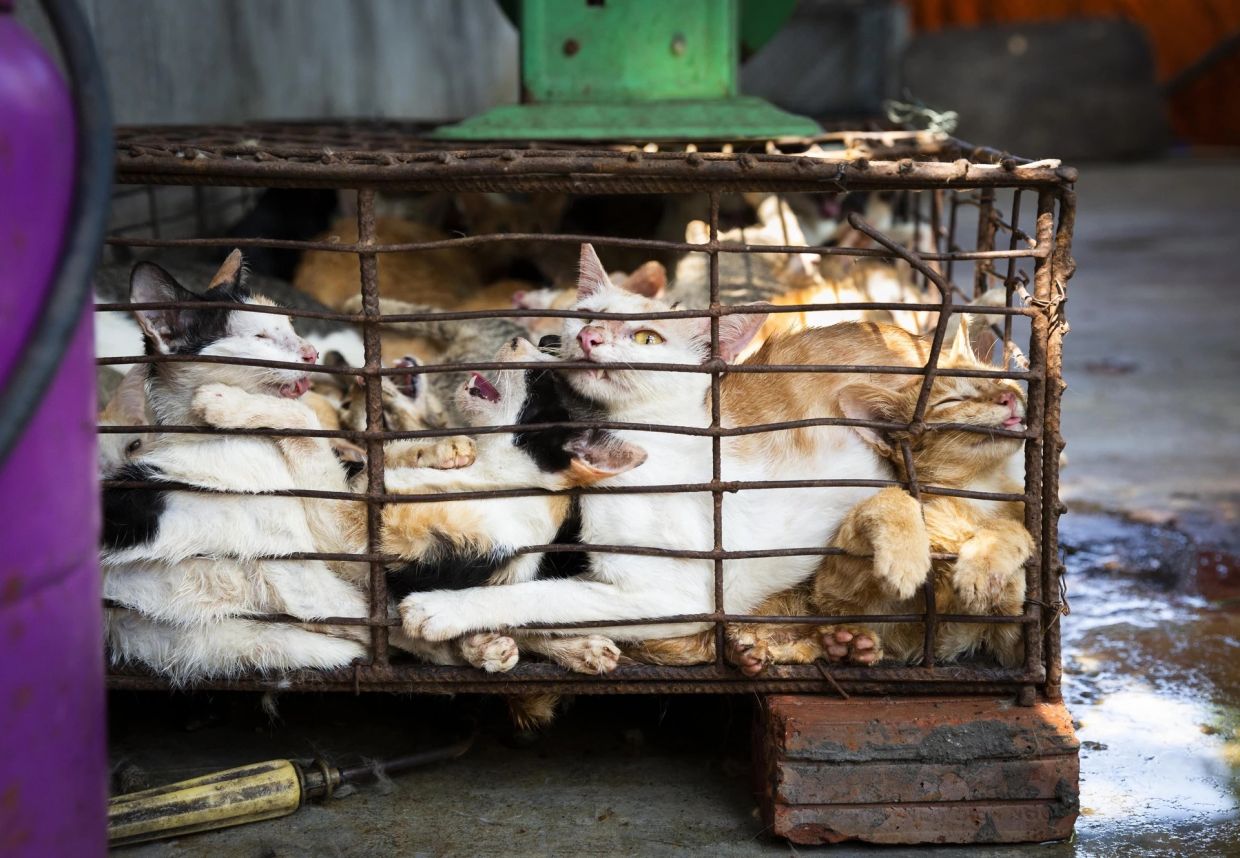
An estimated one million cats fall victim to slaughter each year in Vietnam as part of a clandestine trade rooted in cultural beliefs and traditional practices, according to international animal welfare organisations monitoring the region. The phenomenon extends beyond Vietnam's borders into remote areas of Cambodia and Laos, where similar practices persist, though on a smaller scale. What distinguishes this trade from conventional livestock farming is its foundation in superstition rather than necessity—cat meat is consumed not as a dietary staple but as a purported means to attract good fortune or treat ailments, revealing a cultural dimension that complicates efforts to curb the practice.
The persistence of this trade despite decades of awareness campaigns underscores the deep-rooted nature of these beliefs across parts of Indochina. According to FOUR PAWS, a global animal welfare organisation, cats are systematically stolen from homes and streets, moved across provincial and international borders, and killed to meet demand driven by longstanding traditions. Jon Rosen Bennett, who leads FOUR PAWS' efforts on dog and cat welfare, explains that in Vietnam specifically, certain lunar calendar dates are believed to be auspicious for consuming cat meat as a means of reversing misfortune or inviting prosperity. Additionally, some consumers attribute health or medicinal properties to cat meat, further perpetuating demand despite the absence of scientific evidence supporting such claims.
The trade's brutality came into sharp focus recently when Ho Chi Minh City police dismantled a trafficking gang, rescuing approximately 500 cats destined for slaughter. Nine individuals were detained in connection with inter-provincial smuggling operations that had persisted for three years, highlighting how organised criminal networks have capitalised on the practice. The incident underscores the systematic nature of the trade, which extends far beyond isolated incidents of individual consumption. Traffickers operate with apparent impunity in Vietnam, where no nationwide legislation explicitly prohibits the slaughter, sale, or consumption of cat meat, creating a legal vacuum that enables the industry to flourish.
Economic incentives structure the trade in ways that particularly endanger certain animals. FOUR PAWS investigators found in 2020 that live cats were traded for approximately US$6 to US$8 per kilogramme, with processed meat commanding higher prices of US$10 to US$12 per kilogramme. Black cats command premium prices due to superstitious beliefs about their supposed luck-bringing or medicinal properties, creating a perverse incentive structure that targets specific animals. These price points, while modest by global standards, represent sufficient income to attract traffickers and traders operating in economically disadvantaged communities where legal employment opportunities may be limited.
A critical disconnect exists between the scale of the trade and actual public support for its continuation. Jon Rosen Bennett notes that surveys across Vietnam reveal that approximately 90 percent of the population would support a ban on both dog and cat meat trading, and a similar proportion reject the notion that such consumption represents authentic Vietnamese culture. This data suggests that the trade persists not because of broad societal endorsement but rather through the actions of a minority engaged in trafficking and consumption, often in remote or informal settings beyond the reach of government oversight or public scrutiny. The discrepancy between public sentiment and actual practice indicates that educational campaigns and legislative action could potentially gain traction among ordinary citizens.
The public health dimensions of the cat meat trade extend well beyond animal welfare concerns. The clandestine, undocumented movement of cats across provincial boundaries and international borders creates conditions favourable for disease transmission, particularly of zoonotic illnesses such as rabies. When animals are transported informally without health screening or vaccination records, the risk of pathogenic spread multiplies exponentially, potentially threatening both animal and human populations across the region. In an era of heightened awareness regarding zoonotic disease emergence, the lack of regulation and documentation surrounding this trade represents a genuine epidemiological vulnerability that should concern public health officials throughout Southeast Asia.
Cambodia has begun implementing targeted responses to address the problem within its borders. In June, FOUR PAWS launched an online reporting platform designed to enable citizens to report suspected dog and cat meat trading operations, combining community engagement with direct action against traffickers. This initiative reflects a broader recognition that effective intervention requires multiple approaches operating simultaneously—public awareness, community participation, investigative capacity, and legislative frameworks all play essential roles in addressing entrenched practices. The platform represents an attempt to turn public opposition into concrete enforcement mechanisms that can identify and prosecute violators.
The broader regional context reveals that cats represent only one component of a larger animal meat trade operating across Southeast Asia. Dogs face similar trafficking and slaughter, with estimates suggesting that over 10 million canines are killed annually for meat throughout the region. However, growing public opposition to dog meat consumption suggests that cultural attitudes toward such practices are gradually shifting, particularly among younger and more urbanised populations. This generational and geographic variation in attitudes offers hope that similar attitudinal changes regarding cat meat consumption might eventually take hold, particularly if reinforced by legislative action and sustained public education.
The challenge confronting policymakers and animal welfare advocates lies in bridging the gap between public sentiment and legal enforcement. Vietnam currently lacks comprehensive legislation addressing cat meat, creating a regulatory vacuum that allows the trade to operate relatively openly. Neighbouring countries similarly struggle with fragmented or absent legal protections for cats destined for consumption. Without clear, enforceable national bans backed by adequate enforcement resources and penalties, cultural practices deeply embedded in certain communities will likely persist regardless of majority public opposition. The recent Ho Chi Minh City police operation demonstrates that enforcement is possible, yet such operations remain episodic rather than systematic, addressing symptoms rather than underlying structural factors enabling the trade.
For Malaysian readers, this situation carries particular significance given Malaysia's own concerns regarding animal welfare, growing pet ownership culture, and regional interconnectedness. The prevalence of such practices in neighbouring countries underscores the importance of robust domestic animal protection frameworks and cross-border cooperation on enforcement. Additionally, Malaysia's status as a regional economic and diplomatic hub positions it to champion animal welfare standards throughout Southeast Asia, potentially influencing neighbouring nations toward stricter regulations. The cat meat trade serves as a sobering reminder that cultural practices rooted in superstition and tradition can persist despite scientific evidence contradicting their purported benefits and growing public opposition within affected communities.

