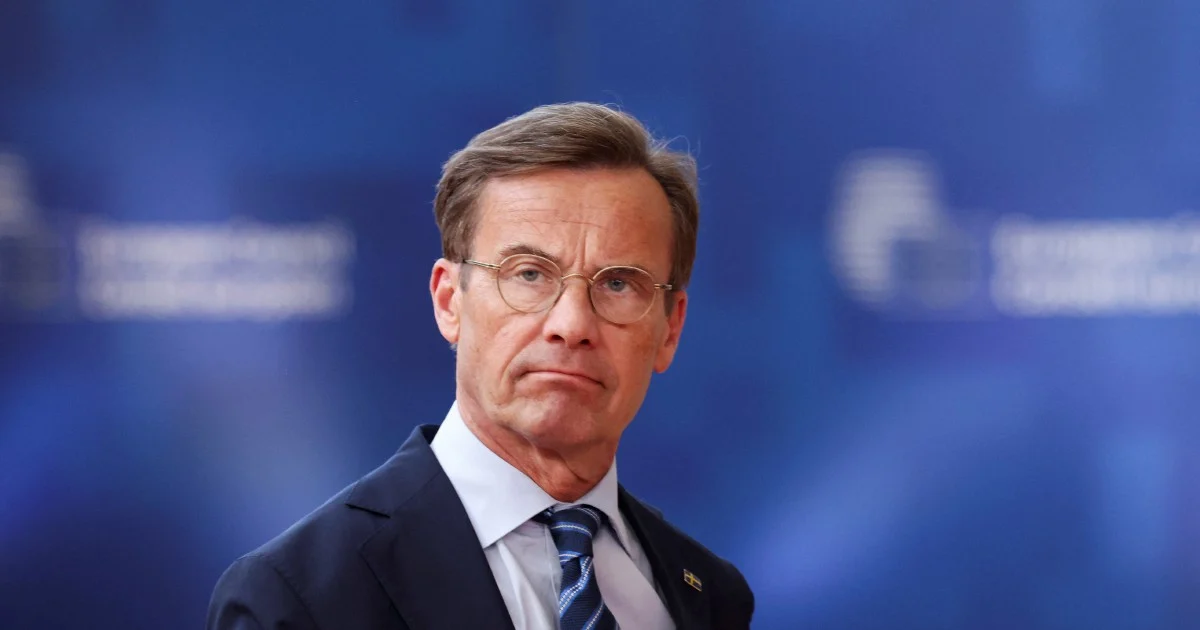
Swedish Prime Minister Ulf Kristersson stands at a critical juncture as fresh corruption allegations emerge just three months before crucial legislative elections, yet he appears positioned to weather this latest storm much as he has others. The timing proves particularly sensitive for his government, arriving during a period when voters assess not only his administration's policy record but its ethical foundations. This latest controversy encapsulates a broader pattern that has characterised his leadership—a persistent ability to deflect serious allegations despite their frequency and severity.
Kristersson's four-year premiership has been marked by a remarkable succession of scandals that, individually, might have derailed most political leaders. Instead, these controversies have accumulated without fundamentally threatening his position or forcing his resignation. This resilience appears rooted in Sweden's particular political culture and institutional safeguards, though observers increasingly question whether such durability reflects genuine public confidence or merely voter fragmentation that prevents any single opposition force from capitalising on the prime minister's vulnerabilities.
The current allegations represent the most direct assault on Kristersson's integrity, moving beyond the reputational damage of previous controversies into potentially illegal territory. The nature of corruption charges typically commands greater public attention and media scrutiny than other forms of scandal, potentially altering the political calculus that has previously insulated him. Yet Kristersson's track record suggests he possesses either remarkable political fortune or a sophisticated apparatus for damage control that transcends normal political circumstances.
Swedish voters will weigh these accusations against his government's achievements, particularly in areas such as economic management and security policy. His coalition government has pursued distinctive positions on defence and security matters relevant to the Nordic region and broader European strategic concerns. Whether these policy accomplishments can offset concerns about ministerial integrity remains the central question animating Swedish politics as the election approaches.
The political opposition faces a complex challenge in translating the scandal into electoral advantage. Rather than a unified anti-Kristersson coalition, Sweden's fragmented parliament features multiple parties with varying ideological positions and competing interests. This fragmentation means that even substantial criticism of the prime minister may not automatically translate into votes for a particular alternative, potentially allowing Kristersson to escape electoral punishment despite the gravity of the allegations.
Swedish media has maintained active scrutiny of these allegations, and investigative journalism has kept the issues in public view. The transparency of Sweden's political institutions and the relative ease with which information reaches voters distinguishes the Swedish case from many other democracies where scandals might be more successfully buried or managed. The extent to which media coverage penetrates public consciousness and shapes voting intentions remains uncertain, however.
International observers have watched Kristersson's handling of previous crises with interest, noting how extensively he has depended on institutional resilience rather than personal political skill. Some analysts suggest his survival reflects broader patterns in contemporary Nordic politics, where institutional trust remains comparatively high and where voters often distinguish between scandal and substantive policy disagreement. Others argue it demonstrates troubling weaknesses in accountability mechanisms that allow figures to accumulate troubling allegations without facing proportional consequences.
The approaching election creates both risks and opportunities for Kristersson. An electoral victory would provide a powerful endorsement, essentially clearing him of the political consequences of these allegations. Conversely, even a modest electoral decline could be interpreted as voter judgment on his ethical record, though determining causation between the scandals and election results proves notoriously difficult. His government's performance on issues like inflation, employment, and crime control may ultimately exercise greater influence on voting patterns than abstract concerns about corruption.
Regional observers from Malaysia and Southeast Asia might find relevant lessons in the Swedish case regarding how different political systems handle ministerial misconduct. The contrast between Sweden's institutional approach and other democratic models across the region highlights how procedural safeguards, media independence, and voter behaviour interact to shape consequences for political leaders. The durability of Kristersson's position despite mounting controversy suggests that institutional resilience can protect leaders even when public trust appears eroded.
As election day approaches, Kristersson faces genuine uncertainty despite his historical ability to navigate past troubles. The accumulation of scandals has created an environment where each new allegation carries greater weight than it might have in isolation. Voters displaying fatigue with repeated controversies could generate subtle but decisive shifts in electoral behaviour. The prime minister's survival thus remains contingent on factors beyond his direct control, including opposition fragmentation and the salience of alternative political issues.
The outcome will likely reveal whether Kristersson's apparent immunity from scandal reflects genuine public indifference to corruption allegations, the effectiveness of institutional mechanisms in preventing escalation, or simply the political arithmetic that prevents opposition consolidation. His test extends beyond personal political survival to broader questions about accountability in mature democracies and the mechanisms through which voters ultimately express judgment on leadership standards.

