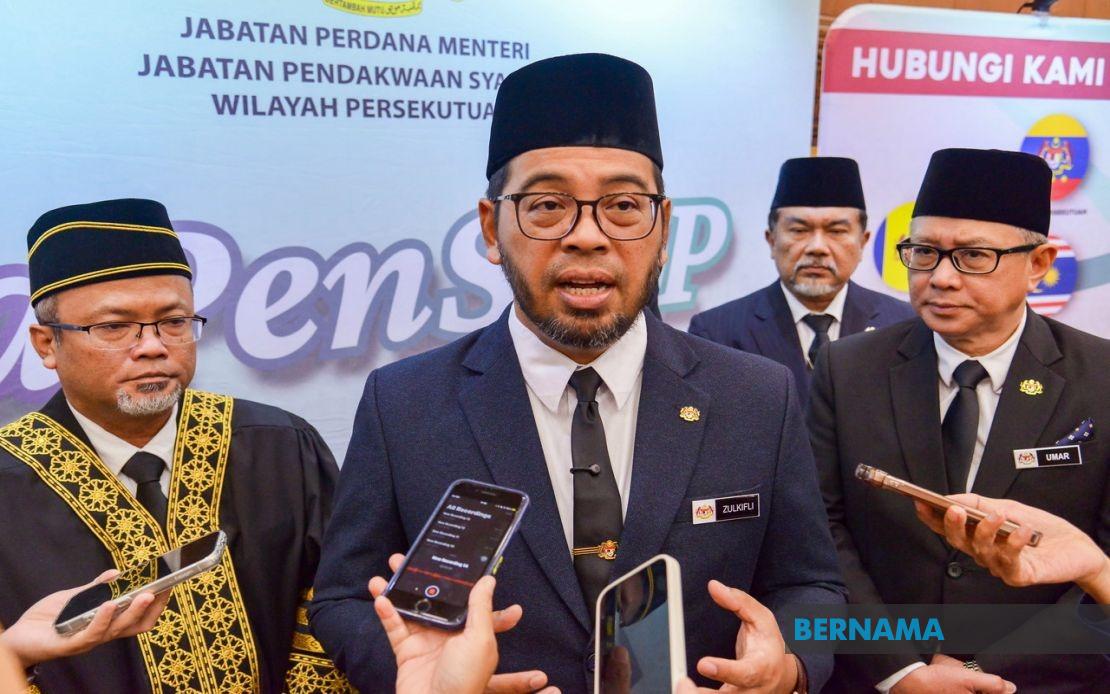
The government is moving closer to implementing legislative reforms that would fundamentally reshape the remuneration framework for Syariah Court judges across Malaysia, marking a significant step in elevating the professional status of the Islamic judiciary. Minister in the Prime Minister's Department (Religious Affairs) Dr Zulkifli Hasan disclosed that the Syariah Judges' Remuneration Act proposal has reached an advanced stage, with preparatory documentation largely complete and undergoing refinement before submission for the next phase of governmental approval.
Zulkifli made these remarks during his address at the second Malaysia Syariah Prosecutors Conference (PePSSM) 2026 in Putrajaya, where he outlined the methodical approach being taken to ensure the legislation addresses financial considerations and other operational dimensions. The Department of Syariah Judiciary Malaysia (JKSM) has been conducting comprehensive investigations in partnership with other government bodies, incorporating structured consultations with interested parties to gather perspectives that will inform the bill's final design. This collaborative process reflects recognition that remuneration structures in the Islamic court system require multi-stakeholder input given their implications for judicial independence, career progression, and institutional credibility.
The minister acknowledged that while preliminary documentation has been prepared, additional refinement remains necessary to incorporate feedback from various quarters. The iterative nature of this development process suggests that officials are prioritising substantive deliberation over expedited passage, recognising that premature legislation could create implementation difficulties or institutional friction. Financial implications form a central consideration, as adjusting judicial remuneration carries budgetary consequences that must be examined within broader government fiscal priorities. The involvement of JKSM alongside other agencies indicates that the proposal requires technical input from multiple governmental perspectives to ensure coherence with existing administrative and financial frameworks.
Prime Minister Datuk Seri Anwar Ibrahim had previously signalled strong governmental commitment to accelerating the act's implementation during comments made in July 2024, framing it as part of a broader agenda to enhance the standing and professionalisation of Syariah Court judges nationally. This high-level endorsement provides political momentum for the initiative, though the underlying technical and consultative work cannot be compressed without risking legislative quality. The government's emphasis on completion reflects acknowledgment that current compensation structures may hinder recruitment and retention of talented jurists to the Islamic bench, potentially affecting the system's capacity to handle complex cases with appropriate expertise.
Parallel to the remuneration legislation, the proposal to establish a dedicated Syariah Prosecution Department (JPSM) is simultaneously advancing through policy refinement stages. This initiative represents a structural innovation in Malaysia's Islamic legal apparatus, as it would create a specialised prosecutorial body focused exclusively on cases within Syariah Court jurisdiction. The JPSM proposal has also entered the final policy development phase, with Cabinet presentation anticipated following incorporation of stakeholder input and completion of inter-agency consultations. The establishment of such a department would professionalise prosecution within the Islamic legal system and clarify institutional responsibilities that currently may be fragmented across various state and federal agencies.
Government engagement with state administrations has formed an integral component of both initiatives' development. Zulkifli emphasised that consultation sessions with state governments proceeded productively, underscoring the importance of incorporating provincial perspectives into national Islamic legal reform. Because Syariah Court administration falls partly within state jurisdiction under Malaysia's constitutional framework, federal initiatives affecting Islamic courts require careful negotiation and consensus-building with state governments. This multi-level governmental coordination explains part of the timeline extension, as alignment across state boundaries demands time-intensive dialogue to address diverse state interests and governance preferences.
The minister stated explicitly that this undertaking represents a collective institutional effort rather than an initiative driven unilaterally by JKSM. This framing suggests that ownership of the reforms extends across multiple government agencies and tiers, which may enhance implementation prospects once the legislation is enacted. When diverse governmental entities participate in developing reforms affecting their operations, subsequent compliance and institutional adaptation typically proceeds more smoothly than when changes are imposed top-down. The inclusive approach also signals respect for established governmental hierarchies and state autonomy, important considerations in a federal system where centralised Islamic legal structures must operate through constitutionally-defined state channels.
For Malaysian legal practitioners, judicial observers, and Islamic law stakeholders, the pending legislation carries implications for professional standards and career pathways within the Syariah judiciary. Enhanced remuneration could attract candidates with advanced qualifications and international training, potentially elevating the sophistication of Islamic legal jurisprudence produced by Malaysian courts. However, remuneration improvements must be accompanied by concurrent reforms ensuring merit-based appointment, transparent promotion processes, and robust continuing education opportunities. The connection between pay improvement and broader institutional modernisation remains implicit in official commentary but deserves explicit articulation as implementation approaches.
Regionally, Malaysia's efforts to codify Syariah judicial remuneration represent an important development in Islamic legal modernisation across Southeast Asia. As other Muslim-majority nations in the region contemplate similar reforms, Malaysia's legislative approach and implementation experience may serve as reference point for neighbouring jurisdictions considering professional advancement of their own Islamic court systems. The regional significance extends to broader questions about how contemporary Islamic legal institutions can maintain traditional jurisprudential values while adopting modern administrative and professional standards that support institutional credibility and judicial effectiveness.
The timeline for Cabinet presentation remains unspecified, though ministerial language suggests submission is anticipated within a reasonable horizon rather than delayed indefinitely. Once documentation receives Cabinet approval in principle, the proposal must navigate parliamentary procedures, state-level coordination for implementation mechanisms, and administrative preparations by relevant agencies. The legislative journey ahead involves multiple procedural stages, each requiring careful attention to ensure that final statutory language accurately reflects the government's reform objectives while remaining implementable within existing institutional and fiscal constraints.

