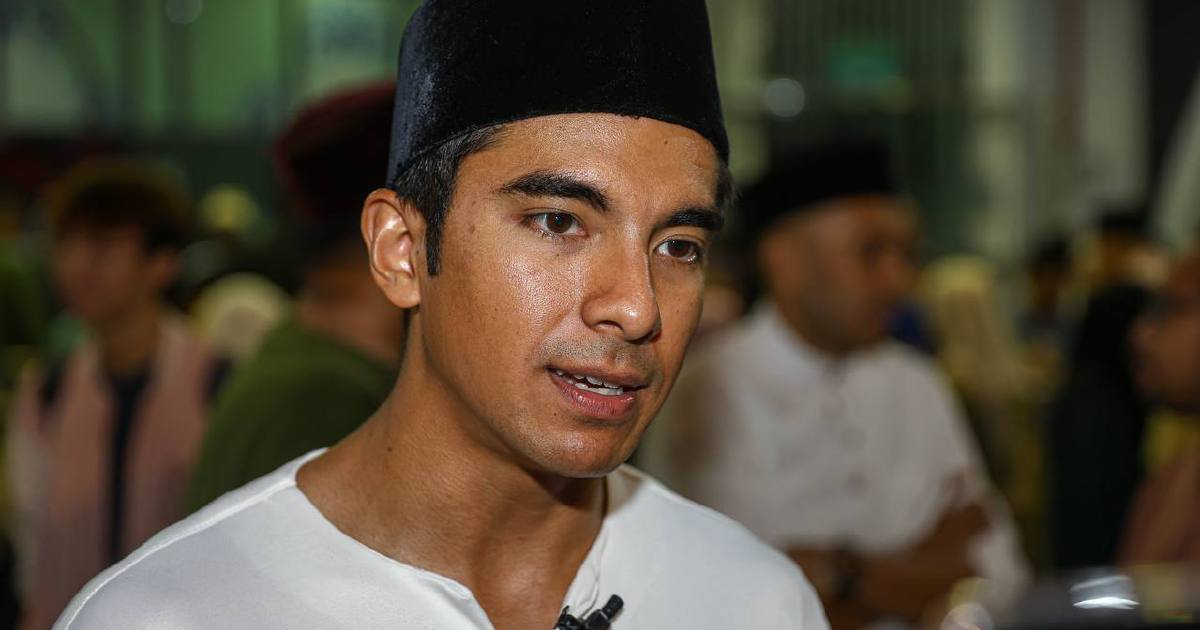
Syed Saddiq Syed Abdul Halim, the Minister of Investment, Trade and Industry, has struck a philosophical tone as he awaits a consequential Federal Court judgment expected soon, signalling acceptance of whatever judicial outcome materialises in what has become one of Malaysia's more closely watched legal proceedings involving a prominent young politician.
The Muar member of parliament, who remains a divisive figure in domestic politics due to his earlier party-switching and controversial policy positions, appears to be preparing himself mentally for a decision that carries significant ramifications for his ministerial role and political standing within the government coalition. His invocation of faith-based acceptance reflects a strategic communications choice that projects equanimity rather than anxiety, even as the legal uncertainty surrounding his status continues to dominate political discourse.
Syed Saddiq's trajectory has been marked by considerable volatility since his emergence as a youthful political voice during the 2018 general election when Pakatan Harapan swept to power. His subsequent defection from PKR to Bersatu, followed by his later realignment with UMNO, established him as someone willing to pursue political opportunities regardless of previous organisational loyalties. This pattern of movement across party lines has drawn criticism from opponents who question his ideological consistency and political reliability.
The nature of the Federal Court case remains a matter that has generated substantial commentary within Malaysian political circles and among observers tracking governance issues. The potential consequences extend beyond Syed Saddiq's personal circumstances, as the ruling could establish or clarify important legal precedents affecting how Malaysian courts interpret relevant statutes and constitutional provisions that govern parliamentary eligibility and ministerial appointment.
His adoption of a serene public demeanour during this period of legal limbo serves multiple purposes within Malaysia's politically charged environment. By emphasising spiritual acceptance and composure, he potentially mitigates damage to his public image regardless of the court's eventual decision, positioning himself as someone dignified and respectful of judicial authority rather than defensive or combative. This rhetorical approach also sidesteps the need for specific substantive responses to allegations or legal arguments that might otherwise require clarification.
For the government coalition, the resolution of this case carries administrative implications regarding ministerial portfolios and departmental continuity. The MITI ministry oversees significant policy areas including foreign direct investment, industrial development, and trade negotiations—matters of considerable importance for Malaysia's economic positioning in an increasingly competitive regional landscape. Any transition in leadership, should the court ruling necessitate it, would require careful management to maintain policy momentum and investor confidence.
Within the broader context of Malaysian political dynamics, Syed Saddiq represents a particular generational cohort—younger politicians who came of age during periods of significant political turbulence and have navigated complex transitions in the country's coalition structures. His political journey illustrates the fluid nature of Malaysian party politics, where ideological boundaries between major political organisations have become increasingly porous, and where personal political advancement frequently trumps organisational loyalty.
The Federal Court proceedings also reflect ongoing tensions within Malaysia's governance architecture regarding the interpretation and enforcement of statutory and constitutional requirements. Different political actors and legal minds have emphasised competing interpretations of relevant provisions, suggesting that the court's reasoning will likely generate substantial analysis and debate among constitutional scholars and political commentators regardless of the ultimate verdict.
Syed Saddiq's investment portfolio interests, both personal and those intersecting with his ministerial responsibilities, have occasionally generated scrutiny from watchdog groups and political opponents. His role overseeing investment matters while potentially facing legal jeopardy creates a situation where questions about conflict of interest or divided attention occasionally surface in opposition commentary, though these remain largely hypothetical concerns pending the court's determination.
The outcome of this Federal Court case will significantly influence Syed Saddiq's political calculus moving forward. Should the ruling favour his position, he emerges strengthened within government circles and better positioned to consolidate his ministerial influence. Conversely, an unfavourable judgment would require rapid repositioning—either accepting reduced political circumstances or pursuing new opportunities elsewhere within Malaysia's fractious political ecosystem, where capable young politicians often find alternative platforms and constituencies despite setbacks.
From a Southeast Asian perspective, the resolution of this case carries minor but discernible implications for Malaysia's institutional credibility. Foreign investors and international observers often monitor how established democracies resolve politically sensitive legal questions, using such cases as proxies for evaluating judicial independence, rule of law consistency, and overall governance reliability. A transparent, reasoned Federal Court judgment will reinforce perceptions of Malaysian institutional stability, while any appearance of political interference would generate counterproductive scepticism.
As Syed Saddiq maintains his public composure and ministerial responsibilities while awaiting the court's decision, the Malaysian political establishment continues functioning around this unresolved question. His philosophical invocation of divine will suggests he has mentally prepared for multiple scenarios, positioning himself for political survival regardless of judicial outcome—a calculation that reflects the pragmatism required for longevity within Malaysia's volatile political environment.

