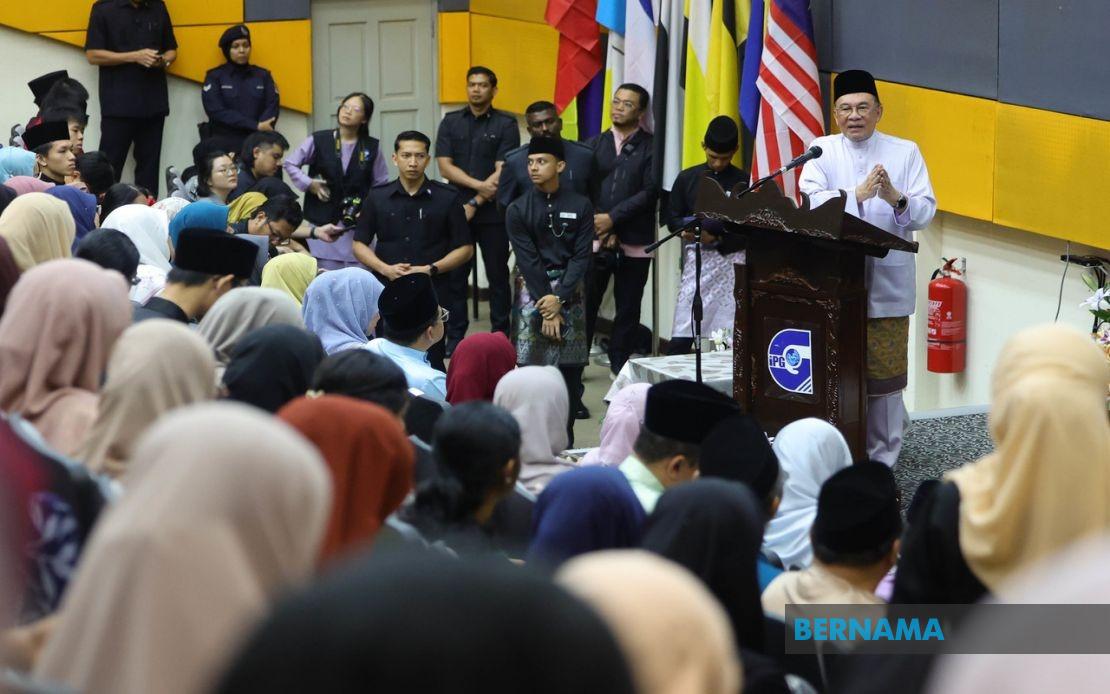
Prime Minister Datuk Seri Anwar Ibrahim has pinpointed a fundamental impediment to Malaysia's reform agenda: not technical incapacity or resource constraints, but rather entrenched opposition from those comfortable with existing power structures and corrupt practices. Speaking at the Technical Education Campus of the Institute of Teacher Education in Bandar Enstek on July 17, Anwar underscored that the real challenge lies in overcoming institutional inertia and vested interests that benefit from maintaining the status quo.
During his address to IPG staff and students at the "Temu Anwar" programme, the Prime Minister reflected on his three-year tenure, noting that reform initiatives consistently encountered friction from individuals and groups invested in preserving longstanding systems. This observation carries significant implications for understanding the pace and depth of Malaysia's anti-corruption drive and broader administrative modernisation efforts. The resistance he describes extends beyond simple opposition to specific policies; it represents a systematic defence of arrangements that have historically concentrated power and material benefit among particular constituencies.
Anwar characterised the opposition to governance improvements as paradoxical. He noted that those resisting reform often present themselves as contemporary in their outward appearance and consumption patterns, yet fundamentally reject the modernisation of institutional practices. This disconnect between personal modernity and institutional conservatism reveals a troubling reality: appearance of progress masks reluctance to surrender the advantages derived from opaque systems. The Prime Minister's observation suggests that superficial adoption of contemporary lifestyles and technology does not automatically translate into acceptance of transparent, accountable governance frameworks.
The relationship between resistance to reform and protection of corrupt practices represents a critical nexus in Malaysian governance challenges. Anwar's framing identifies corruption not as aberrational behaviour by individual malefactors, but as a systematic practice normalised through long repetition and institutional protection. When reform attempts challenge these entrenched practices, they inevitably trigger organised pushback from beneficiaries of the existing system. This dynamic has historically constrained the effectiveness of Malaysia's anti-corruption initiatives, regardless of leadership intent or policy design.
The Prime Minister emphasised that governance reforms, though potentially unpopular with those whose interests they threaten, remain necessary and continuous. He articulated a philosophical position grounded in religious, cultural, and civilisational demands for systemic improvement. This invocation of transcendent principles—moving beyond mere administrative efficiency to ethical foundations—positions the reform agenda within broader frameworks of national identity and moral obligation. For Malaysian society broadly, this framing attempts to elevate the stakes of governance reform beyond technocratic adjustment to fundamental questions of national character and trajectory.
Anwar's comments acquire particular resonance within Malaysia's recent political history. After decades dominated by concerns about political succession and factional competition, the current administration has oriented itself toward transparency and accountability as organising principles. Yet institutional cultures shaped by generations of patronage networks, discretionary authority, and opaque decision-making do not transform overnight through policy pronouncement. The Prime Minister's acknowledgment of this reality suggests recognition that structural change requires sustained pressure against countervailing forces.
The education sector provides an appropriate forum for articulating this message, as the Institute of Teacher Education trains educators who will shape future generations' understanding of governance, ethics, and institutional responsibility. By directly engaging IPG staff and students, Anwar signalled that educational institutions themselves represent frontlines in cultural transformation. The quality of governance reform ultimately depends upon whether younger cohorts accept or perpetuate existing patterns of institutional behaviour. This emphasis on educational constituencies reflects sophisticated understanding that systemic change requires generational renewal of institutional cultures.
For Malaysian readers and Southeast Asian observers, Anwar's candid acknowledgment of reform obstacles offers more honesty than typical political rhetoric typically permits. Rather than proclaiming triumphant progress, he identified the precise nature of resistance: not disagreement over reform desirability in abstract, but rather the material threat that genuine institutional transparency poses to established interests. This clarity, however uncomfortable for beneficiaries of current arrangements, creates space for more realistic assessment of reform trajectory and timeline.
The challenges Anwar identifies extend beyond Malaysia's borders. Throughout Southeast Asia, governance modernisation efforts encounter comparable resistance from entrenched bureaucratic interests, political patronage networks, and vested commercial relationships. The Prime Minister's observations thus offer a diagnostic framework potentially applicable across the region. Governments throughout the region pursuing transparency, accountability, and corruption reduction encounter remarkably similar patterns of resistance from similar constituencies, suggesting structural rather than merely contingent obstacles to reform.
Moving forward, the effectiveness of Malaysia's reform agenda will depend substantially upon whether the government can sustain political will against persistent institutional resistance. The Prime Minister's public acknowledgment of these obstacles, while potentially frustrating to those expecting more rapid transformation, establishes necessary intellectual honesty about reform requirements. Genuine systemic change demands not only policy design and resource allocation, but also sustained confrontation with entrenched interests and institutional cultures resistant to transparency. The years ahead will test whether Anwar's administration possesses the political durability and strategic capacity to overcome the resistance he has candidly identified.

