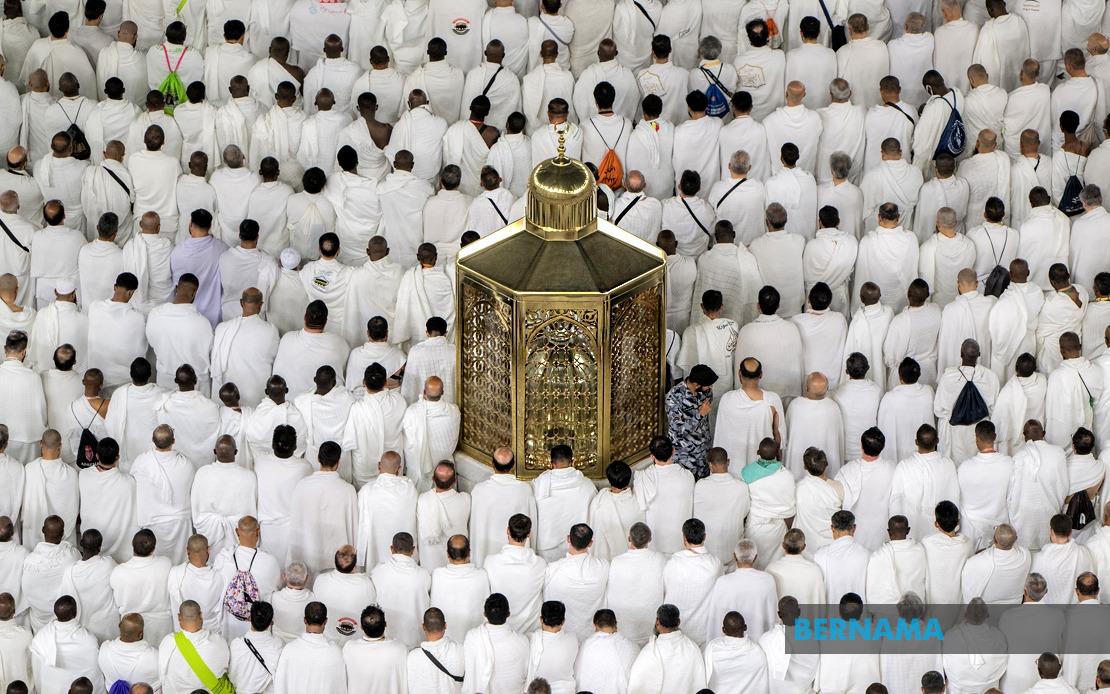
Tabung Haji has reaffirmed its commitment to allocating hajj opportunities through a strict first-registered, first-served queue system, rejecting proposals to create preferential pathways for specific groups of depositors. The decision, announced by Deputy Minister in the Prime Minister's Department (Religious Affairs) Marhamah Rosli during parliamentary proceedings on July 13, underscores the institution's determination to maintain what it describes as an equitable framework that protects the interests of millions of Malaysian Muslims awaiting their turn to perform the Islamic pilgrimage.
The policy debate emerged after Kuala Krai Member of Parliament Abdul Latiff Abdul Rahman raised the prospect of establishing a dedicated hajj category for compulsory retirees who receive gratuity payments. His suggestion was premised on the observation that newly retired individuals, despite possessing stronger financial capacity than other depositors, often face extended waiting periods that might exceed their remaining years. The proposal represented a broader question about whether Tabung Haji's rigid allocation system adequately addresses the particular circumstances of different demographic groups within its depositor base.
Marhamah's rejection of such special categories rested on practical and principled grounds. She argued that introducing preferential routes would fundamentally undermine the existing queue mechanism, creating cascading disadvantages for those who had already endured years of waiting. By maintaining transparent entry rules applied uniformly across the entire depositor population, Tabung Haji preserves what the institution frames as consistency with established norms of fairness, openness, and proportional treatment. This stance reflects broader Malaysian governance principles emphasizing predictability and equal application of administrative rules.
The institution has adopted new financial prerequisites designed to strengthen the integrity of its allocation process. Beginning with the current hajj season, Tabung Haji now mandates that prospective pilgrims maintain a minimum savings balance of RM15,000 before receiving an offer letter, despite the actual pilgrimage cost reaching RM33,300. This threshold mechanism serves multiple objectives: it ensures pilgrims possess sufficient liquidity to manage immediate expenses, reduces the likelihood of last-minute cancellations that disrupt logistics, and filters out depositors lacking genuine readiness to proceed with their religious obligation.
All depositors receive advance notification of their projected hajj year, allowing them extended periods to prepare financially, undertake required health screenings, and acquire knowledge pertaining to hajj rituals and procedures. Nevertheless, the system includes an appeal mechanism through which those not yet scheduled may petition for earlier consideration. Tabung Haji evaluates such requests according to established merit-based criteria, though success requires demonstrating exceptional circumstances that justify deviation from standard sequencing. This dual-track approach balances rigid procedural fairness with occasional flexibility for genuine hardship cases.
Malaysia's annual hajj quota presents an external constraint that inevitably influences Tabung Haji's allocation capacity. For the current hajj season, Saudi Arabia has approved an official quota of 31,600 Malaysian pilgrims, a figure determined entirely by the Saudi government without negotiation. Marhamah acknowledged that this allocation, while substantial in absolute terms, remains insufficient to accommodate the accumulated demand from Malaysia's large Muslim population and the expanding depositor base. The gap between supply and waiting demand creates persistent pressure on the system and generates legitimate grievances among those anticipating opportunities decades hence.
Conscious of this structural imbalance, Tabung Haji pursues supplementary quota applications with the Saudi authorities on an annual basis. These requests acknowledge that Malaysia's domestic demand substantially exceeds its official allocation and seek to negotiate marginal increases whenever feasible. However, Marhamah emphasised that securing additional quotas remains entirely dependent on Saudi governmental decisions, placing clear boundaries on what Malaysian authorities can achieve through institutional effort or diplomatic engagement. This reality explains why policy responses centre on managing existing quotas more efficiently rather than materially expanding the pool of available positions.
Securing hajj pilgrimage opportunities has historically been vulnerable to fraud schemes targeting depositors' savings and trust. Tabung Haji's recently established Fraud Task Force, comprising representatives from the institution itself, the Royal Malaysia Police, and the Ministry of Tourism, Arts and Culture, received zero fraud complaints during the 1447 Hijrah hajj season, a remarkable achievement reflecting strengthened protective mechanisms. The success derives partly from enhanced enforcement measures and elevated vigilance across institutional systems.
Equally significant was the effectiveness of the "No Visa, No Haj" public awareness campaign, which aligns Malaysian protocols with Saudi Arabia's "No Haj Without Permit" policy. This coordinated messaging initiative educated both depositors and potential fraudsters regarding the impossibility of completing hajj without official authorisation, thereby reducing incentives for unlawful circumvention attempts. The campaign operated on the principle that informed populations pose greater obstacles to deceptive schemes than those lacking clarity about legitimate procedures.
For Malaysian Muslims, the Tabung Haji system represents far more than a bureaucratic allocation mechanism; it embodies a collective commitment to enabling a cornerstone Islamic obligation for the nation's entire Muslim population. The queue-based approach, while generating inevitable frustration for those facing decade-long waits, reflects a democratic preference for universalised access rather than wealth-based or status-based prioritisation. This egalitarian orientation distinguishes Malaysia's model from some international competitors where hajj access correlates more directly with individual purchasing power.
The rejection of special categories also carries broader constitutional and governance implications. Creating preferential pathways for retirees, however financially justified, would establish precedents for subsequent claims from other groups—healthcare workers, security personnel, educators—each presenting plausible arguments for expedited consideration. By maintaining categorical uniformity, Tabung Haji avoids cascading requests that would ultimately fracture the system's coherence and transparency. This principled conservatism, though occasionally frustrating for particular constituencies, preserves institutional stability and prevents erosion of the foundational fairness principle.
Looking forward, Tabung Haji confronts the durable challenge of reconciling rising aspirations with constrained supply. While annual quota applications continue, realistic outcomes likely remain modest. The institution's strategy consequently emphasises transparent communication regarding waiting timelines, proactive financial preparation support, and targeted assistance for genuine hardship cases through established appeal mechanisms. This measured approach acknowledges both the depth of religious aspiration driving demand and the practical limits constraining institutional capacity to satisfy universal expectations.

