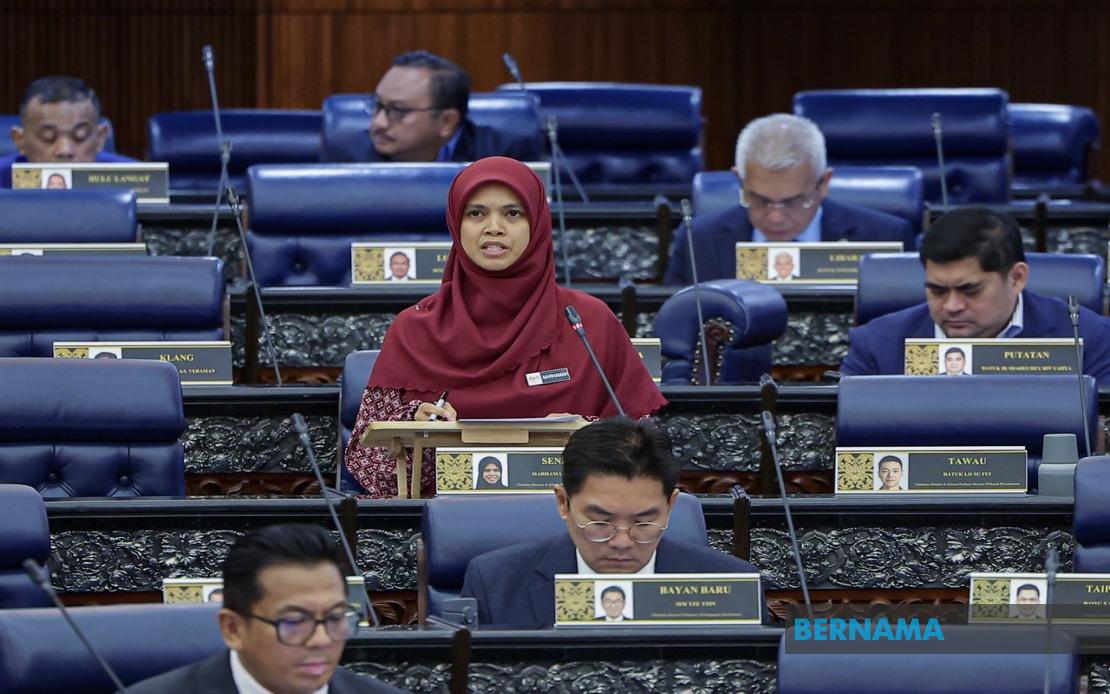
Tabung Haji and the Malaysian government are preparing to evaluate expanding financial aid to lower-income pilgrims, particularly those in the B40 economic bracket, as the expense of completing the annual haj pilgrimage continues climbing. Deputy Minister in the Prime Minister's Department (Religious Affairs) Marhamah Rosli disclosed this commitment while addressing parliament, acknowledging the mounting financial pressure on prospective hajjis despite existing support mechanisms already in place.
The financial gap facing pilgrims has become substantially wider in recent years. The actual outlay required to undertake the haj in the current year totals RM33,300 per individual, yet B40 pilgrims are presently only obligated to contribute RM15,000 toward this journey. This arrangement leaves a shortfall of RM18,300, which Tabung Haji currently bridges through its dedicated financial assistance programme. The differential effectively represents a 55 per cent subsidy, underlining the considerable commitment already being extended to lower-income participants seeking to fulfil one of Islam's Five Pillars.
The sustainability of such extensive subsidy schemes, however, presents an intricate challenge for Tabung Haji's management. Marhamah clarified that the resources funding these assistance payments originate from investment returns generated through accumulated savings held by depositors themselves. This dependency on investment performance means that assistance must be allocated with considerable caution, balanced against obligations to protect the broader depositor base. The organisation cannot indefinitely expand subsidies without potentially compromising the financial interests of those who have contributed to Tabung Haji over extended periods, creating a tension between immediate relief and long-term sustainability.
Despite these structural constraints, officials signalled openness to reconsidering assistance levels. Marhamah indicated that Tabung Haji intends to undertake a thorough examination of expanding aid directed toward B40 pilgrims for upcoming haj seasons, suggesting that policymakers recognise the genuine hardship that continued price escalation imposes on Malaysia's economically vulnerable populations. This prospective review hints at recognition that current assistance mechanisms, while substantial, may eventually prove insufficient if haj expenses continue their upward trajectory.
Beyond the immediate question of financial aid, Tabung Haji is simultaneously overhauling its queue management system to address equity concerns that have accumulated over decades of administration. The organisation recognises that the existing allocation framework may inadvertently disadvantage individuals who have demonstrated financial discipline by consistently saving and accumulating sufficient funds ahead of their pilgrimage. A more transparent, merit-based system could reduce the frustration experienced by depositors who have meticulously planned their haj while watching others selected through what appears to be less systematic processes.
One critical motivation for this systemic redesign involves addressing the practical challenge that arises when selected pilgrims must postpone their journeys due to financial constraints. When such deferrals occur, Tabung Haji must conduct replacement selection processes that generate fresh administrative burdens and create perceptions of unfairness among waiting depositors. By refining the queue management system to prioritise those with demonstrated financial readiness, the organisation could substantially reduce the frequency of such replacements and improve overall process efficiency.
The scale of the underlying challenge cannot be understated. Tabung Haji now manages registrations exceeding four million individuals seeking pilgrimage opportunities, a figure that starkly exceeds Malaysia's annual haj quota of approximately 31,600 pilgrims. This represents a ratio of roughly 127 applicants for every single available slot, condemning newly registered applicants to waiting periods spanning multiple decades under current circumstances. Prospective pilgrims must therefore accept that their journey may be deferred for years or even decades, a reality that shapes planning timelines across Malaysia's Muslim population.
This massive registry backlog creates particular hardship for B40 individuals who cannot afford to accumulate the full RM33,300 independently and depend on Tabung Haji's assistance to realise their religious aspirations. The extended waiting periods mean that those already economically constrained must maintain their commitment to a goal that may not materialise during their most capable working years, compounding the emotional and psychological dimensions of this spiritual obligation.
Marhamah reaffirmed government and Tabung Haji's commitment to elevating haj service quality and bolstering safety provisions, framing these objectives within an ambitious vision of establishing Malaysia as a globally recognised leader in haj administration and service delivery. This positioning reflects Southeast Asian aspirations to demonstrate excellence in Islamic affairs whilst managing the logistical complexities of coordinating pilgrimages for one of the world's largest Muslim populations. Malaysia's success in this arena carries implications extending beyond individual pilgrims to encompass national prestige and soft power within the broader Muslim world.
For Malaysian readers, particularly those in lower-income brackets saving toward their spiritual pilgrimage, these developments carry immediate significance. The willingness of authorities to reconsider assistance levels suggests recognition that the current economic model may require adjustment. Yet the structural limitations imposed by reliance on investment returns indicate that expanded aid will likely remain circumscribed. Prospective pilgrims may need to prepare for continued waiting periods and potentially unchanged or only marginally improved financial support, notwithstanding government statements of intent to study enhancements.

