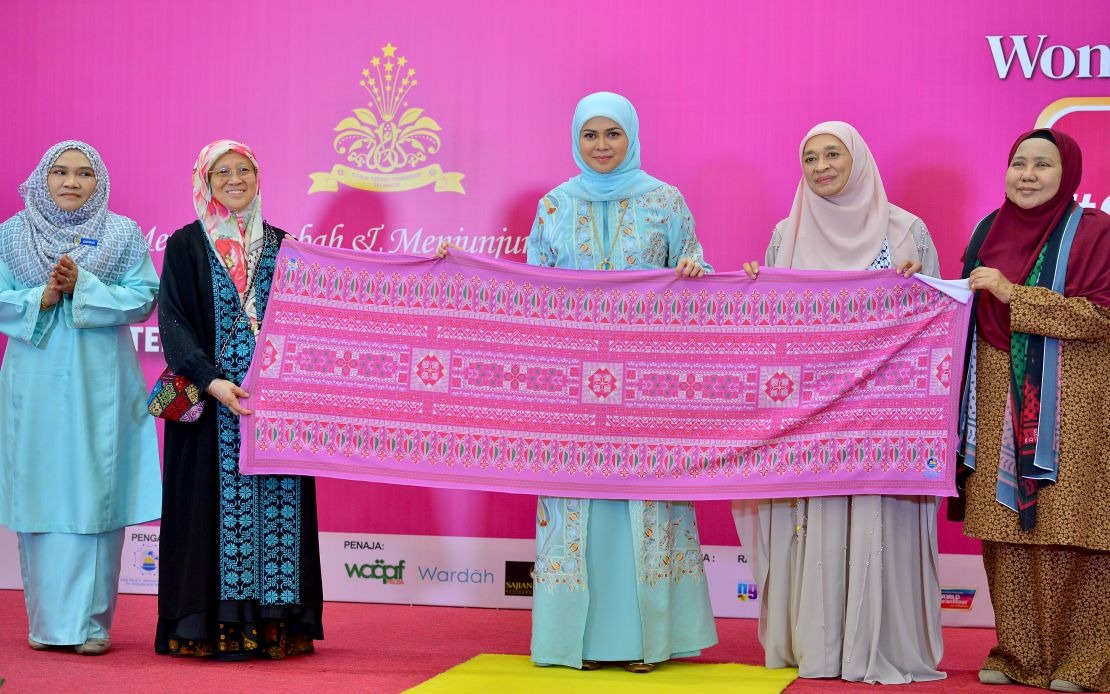
Tengku Permaisuri Norashikin of Selangor officially opened the Women Summit & Women #QuranHour 2026 programme on June 24 at Dahlia Auditorium within Sultan Salahuddin Abdul Aziz Shah Mosque in Shah Alam, marking a significant milestone in faith-based women's empowerment across the region. The inaugural event drew approximately 400 female participants representing Selangor alongside delegates from neighbouring Singapore and Indonesia, reflecting the cross-border appeal of this spiritually-centred initiative.
The programme emerged from a collaborative effort between Yayasan Warisan Ummah Ikhlas (WUIF) and the Asia Pacific Women's Coalition for Al-Quds and Palestine (ApWCQP), two organisations dedicated to strengthening Islamic scholarship and advocacy. WUIF's chief executive officer Marhaini Yusoff and ApWCQP's president Dr Fauziah Mohd Hasan welcomed the Tengku Permaisuri upon her arrival at 9.30am, underscoring the high-profile nature of this undertaking within Malaysian civil society.
The initiative adopts "Women of Grit" as its thematic centrepiece, a concept deeply rooted in the lived experiences of Palestinian women, particularly those enduring the humanitarian crisis in Gaza. Rather than treating resilience as abstract virtue, the programme draws direct inspiration from women navigating extraordinary adversity—maintaining family bonds, sustaining children's education, and preserving faith amid warfare, bereavement, and displacement. This grounding in contemporary struggle distinguishes the initiative from purely theoretical approaches to female empowerment, offering Malaysian and Southeast Asian participants tangible examples of spiritual fortitude under extreme conditions.
Programme director Gharizah Hashim articulated a comprehensive vision extending beyond mere survival narratives. She emphasised that building grit encompasses cultivating inner peace, exercising discernment in decision-making, and moving forward anchored in Quranic guidance. The underlying philosophy positions women not merely as passive recipients of resilience training but as active architects of familial stability and societal contribution. Gharizah stressed that developing women's character and mindset through Quranic foundations is essential for producing a generation characterised by purposefulness, compassion, and the capacity to overcome trials—outcomes increasingly vital in societies facing complex socioeconomic and psychological pressures.
The event attracted prominent speakers including Tirmizi Ali, winner of the 2014 International Quran Recitation Championship, whose expertise in Quranic memorisation and interpretation enriches the programme's academic credibility. Associate Professor Dr Nora Mat Zin from the International Islamic University Malaysia's Department of Psychiatry brought a clinical perspective to the intersection of faith and mental wellbeing, demonstrating how Quranic teachings intersect with contemporary psychological frameworks. This multidisciplinary approach signals an institutional attempt to bridge traditional Islamic scholarship with modern professional disciplines, rendering the programme relevant to women navigating contemporary challenges.
Marhaini revealed plans to substantially scale the initiative beyond this inaugural gathering, leveraging the Rumah Ngaji network—a nationwide system of free Quranic study circles sustained through community sponsorship. This expansion strategy recognises that meaningful transformation requires sustained, localised engagement rather than episodic gatherings. By establishing state-level coordination through existing Rumah Ngaji chapters, the organisers aim to democratise access to the programme across Malaysian territories while maintaining thematic coherence and quality standards.
For Malaysian women and their Southeast Asian counterparts, this initiative addresses a growing appetite for faith-based solutions to contemporary existential challenges. The programme's emphasis on Quranic resilience arrives amid widespread discussions about mental health, family stability, and women's roles in rapidly changing societies. Rather than positioning Islam as incompatible with modern concerns, Women #QuranHour 2026 presents religious scholarship as a resource for navigating rather than retreating from contemporary complexity.
The involvement of the Tengku Permaisuri provides institutional legitimacy while signalling royal patronage for women-centred Islamic initiatives in Selangor. This high-level endorsement may encourage other state-level authorities across Malaysia to consider similar programmes, potentially catalysing broader conversations about women's spiritual and psychological wellbeing within governmental and civil society spheres. The presence of representatives from Singapore and Indonesia suggests the model possesses appeal transcending national boundaries, positioning Malaysia as a thought leader in regional women's Islamic education.
Looking forward, the programme's expansion through Rumah Ngaji chapters promises to reach far beyond the initial 400 participants, potentially touching thousands of Malaysian women across diverse socioeconomic backgrounds. The focus on character formation and Quranic understanding addresses not merely individual wellness but collective social resilience—a consideration particularly relevant as communities throughout Malaysia and Southeast Asia navigate demographic changes, economic pressures, and evolving family structures. By centring women's voices and experiences within Islamic discourse, the initiative contributes to broader conversations about inclusive religious scholarship and women's agency within Muslim-majority societies.

