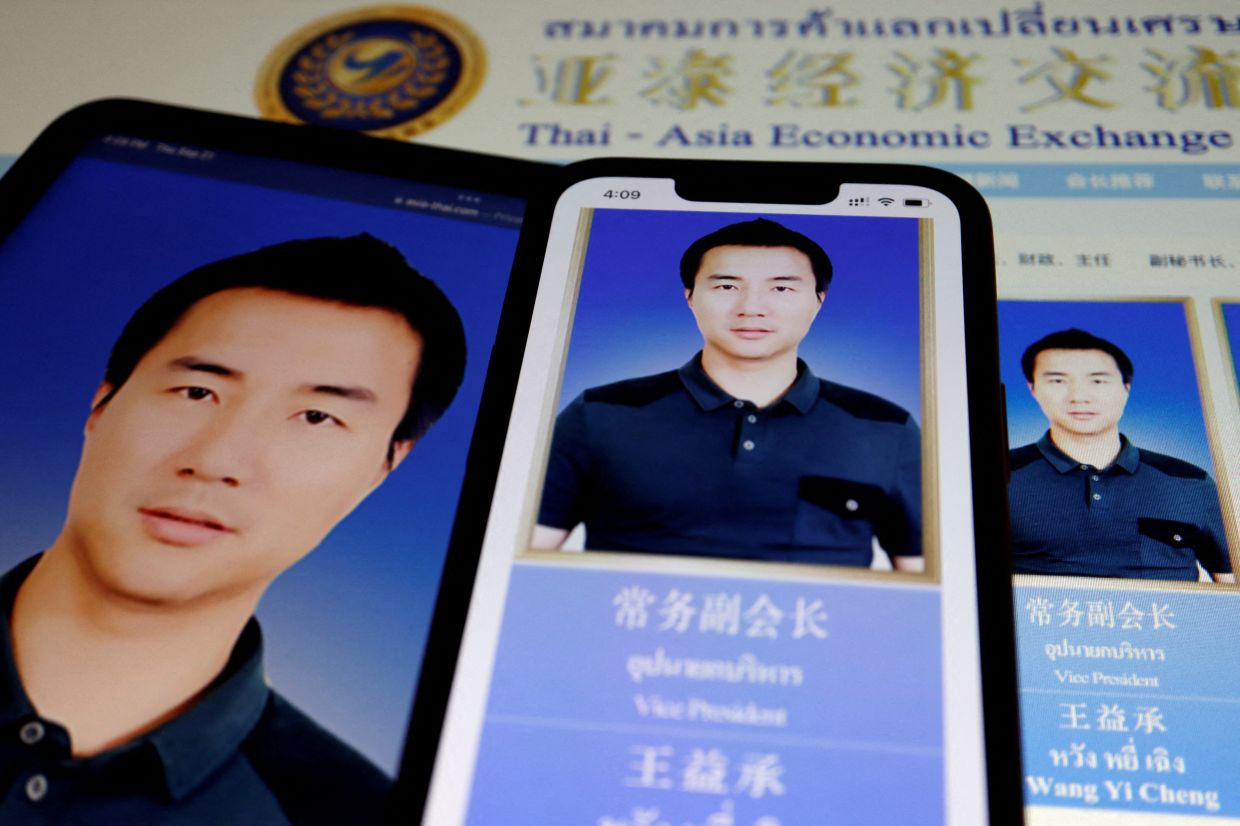
Thailand's Department of Special Investigation has issued an arrest warrant for Wang Yicheng, a Chinese national previously connected to a transnational network engaged in illegal cryptocurrency mining and money laundering. The announcement, made public on June 23, marks an escalation in Bangkok's enforcement efforts against transnational financial crimes that have long exploited Southeast Asia's porous borders and regulatory gaps. Wang, who reportedly fled Thailand, faces charges of theft and violations under the Computer Crimes Act, with authorities indicating that he is believed to have left the country and that they are coordinating with international law enforcement agencies to apprehend him.
The allegations against Wang extend far beyond simple cryptocurrency operations. According to Thai investigators, he served as a key figure in a sophisticated criminal enterprise that channelled proceeds from "pig-butchering" scams—a form of romance fraud where victims are manipulated into fake investment schemes—through illegal cryptocurrency mining operations. A 2023 Reuters investigation had identified Wang as the beneficiary of at least $9.1 million flowing into cryptocurrency wallets from accounts linked to such scam operations between 2021 and 2022. The scheme represented one of Southeast Asia's largest documented cases of illicitly sourced electricity consumption, with the Department of Special Investigation claiming the network illegally used approximately $28 million worth of power to operate the mining infrastructure.
Wang's prominence in Bangkok's business circles added a troubling dimension to the investigation. At the time his cryptocurrency accounts were receiving funds traced to scam victims, he held the position of vice president at the Thai-Asia Economic Exchange Trade Association, an organisation ostensibly dedicated to fostering commercial ties between Thailand and China. More significantly, leadership within this trade group maintained direct relationships with senior officials across both nations, including high-ranking members of Thailand's police establishment. These connections raised questions about whether influential figures in Thai law enforcement were adequately scrutinised regarding their associations with individuals engaged in transnational criminal activity.
The broader context of Wang's alleged activities reveals the sophisticated infrastructure underlying Southeast Asia's scam economy. The United Nations has documented how Chinese-operated fraud syndicates generate billions of dollars annually through schemes often orchestrated from compounds straddling borders—particularly around KK Park on the Myanmar-Thailand frontier—where trafficking victims are coerced into supporting operations. Thailand and neighbouring countries have intensified crackdowns on these networks in recent months, yet the scale of operations and their integration with cryptocurrency infrastructure continues to challenge regional law enforcement capacity.
Wang's connections to major cryptocurrency hardware manufacturers further illustrate the integrated nature of these criminal ecosystems. Bitmain, one of the world's largest producers of bitcoin-mining equipment, confirmed that Wang was a significant customer and business partner, though the company maintained it had supplied equipment through legitimate channels. This relationship underscores how legal businesses operating within the cryptocurrency sector may inadvertently facilitate or provide material support to criminal enterprises, particularly when due diligence mechanisms fail to prevent equipment from reaching illicit operations.
The American perspective on Wang's activities provided additional investigative foundation. In June 2023, the United States Department of Justice seized approximately $500,000 in cryptocurrency from accounts bearing Wang's name, tracing the funds to theft from a Massachusetts-based victim. The victim in question was a 71-year-old California resident who had surrendered his entire $2.7 million life savings after falling victim to a sophisticated romance scam wherein an imposter posed as an attractive young woman to build trust before directing him toward fraudulent cryptocurrency investment platforms. This individual case exemplifies the personal devastation underlying these large-scale criminal enterprises that operate across borders with relative impunity.
The regulatory and investigative response reflects growing international recognition that cryptocurrency has become integral to transnational organised crime. The Thai Department of Special Investigation characterised illegal crypto mining as a tool through which criminal syndicates generate income, launder illicit proceeds, and establish networks facilitating further technology-related offences. The agency's statement indicated that it had simultaneously issued arrest warrants for four unnamed Chinese nationals and four Myanmar citizens, suggesting the criminal network extended well beyond Wang himself and implicated individuals from multiple countries.
Wang's departure from public business roles followed public exposure of his activities. After the 2023 Reuters investigation detailed his alleged involvement in scam-linked cryptocurrency flows, the Thai-Asia Economic Exchange Trade Association announced that Wang had stepped down from his board position. The organisation subsequently claimed that background checks had revealed no criminal history and that Wang's personal affairs remained separate from its operations. However, it acknowledged that some Thai officials served as advisers and friends to the group, though it denied any broader financial entanglement between these officials and the organisation's members or leadership—a statement that some observers viewed as deliberately vague.
The warrant's issuance exposes weaknesses in how Southeast Asian jurisdictions monitor and regulate the intersection of legitimate business associations, cryptocurrency infrastructure, and transnational crime. Wang's ability to simultaneously cultivate relationships with Thai officials while allegedly orchestrating large-scale money laundering through his crypto accounts suggests that due diligence and background verification procedures failed to flag concerning patterns. For Malaysian readers and policymakers, the case underscores how cross-border criminal networks can exploit regulatory fragmentation across the region to operate with minimal interference.
Looking forward, the arrest warrant represents one element of a broader struggle by Thai authorities to dismantle networks that have entrenched themselves across Southeast Asia over many years. The coordination between Thai police and international counterparts, particularly American law enforcement agencies, indicates that regional governments increasingly recognise the necessity of joint investigation efforts. However, the difficulty of locating and apprehending transnational suspects, combined with the sophistication of money-laundering methodologies employed by these networks, suggests that enforcement actions alone may prove insufficient without corresponding improvements in regulatory oversight, cryptocurrency exchange compliance, and cross-border information sharing.
For Southeast Asia more broadly, Wang's case exemplifies a troubling pattern wherein Chinese nationals have become disproportionately associated with major fraud and money-laundering schemes. This reality has prompted several countries to strengthen border enforcement, enhance cryptocurrency transaction monitoring, and conduct more rigorous reviews of business associations claiming to represent legitimate commercial interests. Yet the underlying economic drivers that make the region attractive to such operations—lower enforcement capacity, abundant electricity, and geographic advantages in logistics—remain largely unchanged, suggesting that comprehensive solutions will require sustained regional cooperation and substantial domestic institutional reform.

