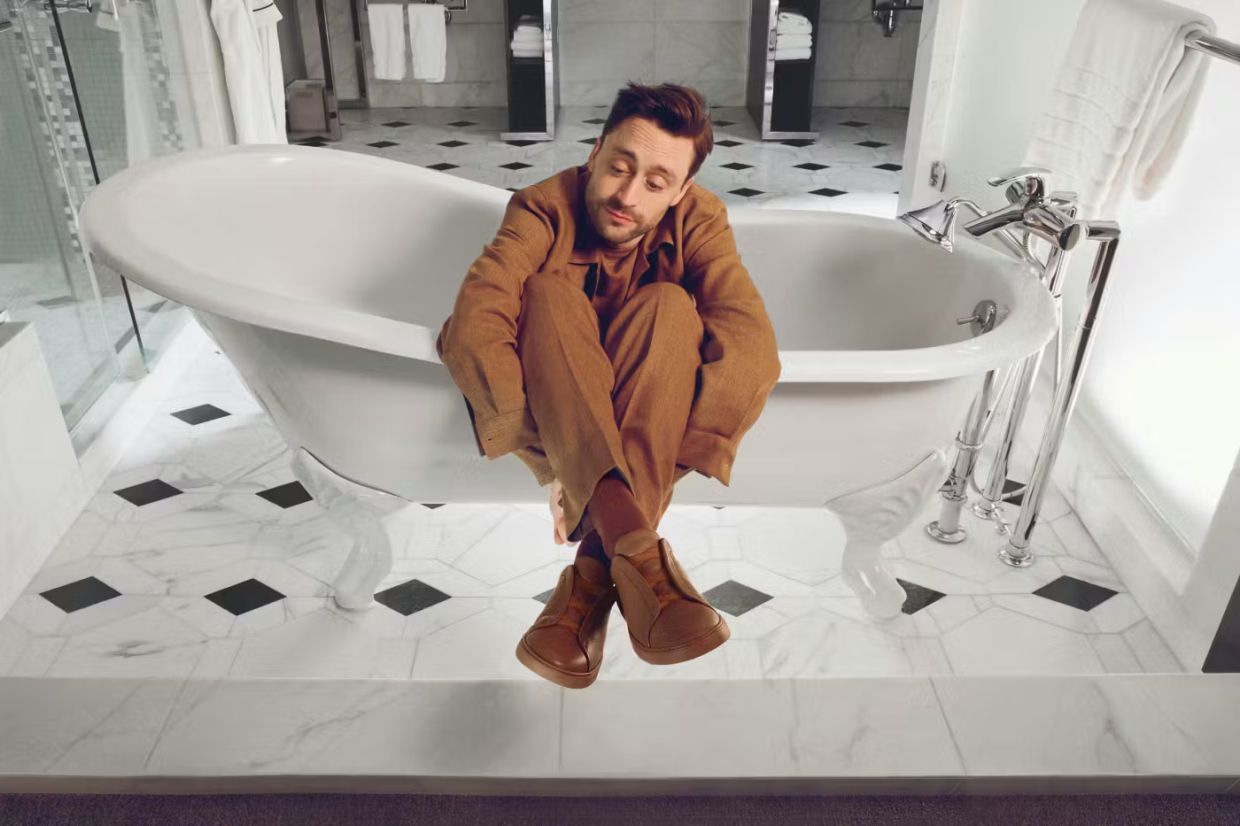
The dress sneaker represents one of contemporary menswear's most intriguing contradictions: a shoe that successfully bridges the comfort of athletic footwear with the formality traditionally demanded by professional environments. This hybrid design—combining a rubber sole with a polished leather upper—has transformed from a styling curiosity into a genuine wardrobe staple that now appears in corporate boardrooms, film festivals, and even the Oval Office itself.
The emergence of dress sneakers reflects deeper shifts in how modern professionals approach clothing. Their rise coincides with the normalisation of casual Friday dress codes, the cultural embrace of "stealth wealth" aesthetics that downplay ostentatious branding, and a broader societal acceptance of comfort as a legitimate consideration in formal dress. Unlike previous attempts at footwear hybridisation—awkwardly named creations such as snoafers or sneakerinas that ultimately became indistinguishable from conventional trainers—dress sneakers managed to carve out a distinct identity that feels neither entirely casual nor rigidly formal.
The sneaker's acceptance in elite circles has been remarkable. Democratic politician Hakeem Jeffries wore his to a White House meeting with President Joe Biden, while film personality Ben Stiller paired them with formal attire at both the New York Film Festival and Knicks games. Actor Kieran Culkin made them part of his costume as the scheming Roman Roy in television's Succession series. Even Apple's Tim Cook, one of the world's most visible technology executives, posed in his favoured Zegna Triple Stitch pair for a magazine cover, effectively endorsing the style at the highest levels of corporate leadership.
This legitimacy has prompted traditionally rigid establishments to soften their position. Exclusive private clubs, institutions that have long maintained dress codes prohibiting athletic footwear, have begun amending their rules to permit white-soled leather shoes worn by members. This accommodation reveals how thoroughly dress sneakers have infiltrated the spaces once reserved for exclusively formal dress shoes. The shoes communicate a carefully calibrated message: professional and respectful, yet simultaneously modern and approachable, ready for unexpected demands that range from important meetings to impromptu sports activities.
Historians of menswear trace the dress sneaker's legitimacy to specific products and moments. Menswear columnist Derek Guy identifies Common Projects' Achilles Low, launched in 2004, as the category's foundational item. These Italian-made white minimal sneakers, deliberately expensive and minimally branded, established the formula that would dominate the category: understated design, premium positioning, and a carefully neutral aesthetic that signalled both sophistication and deliberate casualness. The simplicity of this approach proved replicable across price points, enabling established shoemakers like Allen Edmonds and Wolf & Shepherd to enter the market alongside luxury brands such as Tom Ford, Loro Piana, and Cole Haan.
The pathway to mainstream acceptance occurred through several interconnected cultural forces. Silicon Valley entrepreneurs, eager to project an ethos of innovation and disruption, adopted dress sneakers as visual shorthand for a generation of professionals unconstrained by traditional corporate formality. The shoes spread from technology hubs to financial districts, where investment bankers and hedge fund managers embraced them as markers of sophisticated informality. Simultaneously, their presence expanded into sports media, with ESPN commentators incorporating them into on-air wardrobes, further normalising dress sneakers as acceptable professional attire across diverse sectors.
Yet the cultural moment that elevated dress sneakers may be reaching its inflection point. As social media platforms face intensifying regulatory scrutiny and public criticism regarding their manipulative algorithms, the symbolic associations that made dress sneakers appealing to tech-forward professionals have become complicated. The shoes increasingly evoke not innovation and forward-thinking but rather an earlier era of tech industry culture that now appears ethically compromised. Additionally, economic uncertainties have prompted shifts in workplace fashion psychology, with professionals seemingly reverting toward more conventionally formal dress as a means of demonstrating seriousness and commitment during periods of employment instability.
Observers of menswear and business culture have noted this transition. Andrew Ross Sorkin, editor of New York Times business coverage, has remarked that the post-pandemic period may have prompted a reassessment of casual dressing norms, potentially accelerating the retreat from dress sneakers. This shift might reflect several concurrent anxieties: lingering anxieties about job security driving professionals toward safer sartorial choices, delayed responses to pandemic-era fashion liberalisation finally settling into new equilibrium, or simply a recognition that dress sneakers occupy an increasingly untenable middle ground.
Ultimately, dress sneakers may suffer from the same identity crisis that has plagued other hybrid design solutions: they attempt to serve two incompatible purposes simultaneously, occupying a philosophical middle ground that feels increasingly incoherent. Menswear historian Guy compares the aesthetic to wearing a t-shirt with a tuxedo printed upon it—a clever conceptual joke that exhausts its appeal through novelty. This observation suggests that the dress sneaker's future may depend on whether professional culture collectively commits to casualisation or instead retreats toward more conventional formality. The shoes' fate will ultimately reveal whether contemporary workplaces have genuinely transformed their attitudes toward dress codes or whether recent acceptance of casual footwear was merely a temporary cultural moment now giving way to renewed formality.

