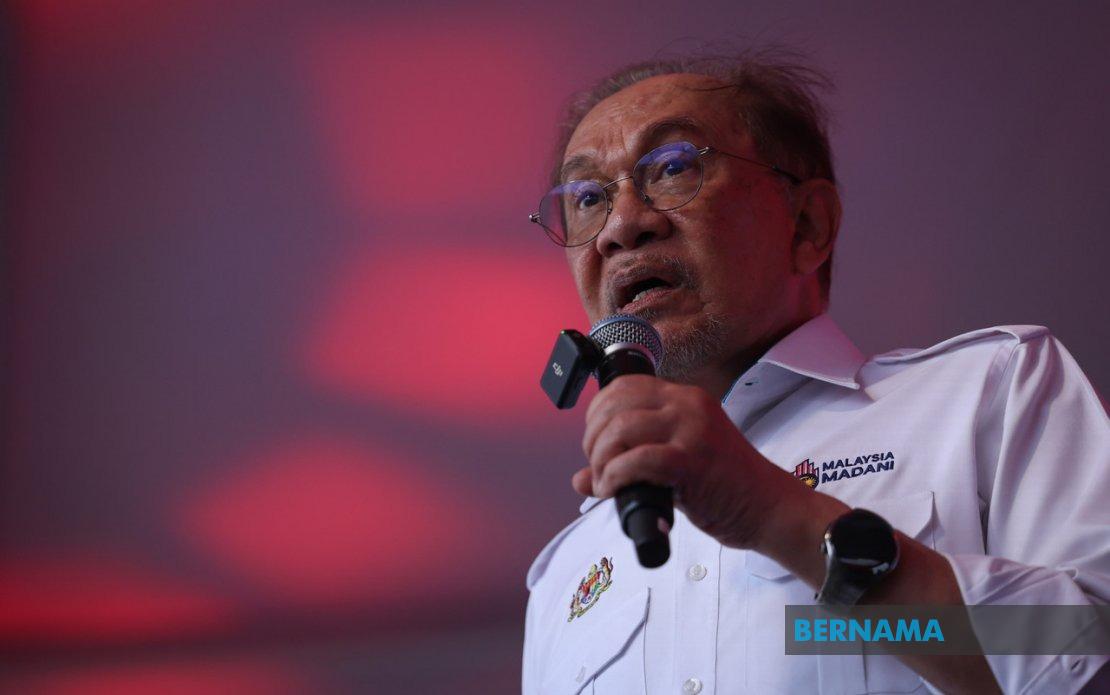
Prime Minister Datuk Seri Anwar Ibrahim has vowed that anyone found culpable for the losses incurred by Lembaga Tabung Haji (TH) will face criminal prosecution, following the release of the Royal Commission of Inquiry (RCI) report on July 29. Speaking at an event in Jelebu, the Premier underscored his administration's commitment to enforcing the rule of law and holding public officials accountable for any financial misconduct affecting the pilgrimage fund.
The RCI findings have identified concerning patterns of misappropriation, fraud and abuse of power within TH's operations. Anwar made clear that these matters will not be treated as administrative issues or subjected to lenient internal disciplinary procedures, but rather investigated rigorously by Malaysia's law enforcement and regulatory bodies. The three main institutions tasked with the investigation are the Royal Malaysia Police (PDRM), the Malaysian Anti-Corruption Commission (MACC) and Bank Negara Malaysia, each bringing specialised expertise to different aspects of the case.
Anwar's statement represents a significant pledge given the sensitive nature of TH, which manages funds held in trust for over 6.5 million Muslims intending to perform the Hajj pilgrimage. The institution's financial difficulties have been a longstanding concern, with prior controversies involving investment losses and governance lapses. For Malaysian pilgrims and the broader Muslim community, the Prime Minister's commitment to accountability provides some assurance that mishandled funds will not go unpunished and that transparency will be restored to the organisation.
The investigation will extend beyond fact-finding to prosecution, Anwar emphasised. If evidence emerges demonstrating criminal conduct, those implicated will be charged in court and subjected to full judicial proceedings. The Premier's language was notably unambiguous: those convicted would face imprisonment without exception or special consideration based on rank or political affiliation. This formulation seeks to counter long-standing public scepticism about whether Malaysia's powerful and well-connected face genuine consequences for financial crimes.
The RCI itself represents a significant development in scrutinising TH governance. Royal Commissions of Inquiry carry considerable political weight in Malaysia and their findings typically prompt government action. The fact that the inquiry was initiated and has now concluded suggests legislative and executive recognition that TH's management failures warranted formal investigation at the highest level. The timing of the report's release, announced during campaign activities for the 16th Negeri Sembilan state election, also reflects the broader political attention now focused on government accountability and anti-corruption efforts.
Transport Minister Anthony Loke Siew Fook, who was present at the event and is Pakatan Harapan's candidate for the Chennah state seat, represents the coalition's emphasis on governance reform. The presence of senior cabinet members at such accountability announcements underscores the current government's positioning as distinct from its predecessors in prioritising rule of law over political convenience. This narrative forms a critical component of Harapan's political branding heading into state elections.
For the broader Malaysian financial system, the TH investigations carry implications for governance standards across government-linked companies and statutory bodies. If conducted transparently and resulting in convictions of senior figures, these cases would establish precedent that institutional leadership cannot use complexity and scale as shields against accountability. Conversely, if investigations stall or produce mild outcomes, the message would reinforce public cynicism about selective enforcement of anti-corruption measures.
The involvement of Bank Negara Malaysia indicates that investigations will scrutinise not only internal TH management but potentially external enablers of financial misconduct, including financial institutions that may have facilitated or overlooked questionable transactions. This suggests a sophisticated investigation extending beyond scapegoating individual actors to examining systemic failures in financial oversight and governance architecture.
For Malaysian Muslims planning pilgrimages, restoring confidence in TH requires not just rhetorical commitments but demonstrated reforms in governance, investment transparency and conflict-of-interest protocols. Many pilgrims rely on TH's structured savings schemes, making the fund's stability and ethical management questions of practical household importance beyond abstract governance concerns.
The political calculation involved in publicising these investigations must also be acknowledged. Anwar's emphasis on accountability plays favourably with urban, reform-minded constituencies while potentially alienating certain factions within the ruling coalition. The Negeri Sembilan state election context suggests these announcements form part of a broader political messaging strategy around competence and integrity.

