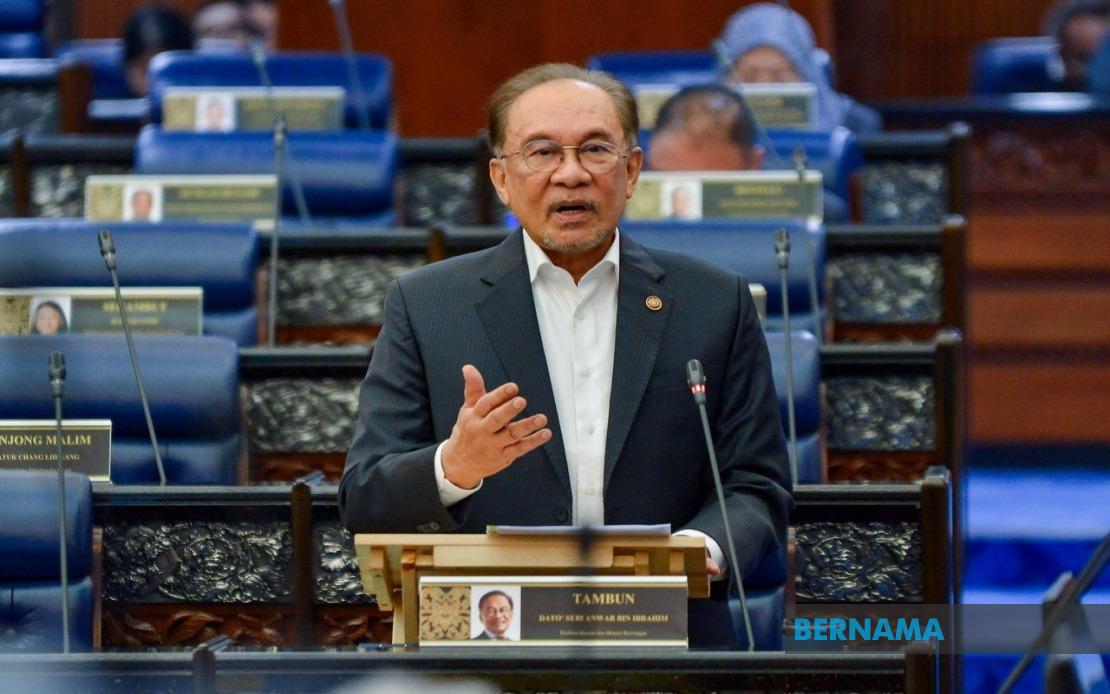
Prime Minister Datuk Seri Anwar Ibrahim has tasked the Transport Ministry with examining possibilities to harness ports situated at the Malaysia-Thailand frontier and in Penang as part of a broader push to strengthen infrastructure development and commercial networks serving the border region. The directive emerged during parliamentary proceedings when Anwar addressed a supplementary question regarding government initiatives to advance infrastructure and logistics capabilities along the shared Malaysia-Thailand border corridor.
The cross-border port strategy formed a significant element of recent diplomatic exchanges between Anwar and Thai Prime Minister Anutin Charnvirakul during the latter's official visit to Malaysia. Both leaders engaged in substantive discussions spanning multiple dimensions of bilateral cooperation, with transport and logistics connectivity emerging as a priority area. Anwar indicated that the conversation extended beyond port operations to encompass broader transport sector considerations, signalling Bangkok's interest in developing comprehensive regional connectivity solutions.
During the Dewan Rakyat session, Anwar highlighted that while a recently inaugurated transport route represented tangible progress, dialogue with the Thai administration had also touched upon railway infrastructure as a complementary transportation modality. Prime Minister Anutin had specifically raised port transport as a mechanism through which both nations could amplify their collaborative potential. This multi-modal approach reflects recognition that sustainable border development requires investment across various transportation channels rather than reliance on singular infrastructure assets.
Among specific facilities examined during bilateral discussions were emerging port installations including the Sanglang port and the Perlis Inland Port, commonly abbreviated as PIP. These facilities represent recent additions to Malaysia's northern logistics infrastructure landscape and offer particular strategic value for channelling commerce through the border corridor. Positioning these ports as hubs for cross-border trade could unlock economic advantages for surrounding communities while establishing competitive alternatives to existing regional maritime gateways.
The emphasis on maximising economic spillovers from border corridor development reveals a deliberate strategy to ensure that infrastructure investments generate tangible benefits for local populations. Rather than pursuing isolated transport projects, the government appears committed to cultivating integrated supply chains and logistics ecosystems capable of attracting regional and international commercial activity. This approach acknowledges that modern border regions function most effectively as economic zones rather than purely administrative dividing lines.
Railway infrastructure featured prominently in bilateral considerations, underscoring recognition that seamless freight movement demands integrated rail-port connections. The Malaysia-Thailand border region currently lacks comprehensive rail interconnectivity comparable to leading Southeast Asian corridors. Developing coordinated rail and port infrastructure could position the region competitively within broader ASEAN logistics networks and facilitate greater penetration of Southeast Asian markets by Malaysian and Thai enterprises.
Tourism emerged as another dimension of border corridor development, reflecting understanding that cross-border regions generate economic activity through multiple channels. Enhanced port facilities and improved transport connectivity naturally support increased tourist movements, while infrastructure investments create employment opportunities across hospitality, logistics, and commerce sectors. Tourism development also encourages cultural and people-to-people exchanges that strengthen bilateral relationships beyond governmental and commercial spheres.
The Transport Ministry's forthcoming engagement with port usage discussions carries implications extending beyond Malaysia-Thailand relations. The border corridor's development trajectory influences the competitiveness of northern Malaysian states within broader Southeast Asian supply chains. Successful implementation of coordinated port and transport strategies could position Penang and Perlis as significant nodes within regional trade networks, potentially attracting multinational logistics operators and manufacturing enterprises seeking Southeast Asian operational bases.
For Malaysian stakeholders, port development initiatives warrant close monitoring given the substantial capital requirements and long-term commercial commitments typically involved. The viability of Sanglang and Perlis Inland Port depends fundamentally upon securing consistent bilateral coordination, competitive pricing relative to established regional ports, and adequate hinterland infrastructure connecting installations to distribution centres and manufacturing zones. Without addressing these foundational requirements, infrastructure investments risk underutilisation and financial underperformance.
The broader policy framework suggests the government recognises that Malaysia's position as a transport and logistics hub depends upon cultivating strategic partnerships with neighbouring nations. Thailand represents a natural commercial partner given geographical proximity, complementary economic structures, and shared interest in capturing ASEAN-wide logistics opportunities. Effective port coordination could yield mutual benefits including reduced transportation costs for bilateral commerce and improved competitiveness against established Asian ports such as Singapore and regional alternatives in neighbouring countries.
Successful implementation of coordinated port strategies requires sustained institutional coordination between Malaysian and Thai authorities across customs, maritime regulation, and port operations. The parliamentary discussion suggests political commitment exists at the highest levels, though translating this commitment into functional operational arrangements typically demands sustained technical-level engagement and resolution of procedural complexities. The Transport Ministry's engagement represents the initial phase of what may constitute a multi-year development initiative.
The emphasis on infrastructure development within border regions reflects increasingly sophisticated understanding that economic integration drives political stability and mutual prosperity. By channelling investment toward shared facilities and coordinated logistics systems, Malaysia and Thailand position themselves to compete more effectively within global supply chains while distributing economic benefits across border communities. This approach contrasts with historical models emphasising borders primarily as security demarcation zones, instead conceptualising frontiers as zones of economic opportunity and cooperation.

