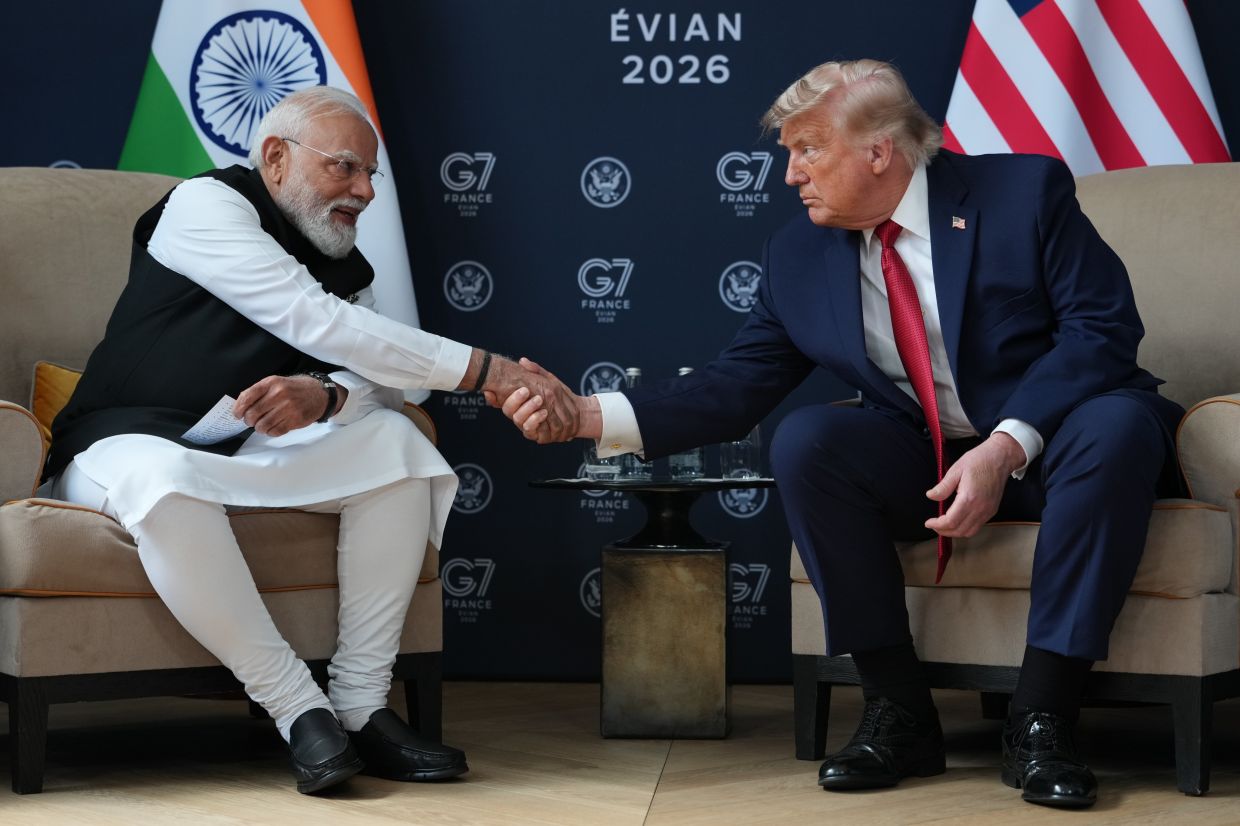
President Trump's meeting with Indian Prime Minister Narendra Modi this week laid bare the tensions simmering beneath the surface of what Washington and New Delhi have long portrayed as a deepening strategic partnership. When asked about three Indian nationals killed when US forces fired missiles at the Palau-flagged MT Settebello in the Strait of Hormuz, Trump offered no condolences or expression of regret. Instead, he dismissed the incident with a casual comment that such losses have "been happening throughout time," characterizing commercial shipping as "a rough profession" while asserting that both nations "work together" and "love all of those people."
The maritime incident that claimed the Indian lives occurred as part of a broader American enforcement operation against vessels allegedly violating a blockade on Iranian ports. The US military struck not only the MT Settebello but also attacked two other commercial vessels crewed by Indian nationals, moves justified by US Central Command as necessary responses to what it deemed violations of the American blockade aimed at restricting Iran's oil exports. This aggressive posture in one of the world's most critical shipping lanes has profound implications for Indian maritime interests, as India remains heavily dependent on Gulf waters for both energy security and commercial trade routes.
The apparent callousness of Trump's response triggered significant backlash within India, reflecting deep public anger at what many saw as American disregard for Indian lives. Viral videos documented Delhi auto rickshaw drivers removing Trump posters from their vehicles—materials distributed by the US embassy as part of an outreach campaign featuring birthday messages for America. The symbolic act of defacing embassy materials, however modest, underscored the disconnect between official diplomatic courtesies and genuine public sentiment. Such grassroots protests suggested that ordinary Indians felt their government should take a firmer stand against American actions.
Opposition voices in New Delhi amplified this discontent. Rahul Gandhi, leader of the Indian National Congress, seized on the incident to criticize Prime Minister Modi, accusing him of compromising India's sovereignty. Gandhi's characterization of Modi as "compromised" and suggesting the government acts as an "obedient servant" reflected a broader concern among sections of India's political establishment that the country is ceding too much ground to American interests in pursuit of strategic alignment. Such internal political divisions suggest that India's courtship with Washington carries domestic political costs that Modi must carefully navigate.
Foreign Secretary Subrahmanyam Jaishankar had previously registered a formal "strong protest" in a call with American counterparts, yet the State Department's official readout of that conversation revealed how the two sides talked past each other. Where Jaishankar protested the loss of life, the American response focused on reasserting the principle that "violations of the US blockade and the illicit transport of Iranian oil will not be tolerated." This divergence in emphasis—India's concern for its citizens versus America's determination to enforce its Iran policy—exposed fundamental differences in how each nation prioritizes competing interests.
Yet despite this friction, both leaders publicly performed the script of strategic partnership. Trump praised Modi as a "tough trader" and a "great guy," while offering vague assurances about future cooperation and even mentioning an intention to visit India "sometime in the future." The two nations are actively negotiating a bilateral trade agreement, with India becoming one of the first countries to enter formal talks with the Trump administration following its return to power in 2025. These negotiations carry significant weight for both economies, with India eager to secure favorable market access in the United States and Washington seeking to deepen economic ties with a major Asian power.
Secretary of State Marco Rubio reinforced these diplomatic courtesies by visiting India shortly after the missile strike, where he characterized the country as one of America's "most important strategic partners." This messaging appeared designed to smooth over the friction caused by the maritime incidents, suggesting that Washington views the relationship through a sufficiently long-term lens that tragic accidents should not derail broader geopolitical cooperation. However, such framing risks minimizing legitimate Indian concerns about how American military operations affect Indian citizens and interests in critical maritime zones.
The tension between rhetoric and reality in US-India relations reflects a broader dynamic affecting Southeast Asian countries and the wider region. As Washington pursues its strategic competition with China and Iran, it increasingly depends on partnerships with major Asian nations to maintain influence. India, given its size, democratic credentials, and location between the Indian and Pacific Oceans, occupies a particularly valuable position in American strategic thinking. Yet this very importance can create asymmetries in the relationship, where India may feel pressured to accommodate American preferences on issues ranging from Iran policy to maritime operations, even when those positions conflict with Indian interests or values.
For Malaysian readers and other Southeast Asian observers, the Trump-Modi dynamic offers instructive lessons about managing relationships with great powers. The incident demonstrates how geopolitical alignment does not automatically translate into mutual regard for each other's citizens or interests. India's experience suggests that smaller or mid-sized powers must actively defend their interests even within ostensibly friendly partnerships, as larger partners may take their cooperation for granted. The maritime strikes also highlight how American military operations in the Strait of Hormuz and surrounding waters have direct consequences for regional shipping and energy security that extend far beyond direct American-Iranian competition.
The ongoing trade negotiations between the United States and India will likely continue despite this friction, with both sides compartmentalizing the maritime incident from broader commercial discussions. India's government appears willing to absorb some diplomatic friction in service of long-term strategic objectives, though the public anger demonstrated through the poster removals and political criticism suggests that Modi cannot indefinitely ignore domestic sentiment on these matters. The broader implication is that even as regional powers align themselves with Washington on matters of geopolitical strategy, they retain leverage through their own domestic political constraints and cannot simply rubber-stamp all American positions without political cost.
Trump's dismissal of the three Indian deaths as an occupational hazard of shipping reveals the transactional nature of great power politics, where individual tragedies are absorbed into larger strategic calculations. For India, which has invested considerable political capital in elevating ties with Washington, the incident and Trump's response posed an early test of whether the relationship would truly be reciprocal or whether India would continue to accommodate American interests despite costs to its own citizens and prestige. The answer, based on the Modi government's measured response, suggests India will maintain the partnership while attempting to negotiate better terms and protections—a delicate balancing act that many regional powers know well.

